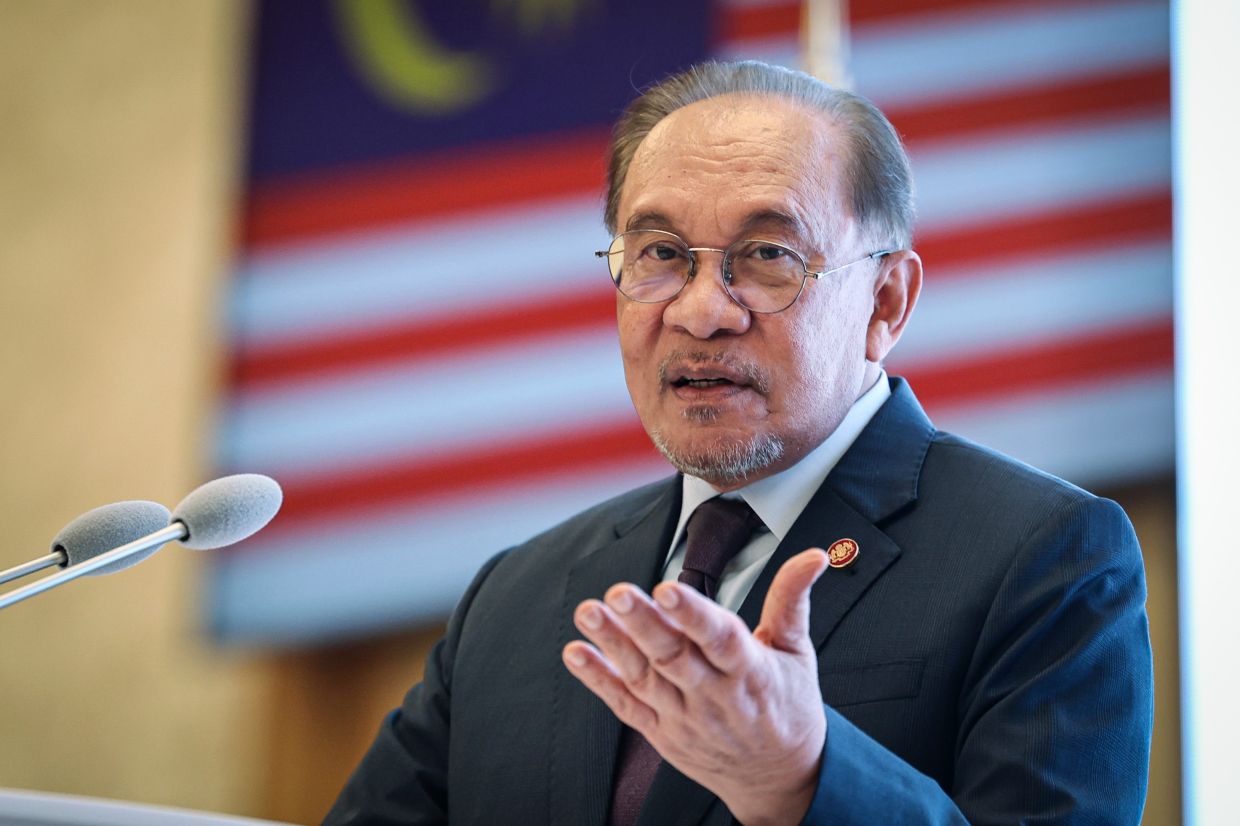
Malaysia and Singapore are moving closer to finalising the master plan governing the Johor-Singapore Special Economic Zone (JS-SEZ), with both nations signalling strong momentum on the flagship cross-border economic initiative, Prime Minister Datuk Seri Anwar Ibrahim announced during high-level bilateral talks this week.
Anwar, who doubles as finance minister, made the remarks following a courtesy call with Singapore President Tharman Shanmugaratnam, whose three-day state visit to Malaysia from July 13 to 15 came at the formal invitation of His Majesty Sultan Ibrahim, King of Malaysia. The encounter provided both leaders an opportunity to take stock of the partnership and chart the course for deepening bilateral engagement across economic, political, and security dimensions.
The JS-SEZ represents one of the most ambitious infrastructure projects in Southeast Asia, designed to leverage the geographic proximity and complementary economic strengths of Malaysia's Johor state and Singapore's advanced financial and logistics sectors. The master plan will establish the regulatory framework, investment incentives, and operational guidelines for companies seeking to benefit from the zone's dual-jurisdiction advantages. By combining Johor's land availability and lower operational costs with Singapore's world-class infrastructure and market access, the initiative aims to attract multinational corporations and create significant employment across the region.
During their discussions, Anwar and Tharman exchanged substantive views on the trajectory of Malaysia-Singapore relations, evolving developments across the broader Southeast Asian landscape, and issues of bilateral and mutual concern. The conversation underscored the importance both nations place on maintaining stable, prosperous ties in an increasingly complex regional environment marked by geopolitical uncertainties and economic headwinds.
The two leaders acknowledged tangible progress in addressing several longstanding matters that have periodically strained relations between Kuala Lumpur and Singapore over recent years. These include maritime boundary disputes, water agreements, and transportation connectivity issues. Anwar emphasised that both governments remain steadfastly committed to resolving any outstanding disagreements through sustained dialogue, underpinned by a foundation of mutual respect and genuine understanding.
The emphasis on constructive negotiations reflects a maturation in how both countries approach contentious issues. Rather than allowing disputes to fester or escalate into public confrontation, the two neighbours have increasingly adopted a problem-solving approach grounded in acknowledgment of shared long-term interests. This pragmatic orientation has become essential as both economies grow more intertwined through trade, investment, and labour flows.
For Malaysia, the JS-SEZ holds particular significance as a vehicle for diversifying Johor's economic base beyond traditional sectors. The state, which has historically relied on manufacturing and palm oil production, stands to benefit substantially from attracting regional headquarters, technology companies, and high-value service providers. The initiative also aligns with Malaysia's broader ambitions to position itself as a competitive destination for foreign direct investment in Southeast Asia, a goal that requires sustained political stability and clear regulatory frameworks.
Singapore's participation demonstrates its interest in expanding its economic footprint beyond its confined geographical boundaries. For the island city-state, the JS-SEZ offers an outlet for its labour force and capital, while deepening its role as the regional economic hub. The arrangement also provides Singapore with a counterweight to similar initiatives that competing nations might pursue, ensuring it remains central to cross-border economic arrangements in the region.
Anwar expressed optimism that the Malaysia-Singapore relationship would continue strengthening, anchored in trust, reciprocal regard, and tangible benefits flowing to both populations. This sentiment carries weight given the historical complexities that have occasionally complicated ties between the neighbours, ranging from disputes over Pulau Batu Puteh to disagreements over the Johor Strait and water exports.
The finalisation of the JS-SEZ master plan would mark a significant milestone in regional integration efforts. Unlike some mega-projects that remain perpetually under discussion, concrete progress on this initiative would demonstrate that Malaysia and Singapore can translate aspirations into implementable frameworks. The master plan's completion would enable the formal launch of special regulatory provisions, streamlined investment approval procedures, and coordinated infrastructure development.
For the broader Southeast Asian region, a successful JS-SEZ signals that despite occasional friction, major economies can collaborate on mutually beneficial initiatives. This has implications for other cross-border economic zones being discussed across ASEAN, from similar arrangements involving Thailand and Cambodia to those involving Indonesia and Malaysia. A working model developed through Malaysian-Singaporean cooperation could become a template for regional economic integration.
The timing of this announcement also reflects confidence in both governments' ability to manage bilateral relations constructively. As the global economic environment remains uncertain, with trade tensions and supply chain disruptions continuing, both nations recognise that deepening regional economic interdependence serves as a stabilising force.
Looking ahead, attention will focus on when the master plan reaches finalisation and what specific provisions it contains regarding tax treatment, labour regulations, and dispute resolution mechanisms. These details will largely determine whether the JS-SEZ achieves its potential as a transformative economic initiative or remains another flagship project that struggles with implementation complexities.

