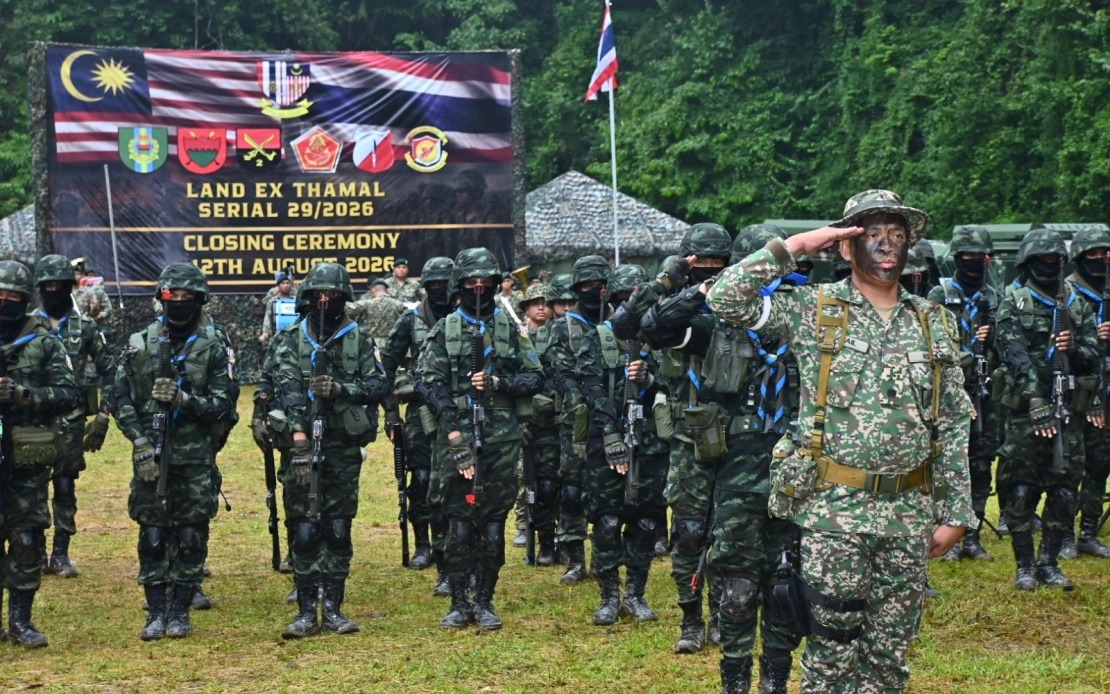
A combined force of 252 military personnel from Malaysia and Thailand is undertaking an intensive tactical training programme in Gerik that underscores the deepening defence cooperation between the neighbouring nations. The exercise, known as LAND THAMAL Series 29/2026, began on August 5 and brings together 197 Malaysian Army (TDM) troops alongside 55 members of the Royal Thai Army (RTA), representing a significant commitment to bilateral military coordination and interoperability in Southeast Asia's increasingly complex security environment.
The exercise framework encompasses three substantial phases designed to build practical capabilities and mutual understanding between the forces. The Cross Training Exercise allows personnel to learn directly from each other's methodologies, while the Field Training Exercise exposes troops to realistic operational scenarios including combat procedures, obstacle negotiation, camp establishment, reconnaissance patrols, defensive positions, and simulated offensive operations. This layered approach ensures that personnel develop not just technical competence but also familiarity with how their counterparts operate in the field, a critical element for any future joint deployment or crisis response.
Thailand's 5th Infantry Brigade Commander, Senior Colonel Taweeporn Kanatong, highlighted at the exercise's opening ceremony that such initiatives serve purposes extending well beyond traditional military capability building. He emphasised that LAND THAMAL addresses the full spectrum of contemporary regional challenges, from natural disaster response and counterterrorism operations to managing transnational security threats and maintaining stability across Southeast Asia. For Malaysia and Thailand, which share a significant maritime border and face overlapping security concerns ranging from maritime piracy to transnational crime networks, this comprehensive approach reflects realistic threat assessment.
The Malaysian Army's 2nd Infantry Division noted that the exercise deliberately emphasises knowledge exchange and tactical innovation, with personnel encouraged to analyse and discuss differing operational procedures. This intellectual dimension distinguishes LAND THAMAL from routine military training; it creates space for professional soldiers to challenge assumptions, identify best practices, and develop hybrid approaches that leverage the strengths of both militaries. The statement specifically referenced strengthening working relationships through enhanced communication, suggesting that building personal connections among officers and personnel facilitates smoother coordination when circumstances demand rapid response or joint operations.
For Malaysia, such exercises carry particular strategic weight. As a nation with significant maritime interests, multiple ethnic and religious communities, and economic dependence on regional stability, military readiness and strong defence partnerships represent core national interests. Thailand's position as the regional land bridge to Myanmar and Cambodia, combined with its significant naval capabilities in the Gulf of Thailand and Andaman Sea, makes it a natural and important partner. The two nations have historically collaborated on border security and counter-insurgency operations, and LAND THAMAL represents the evolution of that partnership into a broader, more institutionalised framework for regular training and capability development.
The inclusion of the Combined Military Civil Action component through the Jiwa Murni Programme demonstrates a sophisticated understanding of modern military operations. By conducting community engagement activities at Sekolah Menengah Kebangsaan Sultan Idris Shah II in Gerik, personnel from both nations reinforce the crucial principle that military forces function within civilian contexts and must maintain public trust and cooperation. This civil-military dimension, often overlooked in conventional military exercises, actually addresses a real operational requirement; troops deployed in crisis situations must interact effectively with civilian populations, understand local needs, and project professionalism and cultural sensitivity.
The official launching ceremony, jointly conducted by Brigadier General Datuk Mohd Zaini Hashim of the Malaysian 30th Infantry Brigade and Senior Colonel Taweeporn, reflected the ceremonial gravity both nations attach to this partnership. The location at Gerik Airstrip, situated near the Malaysia-Thailand border, carried symbolic significance, positioning the exercise literally at the intersection of the two nations' territories. Such choices in military diplomacy communicate respect, commitment, and a willingness to operate transparently in shared spaces.
From a broader Southeast Asian perspective, LAND THAMAL exemplifies the incremental but meaningful military integration occurring across the region. Unlike the high-profile naval exercises that frequently capture headlines, such land-focused bilateral drills often represent deeper institutional cooperation. The fact that this represents the 29th iteration in the series indicates this is not a one-off initiative but rather an established mechanism that has been refined and evolved over many years. This consistency provides both militaries with reliable planning frameworks and generates institutional knowledge about working together effectively.
The emphasis on improving interoperability and operational readiness addresses a practical challenge in any coalition or joint operation. Different nations train their personnel using different doctrines, operate different equipment variants, and develop distinct cultural approaches to problem-solving within military hierarchies. Through repeated exercises like LAND THAMAL, these differences become understood rather than obstacles, and personnel develop mental models of how their counterparts will likely respond in given situations. This level of familiarity substantially improves the efficiency and effectiveness of any joint operation, whether responding to natural disaster, conducting counter-terrorism operations, or managing maritime security incidents.
The 55-strong Thai contingent's participation, while numerically smaller than the Malaysian component, should not be underestimated in symbolic or practical terms. Thailand's decision to commit trained personnel and senior officers like Senior Colonel Taweeporn to such exercises reflects Bangkok's own assessment that regional military coordination serves Thai national interests. For Malaysia, this reciprocal commitment provides reassurance about the reliability of the partnership and the likelihood that agreed defence arrangements will be honoured when circumstances require.
Looking forward, LAND THAMAL Series 29/2026 contributes to the broader architecture of Malaysia-Thailand defence relations at a time when the region faces multiple security pressures. Transnational criminal networks exploit border regions, maritime disputes periodically flare into diplomatic tension, and the broader strategic competition between major powers creates incentives for smaller nations to strengthen regional partnerships. By systematically building military-to-military relationships and operational familiarity, Malaysia and Thailand are investing in their collective security in a manner that costs far less than unilateral military expansion and produces more durable benefits through trust and understanding.
The success attributed to LAND THAMAL in the military statement ultimately rests on a deceptively simple observation: soldiers who know each other, understand each other's methods, and have trained together under realistic conditions are more likely to coordinate effectively when circumstances demand it. This exercise, by bringing together personnel for several weeks of intensive training across multiple phases and civilian engagement, creates exactly these conditions. As regional security challenges persist and evolve, such investments in professional military relationships and institutional coordination mechanisms become increasingly valuable, suggesting that exercises like LAND THAMAL will remain central to Malaysia and Thailand's strategic partnership.

