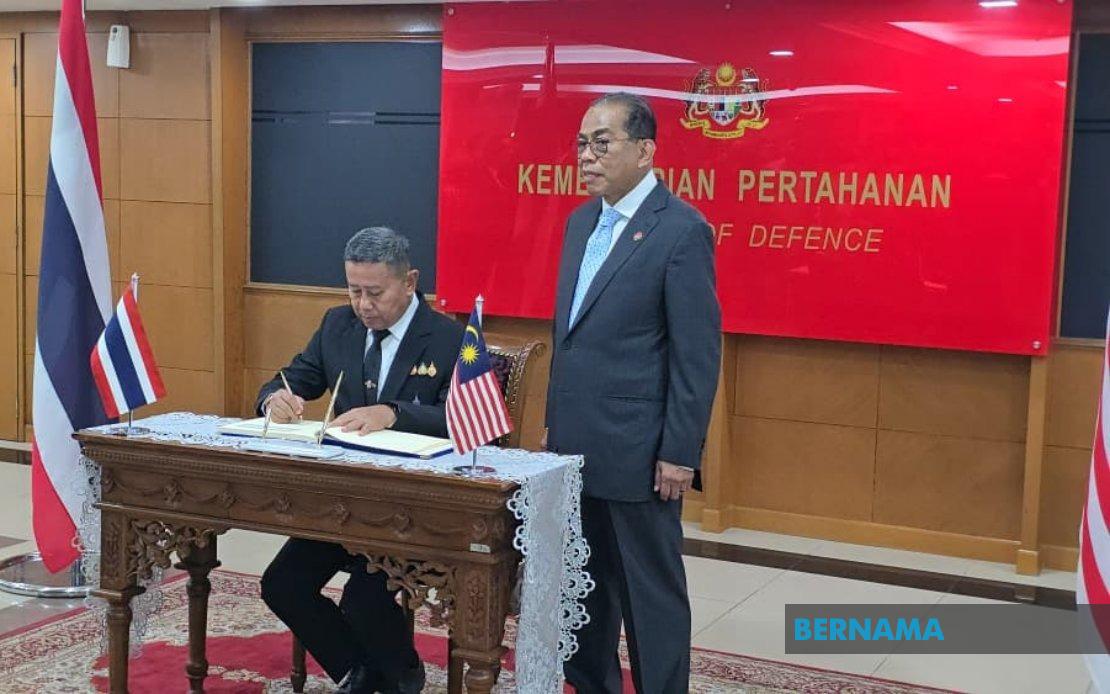
Malaysia and Thailand have signalled their determination to deepen defence partnerships and collaboratively tackle pressing regional security issues following high-level talks in Kuala Lumpur between Defence Minister Datuk Seri Mohamed Khaled Nordin and his Thai counterpart, Lieutenant General Adul Boonthumjaroen. The meeting, which took place at Wisma Pertahanan on July 14, underscored the enduring bilateral relationship between the two nations and their shared commitment to maintaining stability throughout Southeast Asia.
Adul's visit marked his inaugural engagement with Malaysia's defence establishment following his recent appointment as Thailand's Defence Minister under the administration of Prime Minister Anutin Charnvirakul. The occasion provided an opportunity for Mohamed Khaled to formally extend Malaysia's congratulations to Adul and to express confidence in Thailand's defence trajectory under the current government's stewardship. Such diplomatic courtesies, whilst seemingly ceremonial, carry significance in reinforcing the personal relationships that underpin institutional cooperation between neighbouring states.
The bilateral dialogue reflected mutual understanding of the strategic environment facing both nations. Malaysia and Thailand, as ASEAN members sharing maritime borders and interconnected economies, face common challenges ranging from transnational security threats to maintaining freedom of navigation in regional waters. By positioning their defence engagement as a tool for promoting peace and stability across Southeast Asia, both countries demonstrated awareness that their security cooperation extends beyond bilateral interests to encompass the broader regional architecture.
Thailand's explicit recognition of Malaysia's efforts in mediating the protracted border dispute between Thailand and Cambodia represents a significant endorsement of Malaysia's regional diplomatic role. This acknowledgement is particularly noteworthy given the complexity and sensitivity surrounding Thai-Cambodian relations, which have periodically flared into military confrontations. Malaysia's ability to facilitate dialogue between these neighbours—often through ASEAN mechanisms—has been crucial to preventing escalation and maintaining regional equilibrium. By publicly praising Malaysia's contribution, Thailand has validated the importance of constructive mediation and positioned Malaysia as a stabilising force within Southeast Asia's security landscape.
Beyond the political dimensions of their engagement, the two defence ministers emphasised substantive cooperation in defence and security matters. Both nations recognise that effective regional partnership requires concrete institutional mechanisms and ongoing dialogue channels rather than purely symbolic gestures. The reaffirmation of their commitment to strengthened defence cooperation signals intent to expand military-to-military relations, intelligence sharing, and coordinated responses to transnational threats including terrorism, cybersecurity, and maritime security challenges.
The industrial dimension of Adul's visit proved equally significant. His tour of the National Aerospace and Defence Industries (NADI) Group of Companies reflected Thailand's interest in Malaysia's defence manufacturing capabilities and innovation ecosystems. NADI, as a major player in Malaysia's defence industrial landscape, represents domestic expertise in aerospace, naval systems, and advanced manufacturing. The exchange of views between Thai and Malaysian defence officials regarding potential cooperation areas suggests possibilities for joint ventures, technology transfer, technology cooperation, and shared development of defence solutions tailored to regional requirements.
For Malaysia, such industrial engagement offers multiple benefits. It demonstrates the commercial viability and strategic importance of the domestic defence sector whilst creating opportunities for Malaysian companies to access Thai procurement requirements and regional markets. For Thailand, partnership with Malaysian defence firms provides access to proven technologies and manufacturing capabilities without the need for entirely indigenous development, a pragmatic approach for cost-conscious defence establishments in developing economies.
The timing of these discussions occurs against a backdrop of evolving regional dynamics. Southeast Asia has witnessed increased great power competition, rising maritime tensions in contested waters, and the emergence of non-traditional security threats. Within this environment, bilateral defence relationships like that between Malaysia and Thailand serve as stabilising anchors. When neighbouring countries maintain robust defence dialogue and commitment to peaceful resolution of disputes, they reduce the risk of miscalculation and create frameworks for managing inevitable differences.
Moreover, the Malaysia-Thailand defence engagement carries implications for ASEAN cohesion. Both nations are influential members of the regional bloc, and their demonstrated commitment to cooperation and dialogue sets positive precedent for how ASEAN members should approach mutual relations. In an era when regional unity is sometimes tested by competing interests and external pressures, bilateral partnerships that prioritise stability and dialogue reinforce ASEAN's collective capacity to address challenges and maintain the centrality of the organisation in regional affairs.
Looking forward, the defence cooperation framework established through such high-level meetings requires translation into concrete programmes. Military exchanges, joint training exercises, coordinated maritime patrols, and technology partnerships represent practical mechanisms through which aspirations can become operational reality. The involvement of defence industry stakeholders like NADI indicates recognition that modern security challenges often require industrial and technological solutions developed through partnership rather than isolation.
For Malaysian policymakers, the strengthened Thai relationship acknowledges that Malaysia's security environment is fundamentally interconnected with that of immediate neighbours. By investing in robust defence cooperation with Thailand, Malaysia addresses shared challenges more effectively whilst demonstrating commitment to regional stability that extends beyond its own borders. This approach aligns with Malaysia's historical emphasis on regional solutions to regional problems, a principle that has guided its foreign policy throughout its tenure as an ASEAN member.
The dialogue between Mohamed Khaled and Adul ultimately reflects a mature understanding that defence cooperation in Southeast Asia need not be zero-sum. Both nations can strengthen their bilateral military capabilities and defence industries whilst simultaneously promoting regional peace and stability. In pursuing this balanced approach, Malaysia and Thailand model the kind of pragmatic partnership that enables regional states to prosper collectively whilst managing security imperatives responsibly.

