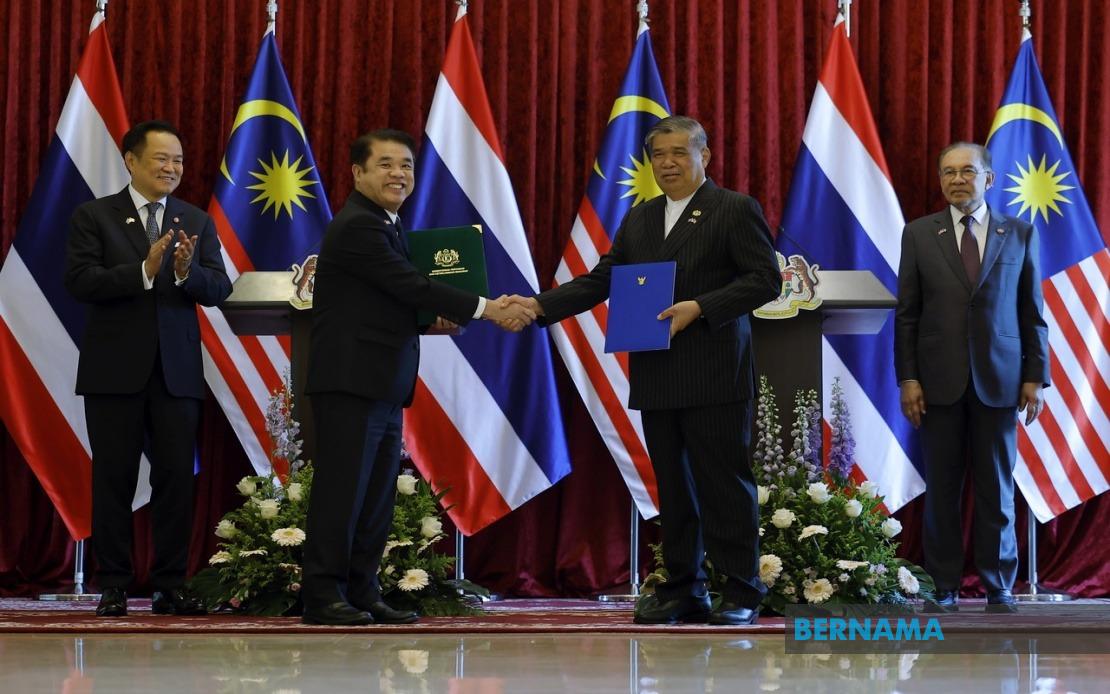
Malaysia and Thailand have successfully navigated a series of trade obstacles affecting their agricultural sectors, with both nations committing to accelerate implementation of a comprehensive cooperation agreement. The breakthrough came during Thai Prime Minister Anutin Charnvirakul's inaugural official visit to Malaysia, where the two countries' leaders oversaw the signing of a revised Memorandum of Understanding on Agricultural Cooperation in Putrajaya on July 9. The accord represents a significant shift in the bilateral relationship, particularly given the contentious import restrictions Malaysia imposed on Thai fisheries products just over a month earlier.
Prime Minister Datuk Seri Anwar Ibrahim and Anutin jointly witnessed Agriculture and Food Security Minister Datuk Seri Mohamad Sabu and Thai Agriculture Minister Suriya Juangroongruangkit exchange the MoU, signalling the high-level political importance both governments attach to resolving sectoral tensions. The fisheries dispute that prompted Malaysia's June 1 import controls—requiring Certificates of Analysis for barramundi and restricting five specific shrimp species—had created friction in an otherwise robust trade relationship. By demonstrating swift resolution through diplomatic channels, the two countries have underscored their preference for negotiation over protectionist measures, a posture that carries implications for regional trade stability.
The accelerated timeline proved pivotal in negotiations. Thai authorities initially sought a one-and-a-half-month implementation window for the MoU, but Malaysian negotiators pressed for and secured agreement on activation within just one week. This compression reflects Malaysia's determination to restore market access for Thai agricultural products and signals confidence that outstanding technical and regulatory issues can be resolved expeditiously. Anwar's emphasis on the acceleration during the joint press conference underscored the political will on both sides to move beyond the friction that had characterised earlier exchanges.
The agricultural cooperation framework itself addresses a spectrum of interconnected challenges facing both nations. The MoU establishes formal mechanisms for coordination on crop production, livestock management, fisheries operations, and trade facilitation—domains where regulatory harmonisation remains essential for seamless cross-border commerce. Additionally, the agreement incorporates provisions for research and development cooperation, capacity building initiatives, and alignment on biosecurity protocols and sanitary and phytosanitary standards. This comprehensive architecture suggests that both countries recognise food security as a strategic priority requiring sustained institutional cooperation beyond episodic negotiations.
For Malaysian stakeholders, the accord carries particular significance given the country's reliance on imported agricultural inputs and processed foods. Thailand represents a critical supplier of meat and meat-based products to Malaysia, while the Malaysian agricultural export basket—comprising coffee, cocoa, tea, spices, and processed foods—depends on reliable market access. The bilateral agricultural and agri-food trade relationship had generated RM20.33 billion in commerce between January and December 2025, demonstrating the scale of economic interdependence and justifying the priority both governments assign to maintaining flows. Disruptions triggered by import controls or regulatory disputes threaten food price stability and supply chain continuity across the region.
The resolution process itself illuminates how Malaysia and Thailand approach dispute settlement in sensitive sectors. Rather than escalating to formal trade complaint mechanisms or retaliatory measures, both countries opted for structured dialogue between sectoral ministers, reflecting the diplomatic maturity characterising the bilateral relationship. The June 1 import controls, while ostensibly aimed at addressing biosecurity and product quality concerns, were accompanied by a parallel process of technical engagement designed to identify pathways toward lifting restrictions. This calibrated approach prevented the dispute from metastasising into broader trade tensions.
The underlying technical issues driving the fisheries restrictions warrant attention, particularly regarding the Certificates of Analysis requirement for barramundi and restrictions on specific shrimp species. These measures, if retained, suggest Malaysian authorities identified legitimate quality or safety concerns in Thai supply chains. The rapid resolution implies confidence that Thai producers can meet Malaysian standards, but the sustainability of improved market access will depend on consistent compliance with phytosanitary and biosecurity requirements. Ongoing monitoring mechanisms embedded within the MoU framework should help prevent future flashpoints.
From a regional perspective, the Malaysia-Thailand accord demonstrates commitment to deepening Southeast Asian agricultural integration even as global supply chain pressures and protectionist sentiments intensify elsewhere. Thailand's position as a major regional exporter of agricultural commodities and Malaysia's role as a consumption hub and value-added processor create natural complementarities. Enhanced cooperation on standards harmonisation, information sharing on pest and disease outbreaks, and coordinated approaches to third-country market access could amplify benefits for both economies while strengthening ASEAN's collective food security posture.
Anwar and Anutin's bilateral discussions extended beyond agriculture to encompass investment, trade expansion, and regional geopolitical considerations, indicating that the agricultural accord sits within a broader strategic partnership. The willingness to resolve technical trade disputes swiftly reflects mutual interest in consolidating economic ties as both nations navigate external challenges including global inflation, supply chain volatility, and shifting geopolitical alignments in the Indo-Pacific. For Malaysia, closer agricultural cooperation with Thailand also complements domestic efforts to enhance food security amid climate change and population growth pressures.
The one-week implementation timeline now becomes a practical test of bilateral commitment. Both agricultural ministries must coordinate rapidly on the technical protocols required to operationalise the framework, with particular focus on clearing the remaining backlog of fisheries and agricultural product approvals. Success in meeting this accelerated schedule would signal to investors and trading partners that Malaysia and Thailand have genuinely overcome procedural barriers and are prepared to compete together for regional market share rather than fragment along bilateral lines.
Looking ahead, the MoU establishes institutional foundations for addressing emerging challenges in agricultural cooperation. Climate impacts on crop production, labour availability in fishing and livestock sectors, and evolving consumer preferences for sustainably produced foods will test the robustness of the bilateral framework. The agreement's emphasis on research collaboration and capacity building suggests both countries recognise that durability of agricultural supply chains depends on continuous innovation and adaptation. By committing to structured cooperation mechanisms rather than ad hoc negotiations, Malaysia and Thailand have positioned themselves to navigate future sectoral challenges more effectively.

