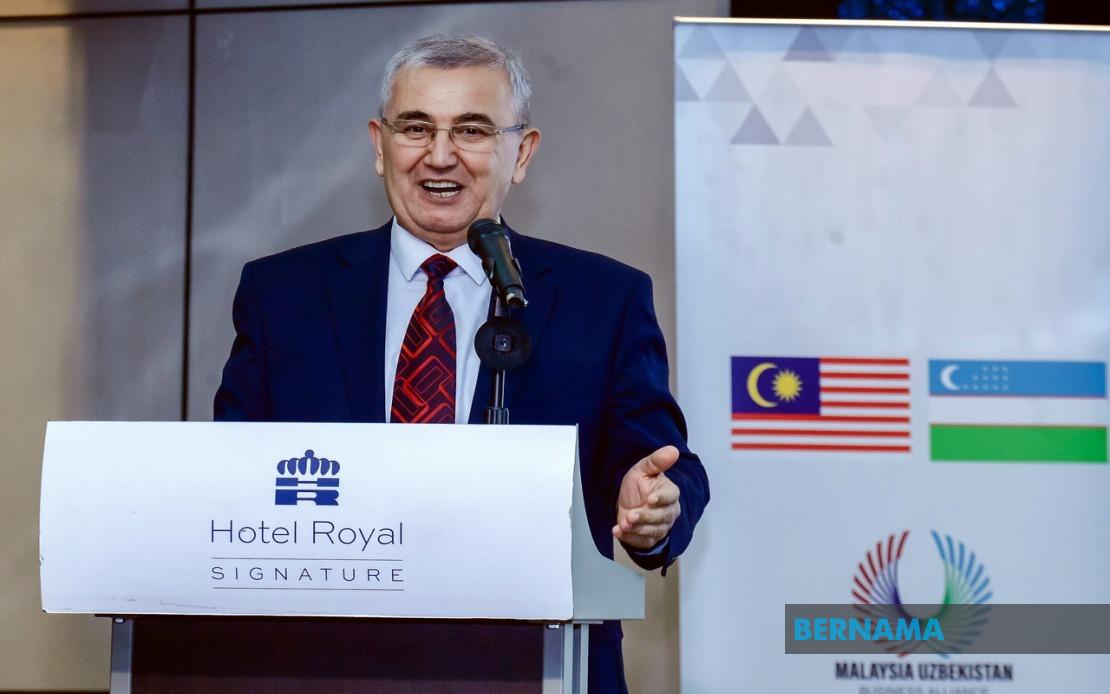
Malaysia and Uzbekistan are positioning themselves to become strategic agricultural partners by leveraging complementary strengths in technology, research, and sustainable food production. The two countries have identified agriculture as a cornerstone of their bilateral relationship, with high-level political engagement underscoring its importance. Uzbekistan's Ambassador to Malaysia, Dr Karomidin Gadoyev, emphasised that agricultural cooperation has remained a consistent priority during diplomatic exchanges, including Prime Minister Datuk Seri Anwar Ibrahim's May 2024 visit to Uzbekistan and President Shavkat Mirziyoyev's February 2023 journey to Malaysia.
The partnership reached a significant inflection point following Agriculture and Food Security Minister Datuk Seri Mohamad Sabu's recent official visit to Uzbekistan, which catalysed concrete discussions on expanding cooperation across multiple agricultural domains. Malaysia brings substantial expertise in paddy rice cultivation, fisheries management, aquaculture systems, and precision agriculture technologies, areas where the nation has developed competitive advantages through decades of investment in research and commercial application. Uzbekistan, conversely, contributes sophisticated irrigation technologies designed for energy efficiency, established horticultural practices suited to Central Asian climates, and robust agri-food processing infrastructure that can scale production across the broader region.
Food security has emerged as a critical driver of this partnership, particularly as both nations grapple with global supply chain volatility and climate variability. The countries recognise that integrating artificial intelligence and digital technologies into agricultural systems can substantially amplify productivity while building resilience against external shocks. Uzbekistan is particularly keen to absorb Malaysian technological know-how, viewing it as instrumental to modernising its agricultural sector and meeting domestic demand from a population approaching 40 million inhabitants. The digital agriculture agenda extends beyond simple mechanisation; it encompasses data analytics, precision input management, and real-time crop monitoring systems that optimise resource use.
Aquaculture represents one of the most promising collaboration vectors, driven by Uzbekistan's geographic and demographic circumstances. As a double-landlocked nation, Uzbekistan faces inherent constraints in accessing marine resources, creating substantial demand for domestically-produced seafood and aquaculture-derived protein. Malaysia has successfully commercialised biofloc aquaculture technology, a system that dramatically reduces feed costs by approximately 30 percent whilst simultaneously increasing overall productivity and lowering production expenses. Malaysian enterprises have already begun preliminary investigations into shrimp farming and broader fisheries ventures within Uzbekistan, suggesting investor confidence in the opportunity landscape.
The agricultural drone sector exemplifies the type of technology transfer underpinning this partnership. Malaysian company Miracule has established Uzbekistan's first agricultural drone demonstration facility, representing a practical beachhead for introducing unmanned aerial systems into Central Asian farming practices. The strategic progression involves expanding drone utilisation across Uzbekistan's agricultural operations, ultimately advancing toward domestic assembly of sophisticated agricultural drone platforms. This trajectory from demonstration through adoption to localised manufacturing creates employment opportunities whilst building indigenous technological capacity.
Collaboration with Malaysia's Agricultural Research and Development Institute (MARDI) provides institutional scaffolding for innovation development and adaptation to local conditions. MARDI's established research protocols, breeding programmes, and agronomic knowledge bases offer Uzbekistan practical pathways for accelerating agricultural modernisation. Joint research initiatives can address region-specific challenges whilst generating intellectual property benefits for both parties. This institutional approach generates sustainability beyond individual commercial transactions, embedding technical knowledge transfer into formal organisational relationships.
Bilateral agri-food trade currently totals more than RM338 million annually, with Malaysian palm oil and palm oil derivatives dominating export flows to Uzbekistan. However, Dr Gadoyev identified substantial untapped commercial potential, projecting that bilateral agri-food trade could realistically double or triple over the next five to ten years through systematic cooperation. Malaysia possesses opportunities to position Uzbekistan as a regional processing hub for crude palm oil destined for Central Asian markets, capturing value-added processing revenues whilst establishing supply chain efficiency. Concurrently, Uzbek companies can expand their premium fresh and dried fruit exports and processed food products into Malaysian and Southeast Asian markets, leveraging Malaysia's established trade networks and consumer familiarity.
The geographic and economic logic underlying this partnership extends beyond bilateral commercial interests. Uzbekistan's location at the intersection of Central Asian trade corridors positions it as a natural distribution point for Malaysian agricultural products and technologies throughout the wider region. Similarly, Central Asian horticultural products gain access to Southeast Asian consumer markets through Malaysian distribution networks. This mutually reinforcing trade architecture creates efficiency gains transcending simple bilateral exchange, generating regional value chain integration.
Malaysia's invitation to Uzbekistan to participate in the Malaysia Agriculture, Horticulture and Agrotourism Exhibition (MAHA) 2026 reflects institutional commitment to deepening sectoral engagement. MAHA functions as a significant commercial and networking platform, exposing Uzbek agricultural enterprises to Malaysian businesses, potential investment partners, and end consumers. Exhibition participation facilitates knowledge diffusion, relationship-building, and market exploration in a concentrated format, accelerating the pace of commercial collaboration development.
The partnership framework positions both nations to address converging regional challenges around food security, agricultural sustainability, and climate resilience. By combining Malaysian technological sophistication with Uzbekistan's agricultural resource base and Central Asian market access, the collaboration generates synergies unavailable through unilateral development efforts. For Malaysia, deepening agricultural relationships within Central Asia diversifies export markets whilst strengthening bilateral ties with strategically important regional actors. For Uzbekistan, access to Malaysian expertise and technology accelerates agricultural modernisation and positions the nation as a competitive producer within regional and global value chains. The partnership demonstrates how complementary capabilities, rather than competitive positioning, can structure mutually beneficial bilateral relationships in strategic sectors.

