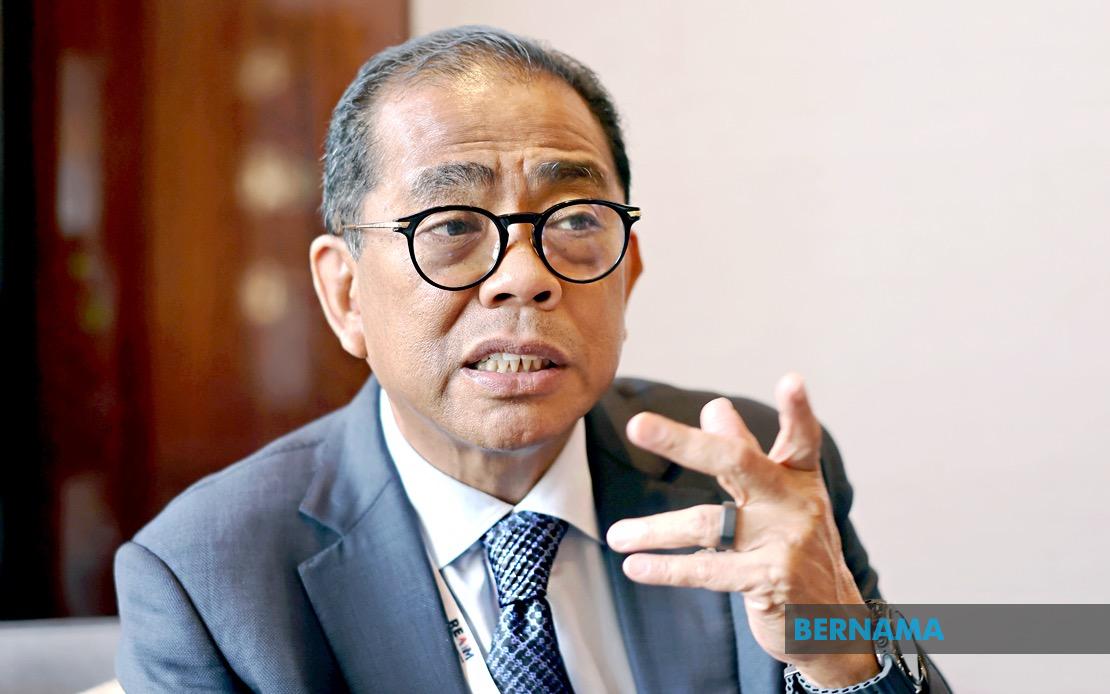
Malaysia and Vietnam are deepening their defence partnership across multiple fronts, with Defence Minister Datuk Seri Mohamed Khaled Nordin emphasising the strategic importance of enhanced cooperation for advancing regional peace and prosperity during his official visit to Hanoi. The bilateral engagement, conducted with Vietnamese Minister of National Defence Gen Phan Van Giang, signals both nations' determination to move beyond symbolic commitments and establish tangible frameworks for military collaboration that will benefit the broader ASEAN community.
The scope of cooperation discussions reveals the comprehensive nature of the defence relationship. Beyond traditional military exchanges, the two ministers explored intelligence-sharing protocols, submarine rescue operations, maritime domain awareness initiatives, and defence industry partnerships. The inclusion of artificial intelligence cooperation indicates Malaysia and Vietnam's recognition that modern security challenges demand technological advancement and joint innovation. These discussions also encompassed strategies for addressing grey zone activities—a growing concern across Southeast Asia where state and non-state actors blur conventional conflict boundaries through cyber operations, disinformation campaigns, and strategic economic coercion.
Mohamed Khaled's proposal to strengthen the bilateral cooperation mechanism through a High-Level Committee reflects lessons learned from previous defence agreements and the need for institutional rigour in implementation. Malaysia has observed that well-intentioned memorandums can languish without proper coordination structures, particularly when military and civilian bureaucracies operate in parallel. By establishing a formal high-level mechanism, Malaysia seeks to ensure that initiatives move from agreement to operational reality, with clear timelines, accountability measures, and regular progress reviews.
The visit builds upon the Memorandum of Understanding on Defence Cooperation signed in November 2023, which provided the foundational framework for the current discussions. This progression from formal agreement to substantive bilateral engagement demonstrates that both nations view defence cooperation not as a checkbox exercise but as a cornerstone of bilateral relations. The timing of these discussions, occurring amid complex regional geopolitical shifts, underscores Malaysia's strategic calculation that Vietnam represents a crucial ally in maintaining balance and supporting ASEAN's collective interests.
Maritimise security emerged as a particular focus area, reflecting shared vulnerabilities both nations face in Southeast Asian waters. Malaysia and Vietnam both contend with maritime challenges ranging from piracy and smuggling to territorial disputes and freedom of navigation concerns. Joint training programmes and coordinated maritime domain awareness systems would enhance the operational capabilities of both navies while strengthening the enforcement of international maritime law. For Malaysia specifically, deepened Vietnamese cooperation in maritime security reinforces its position in advancing regional norms and demonstrating commitment to protecting shipping lanes that remain vital to ASEAN's economic prosperity.
On the South China Sea issue, Mohamed Khaled articulated Malaysia's measured but firm position that peace must be maintained through dialogue and international law rather than military posturing. His emphasis on supporting an effective Code of Conduct reflects Malaysia's long-standing diplomatic approach—seeking binding agreements that constrain unilateral actions while preserving legitimate interests. Malaysia's statement that ASEAN must maintain strategic autonomy signals concern about external pressure on the bloc and determination that Southeast Asian nations set their own agenda rather than being pulled into great power competition.
The Defence White Paper framework guiding Malaysia's foreign defence relations emphasises competent partnership as a central pillar. This concept transcends routine military-to-military contacts and demands substantive capability-building, technology transfer, and integration of operational procedures. Vietnam, with its substantial military experience and technological advancement in recent decades, represents precisely the type of partner that can contribute meaningfully to Malaysia's strategic development while benefiting from Malaysian expertise in areas such as naval modernisation and counter-terrorism operations.
Mohamed Khaled's courtesy call on Vietnamese Prime Minister Le Minh Hung reflects the highest-level attention both governments assign to defence diplomacy. That the Malaysian Defence Minister met with Vietnam's civilian leadership indicates these defence discussions carry political weight extending beyond military circles. This civilian-military engagement pattern strengthens institutional relationships and ensures defence cooperation aligns with broader foreign policy objectives, reducing the risk that military agreements become disconnected from diplomatic strategy.
The reference to Malaysia's National Defence Strategic Plan 2026-2030 contextualises these bilateral efforts within a longer-term strategic vision. Rather than ad-hoc defence engagement, Malaysia is systematically building partnerships that support its strategic objectives across the next five years. Vietnam figures prominently in this vision precisely because of geographic proximity, shared ASEAN membership, and comparable security concerns. The strategic plan's emphasis on strengthening international defence relations to ensure national sovereignty suggests Malaysia views robust defence partnerships as essential to maintaining strategic autonomy in an era of great power competition.
For the broader Southeast Asian context, Malaysia-Vietnam defence cooperation contributes to ASEAN's collective resilience and institutional credibility. When major ASEAN powers demonstrate serious commitment to bilateral military cooperation, it strengthens the ASEAN Defence Ministers' Meeting and ASEAN Defence Ministers' Meeting-Plus mechanisms. These multilateral forums become more robust when underpinned by genuine bilateral partnerships rather than merely aspirational regional declarations. Malaysia and Vietnam, as major ASEAN economies with significant military capabilities, have particular responsibility for demonstrating that ASEAN can maintain internal cohesion while addressing external challenges.
The emphasis on ASEAN Centrality in both nations' statements reveals the diplomatic chess being played in Southeast Asia. By repeatedly affirming commitment to ASEAN-led frameworks, Malaysia and Vietnam signal that their bilateral defence cooperation complements rather than circumvents regional mechanisms. This positioning becomes increasingly important as external powers seek to pull ASEAN states into competing strategic arrangements. Malaysia's explicit commitment to ASEAN unity and strategic autonomy provides reassurance to fellow ASEAN members that enhanced Malaysian-Vietnamese ties will not come at the expense of broader regional solidarity.
Looking forward, the success of Malaysia-Vietnam defence cooperation will depend on consistent implementation and willingness to adapt as security environments evolve. The military training coordination programmes and maritime security initiatives announced during these discussions will produce tangible results only if both nations commit adequate resources and personnel. Intelligence-sharing protocols, particularly sensitive given their classification implications, require extraordinary trust and careful management of information compartmentalisation. These practical challenges explain why Mohamed Khaled's proposal for a High-Level Committee oversight mechanism carries real significance—without such structures, ambitious defence agreements often atrophy due to bureaucratic friction and competing institutional priorities.
For Malaysian policymakers, this defence deepening with Vietnam positions Malaysia as an active shaper of regional security architecture rather than a passive observer. By establishing substantive partnerships with key ASEAN allies, Malaysia enhances its diplomatic weight in ASEAN deliberations and strengthens its capacity to influence regional outcomes. The investment in defence cooperation, intelligence sharing, and technology partnerships represents Malaysia's strategic bet that ASEAN nations acting collectively and bilaterally can maintain regional stability despite external pressures and internal tensions.

