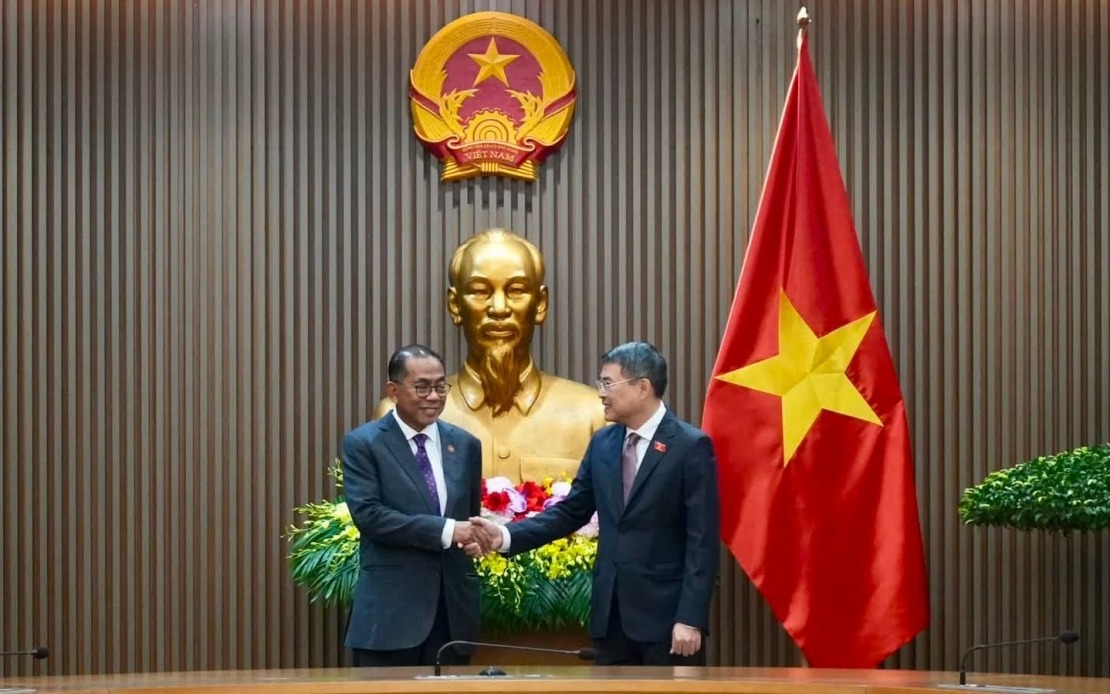
Malaysia and Vietnam are moving to cement their defence relationship through a comprehensive programme targeting maritime security, technological advancement, and industrial collaboration. Defence Minister Datuk Seri Mohamed Khaled Nordin announced the commitment following discussions with Vietnamese Prime Minister Lê Minh Hưng during an official visit to Hanoi, signalling the two nations' determination to deepen military ties in an increasingly complex regional security environment.
The partnership reflects a broader strategic alignment between Kuala Lumpur and Hanoi, who share fundamental perspectives on maintaining regional stability and advancing ASEAN principles. Both countries regard dialogue and diplomatic engagement as essential tools for preserving peace in Southeast Asia, particularly as the region grapples with mounting geopolitical pressures and emerging security threats. This convergence of views provides a solid foundation for expanding bilateral defence collaboration beyond traditional military exchanges.
Maritime security emerges as a central pillar of the strengthened partnership, underscoring the shared maritime interests of both nations. The South China Sea, which connects Malaysia and Vietnam, remains strategically vital for regional commerce and security. Enhanced cooperation in this domain could include joint patrols, information sharing, and coordinated responses to maritime challenges, enhancing collective capacity to protect shipping lanes and uphold freedom of navigation principles critical to regional prosperity.
Capability development constitutes another significant dimension of the expanded framework. By collaborating on military modernisation and training programmes, Malaysia and Vietnam can pool resources and expertise to strengthen their respective defence forces more efficiently. This approach allows both nations to address capability gaps while optimizing defence spending—a consideration increasingly important as regional security demands mount and budgetary pressures persist across Southeast Asia.
The integration of advanced technology and defence industry cooperation signals recognition that modern security challenges demand sophisticated solutions. Artificial intelligence, cyber defence, and autonomous systems represent frontiers where collaborative development can yield tangible advantages. Such cooperation also creates opportunities for Malaysian and Vietnamese defence firms to participate in joint ventures and technology transfer initiatives, potentially strengthening domestic defence industrial bases.
The 2023 Memorandum of Understanding on Defence Cooperation provides the institutional framework guiding these initiatives. Rather than serving as merely ceremonial documentation, this MoU functions as a detailed roadmap charting specific cooperation areas and establishing mechanisms for regular consultation and coordination. The agreement's existence demonstrates sustained commitment beyond individual administrations, lending continuity to defence ties regardless of political transitions.
The strategic context for this partnership extends beyond bilateral considerations. Both nations recognise that contemporary security challenges—great power competition, grey zone activities, and supply chain disruptions—transcend national borders and demand collective responses. The increasingly assertive posturing by major powers in regional waters has heightened awareness among Southeast Asian nations that solidarity and coordinated action strengthen their collective leverage and reduce vulnerability to coercion.
Cyber threats and cognitive warfare represent emerging domains where Malaysia and Vietnam must coordinate defences. As military operations increasingly incorporate digital dimensions and information warfare elements, bilateral intelligence sharing and joint cyber defence initiatives become essential. The recognition of these threats in official discussions indicates both countries understand modern conflict extends far beyond conventional military engagement.
ASEAN's institutional role receives implicit emphasis through this partnership development. By demonstrating commitment to strengthening bilateral defence ties within ASEAN frameworks, Malaysia and Vietnam reinforce the regional bloc's collective resilience. This approach contrasts with attempts by extra-regional powers to establish exclusive security arrangements that might fragment ASEAN cohesion. A stronger Malaysia-Vietnam relationship contributes to maintaining ASEAN unity and decision-making autonomy.
For Malaysian policymakers and security analysts, the strengthened ties with Vietnam offer strategic benefits in multiple dimensions. Vietnam's geographic position, substantial military capabilities, and demonstrated commitment to regional stability make it a valuable partner for addressing shared maritime challenges and transnational security threats. The partnership also enables Malaysia to expand its security horizon beyond traditional partnerships, creating a more diversified and resilient network of strategic relationships.
The emphasis on technology transfer and defence industrial cooperation holds particular significance for Malaysia's long-term defence modernisation objectives. Access to Vietnamese expertise in certain defence domains, combined with opportunities for Malaysian firms in collaborative projects, supports the country's aspirations to develop indigenous defence capabilities and reduce import dependency. Such industrial linkages create economic benefits complementing security advantages.
Regional observers should monitor the implementation progress of these defence cooperation initiatives. Translating commitments into concrete joint operations, training exercises, and technology development projects will determine whether this partnership achieves its potential as a significant force for regional stability. The frequency and scope of future high-level defence meetings, military exercises, and working-group activities will provide reliable indicators of partnership momentum.
Ultimately, the Malaysia-Vietnam defence partnership represents a pragmatic response to evolving regional security dynamics. By deepening cooperation with trusted neighbours and ASEAN peers, Malaysia reinforces its commitment to rules-based regional order and collective security approaches. In an era of great power competition and emerging transnational threats, such partnerships amplify the voice and capacity of mid-sized regional powers to shape their security environment and protect national interests.

