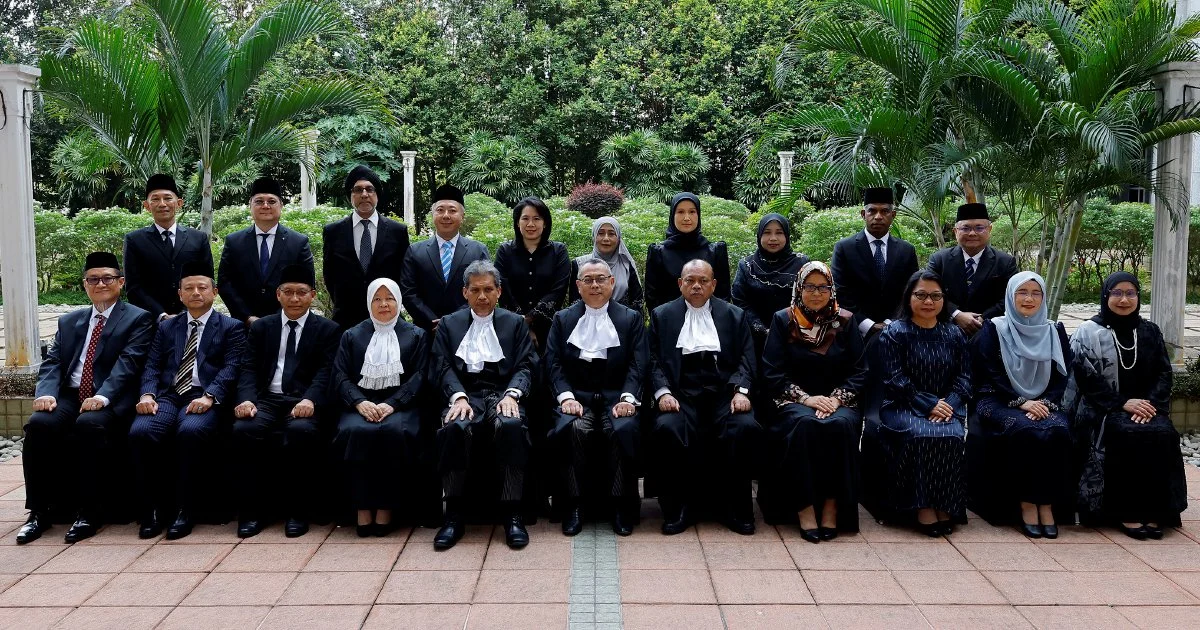
Malaysia's judiciary has taken a major step to strengthen its bench capacity by appointing 17 new judicial commissioners in a ceremony held in Putrajaya today. The fresh cohort of appointees, drawn from experienced lawyers and officers within the judicial and legal service, represents a measured expansion of the High Court's human resources as the institution faces mounting case backlogs and demand for expedited adjudication across the nation's courts.
Among the successful candidates is the daughter of a former president of the Court of Appeal, a development that underscores the judicial system's reliance on legal talent with deep institutional familiarity. The appointment carries symbolic weight in Malaysia's legal circles, reflecting the cumulative advantage that family connections within the profession can confer, though the merit-based selection process itself emphasises the appointee's individual qualifications and standing among her peers.
Judicial commissioner appointments serve as a critical mechanism for renewing Malaysia's judicial workforce and injecting fresh perspectives into courtrooms. These officers typically handle substantial caseloads independently before potential elevation to higher judicial ranks, functioning as operational lynchpins in the High Court system. The 17 new commissioners thus represent not merely symbolic reinforcement but substantive additions to judicial capacity, particularly important given Malaysia's expanding commercial, civil, and increasingly complex criminal dockets.
The timing of this appointment round reflects ongoing institutional efforts to manage the judiciary's resource constraints. Malaysian courts have long grappled with case backlogs that delay justice for litigants and strain the confidence of the public in the legal system. By elevating experienced legal professionals to the judicial commissioner level, the system broadens the pool of judicial officers available for case management and trial leadership, potentially accelerating resolution timelines across multiple court divisions.
The selection pool demonstrates the judiciary's commitment to drawing talent from diverse backgrounds within the legal profession. Applicants for such positions typically include established advocates and solicitors with substantial courtroom experience, as well as serving officers from the judicial and legal service cadre. This mixed-recruitment approach ensures that the bench benefits from practitioners who have navigated the evolving demands of legal practice in real-world contexts, alongside career judiciary professionals schooled in institutional frameworks.
For Malaysian readers concerned with access to justice, the expansion of judicial commissioner positions carries practical implications. Courts with adequate bench strength can schedule hearings more flexibly, reduce adjournments arising from judicial unavailability, and tackle backlog cases more aggressively. The High Court's range of appellate and original jurisdiction—spanning contract disputes, constitutional matters, family law appeals, and serious criminal cases—makes adequate judicial staffing essential for systemic efficiency.
The appointment also reflects broader regional trends in judicial development across Southeast Asia. With increasing cross-border commercial activity, litigation complexity, and demands for judicial accountability, national judiciaries across the region have sought to strengthen their benches through competitive recruitment and structured career progression. Malaysia's approach of appointing experienced legal professionals as judicial commissioners mirrors practices in Singapore, Thailand, and other neighbouring jurisdictions facing similar pressures.
The presence of the former Court of Appeal president's daughter among the appointees touches on enduring conversations about meritocracy and family legacy in professional institutions. While Malaysian law and judicial practice have grown more transparent and rules-based over recent decades, the judiciary remains a field where family networks and institutional connections historically held considerable influence. The fact that this appointee has secured appointment through formal selection channels suggests her credentials withstand scrutiny; nevertheless, her background ensures heightened public attention to her future judicial decisions.
From a broader governance perspective, these appointments carry implications for judicial independence and perceived neutrality. Malaysia's courts have faced periodic scrutiny regarding political influence and the appearance of partisan alignment, particularly during periods of constitutional controversy or high-profile criminal prosecutions. A steadily expanding, professionally diverse bench may help buffer judicial decision-making from perception of improper influence, as greater numbers and varied backgrounds make coordinated institutional capture more challenging.
The appointment process itself occurs within Malaysia's established constitutional framework, where the Yang di-Pertuan Agong acts on advice of the Prime Minister and the Minister of Law in judicial appointments. This structure has weathered considerable debate in recent years, with some observers advocating for enhanced judicial involvement or transparent merit commissions. Today's ceremony represents an evolution of the existing system rather than structural reform, but the appointment of 17 candidates signals governmental commitment to maintaining judicial bench strength.
For the legal profession itself, the appointment window triggers broader questions about career incentives and the judiciary's competitive position in attracting top talent. Experienced advocates may weigh the prestige and security of judicial office against the potentially greater financial rewards of private practice. By maintaining regular appointment rounds and ensuring that selected candidates come from distinguished backgrounds, Malaysia's judiciary sustains institutional attractiveness to ambitious legal professionals.
Looking forward, these 17 new judicial commissioners will face the immediate challenge of absorbing diverse caseloads while establishing themselves as reliable, impartial decision-makers. Their collective contribution to the High Court's capacity will measurably affect the institution's performance on docket management and speed of adjudication—metrics that ultimately determine public confidence in the rule of law. The appointments thus represent not merely personnel shuffling but substantive investment in Malaysia's judicial infrastructure.

