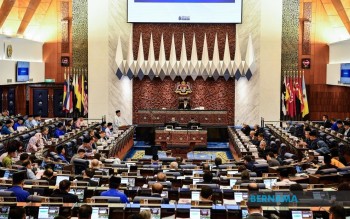
Malaysia's Ministry of Investment, Trade and Industry and its investment arm, the Malaysian Investment Development Authority, have channelled approval for 5,899 manufacturing investment initiatives valued at RM774.4 billion between 2020 and 2025, establishing a pipeline with the capacity to generate 502,493 jobs across the economy. The dual announcement, disclosed through parliamentary records, signals the government's commitment to maintaining Malaysia's competitive standing in global manufacturing amid regional competition from Vietnam, Thailand and Indonesia.
The realisation rate for these investment commitments has been substantially robust, with 5,087 projects amounting to RM587.4 billion — representing 86.2 per cent of total approved ventures — already moving into the operational phase. This execution track record demonstrates that the vast majority of pledged capital has transitioned from agreement stage into tangible factory construction, equipment installation and workforce deployment. The cumulative employment generated by these materialised projects has reached 416,914 positions, considerably exceeding half the initial target capacity, reflecting the accelerating pace of manufacturing activity across the nation's industrial zones.
A significant proportion of newly created roles occupy the upper echelons of the employment pyramid, with nearly 40 per cent positioned within management, professional, technical, supervisory and skilled classifications. This composition is crucial for Malaysia's long-term economic trajectory, as positions in these tiers command substantially higher wage premiums compared to entry-level manufacturing roles, directly elevating household incomes and domestic consumption capacity. The distribution underscores deliberate policy emphasis on attracting sophisticated manufacturing operations rather than labour-intensive, low-margin assembly work that characterised earlier phases of industrial development.
The gap between approved investment volumes and realised project figures — approximately RM187 billion representing 13.8 per cent of commitments — reflects the temporal realities inherent in large-scale capital deployment. Manufacturing facilities of significant scale, particularly those incorporating cutting-edge semiconductor fabrication, aerospace component production or pharmaceutical synthesis, require extended construction periods spanning two to five years. The phenomenon is especially pronounced in technology-intensive sectors where equipment procurement timelines, facility conditioning requirements and workforce skill development necessarily precede full operational capacity. Rather than signalling investment weakness, this lag demonstrates the pipeline maturity sustaining future employment expansion.
The ministry identified capital-intensive, large-scale ventures as sectors recording the widest implementation delays, a characteristic reflecting the structural demands of modern manufacturing. Projects in semiconductors, automotive components, petrochemicals and renewable energy systems inherently demand more protracted development cycles than smaller, conventional assembly operations. These initiatives frequently involve complex technological transfer arrangements, intricate supply chain integration with multinational parent corporations, and sophisticated quality assurance protocols that cannot be compressed without compromising product standards or safety specifications.
Government strategy explicitly targets high-value-added manufacturing domains where Malaysia possesses competitive advantages or emerging capabilities. Semiconductor fabrication and assembly represents a cornerstone sector, given Malaysia's existing concentration of advanced wafer facilities and the global semiconductor shortage dynamics that have elevated regional production priorities. Digital economy manufacturing — encompassing cloud infrastructure, software development hardware, and telecommunications equipment — aligns with Southeast Asia's accelerating digitalisation trajectory. Green technology production capitalises on renewable energy deployment acceleration across the region, whilst aerospace component fabrication leverages Malaysia's established aerospace supplier ecosystem centred around Penang and Selangor.
Investment facilitation mechanisms represent the government's operational response to accelerating project execution. MIDA has streamlined application processing, reduced documentation requirements, and established single-window approval systems permitting faster licensing decisions. These administrative enhancements reduce the interval between investment commitment and commencement of capital expenditure, directly shortening the transition period from approved status to realised operations. The acceleration becomes particularly valuable in competitive environments where manufacturing site selection timelines compress substantially, with multinational corporations making facility location decisions within months rather than years.
Human capital development has become increasingly central to investment attraction, recognising that factory automation and technological sophistication demand substantially elevated workforce qualifications. Government support extends to industrial training subsidies, apprenticeship programme funding, and collaborative arrangements with educational institutions establishing manufacturing-aligned curriculum. These interventions address the recurrent skills mismatch where job creation outpaces workforce preparation, a phenomenon that can depress recruitment prospects and elevate labour costs for investors. By proactively developing technical competencies across the working-age population, Malaysia reduces hiring friction and enhances retention.
Research and development initiatives function as complementary attraction mechanisms, particularly for multinational corporations considering regional headquarters locations or integrated innovation centres. Government support for R&D through tax incentives, intellectual property protection guarantees, and university partnership subsidies creates ecosystems where manufacturing operations couple production capabilities with design functions and innovation activities. This integration elevates job quality whilst increasing local value retention, preventing the situation where production facilities remain wholly dependent on foreign technology inputs and managerial expertise.
Conditionality imposed on manufacturing licences and high-value foreign investment approvals establishes obligations ensuring local community participation in investment benefits. Requirements mandating employment of Malaysian citizens across management and technical grades prevent scenarios where foreign investors establish nominally local operations staffed predominantly by expatriate personnel. Industrial training programme mandates establish pathways for domestic workforce skill upgrading, whilst collaboration stipulations with universities and research institutions embed local innovation capacity within foreign-controlled manufacturing ecosystems. These conditions represent Malaysia's negotiating leverage, deployed to maximise spillover effects from capital inflows.
The investment landscape reflects broader regional competitive dynamics where Thailand, Vietnam and Indonesia simultaneously pursue manufacturing attraction through comparable incentive packages and cost advantages. Malaysia's strategy differentiates through emphasis on technology intensity, quality human capital, and institutional stability rather than competing primarily on wage suppression. This positioning requires continuous investment in infrastructure, education systems and regulatory predictability — areas demanding substantial government expenditure and policy consistency across electoral cycles. The RM774.4 billion investment commitment validates this differentiation strategy, suggesting multinational investors perceive Malaysia as offering sufficient advantages to justify capital deployment despite competing regional alternatives.
Looking forward, the realisation trajectory for remaining approved projects will substantially determine employment gains through 2025 and beyond. If the 86.2 per cent realisation rate persists across the outstanding pipeline, an additional 110,000 jobs should materialise from currently approved but not-yet-realised initiatives. This projected employment expansion, combined with productivity enhancements and wage growth accompanying movement into higher-skilled roles, positions manufacturing as a sustained contributor to household income and economic resilience, particularly relevant for regions where manufacturing agglomeration creates employment ecosystems benefiting supplier industries, logistics operations and services sectors.

