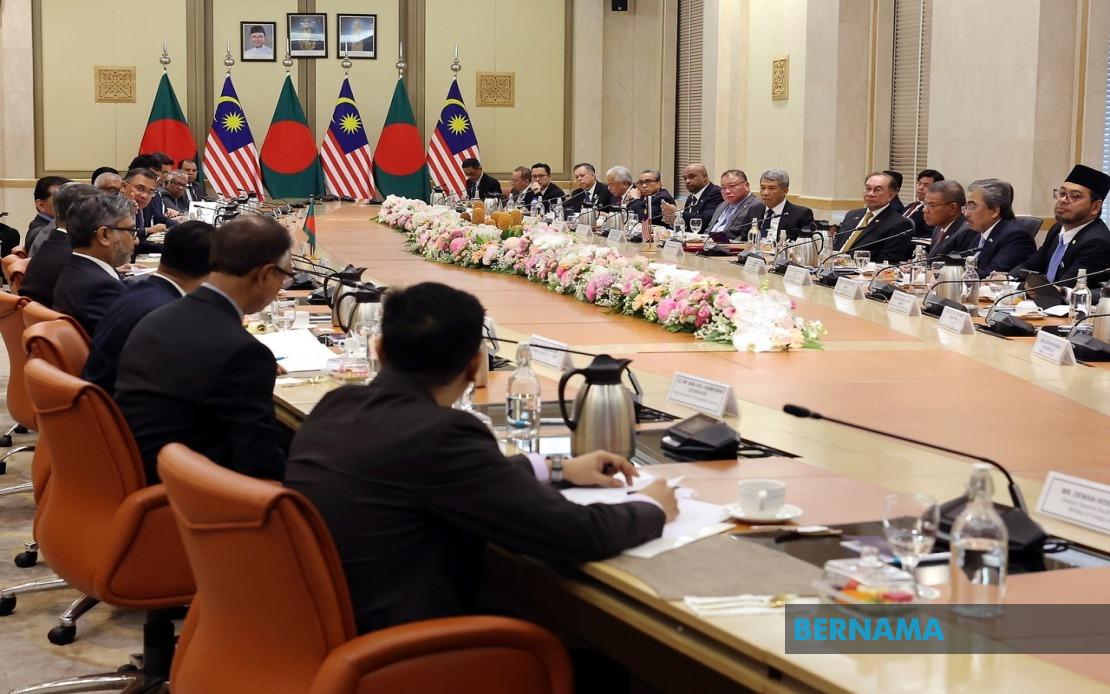
Malaysia and Bangladesh are set to significantly broaden their economic and technological partnership, with both countries committing to joint ventures in artificial intelligence, clean energy, and semiconductor manufacturing. The commitment came during a high-level bilateral meeting in Putrajaya on June 22, where Prime Minister Datuk Seri Anwar Ibrahim and visiting Bangladesh Prime Minister Tarique Rahman outlined an ambitious agenda for expanded cooperation across multiple strategic sectors.
The decision to pivot towards emerging industries reflects a broader recognition by both Southeast and South Asian nations that traditional trade relationships must evolve to remain competitive in an increasingly technology-driven global economy. While agriculture has historically formed the backbone of Malaysia-Bangladesh trade, policymakers in both capitals acknowledge that future prosperity depends on embracing innovation-intensive sectors where higher value creation occurs. This strategic realignment also signals a shift in how regional powers approach bilateral relationships, moving from commodity-based exchanges towards knowledge economies.
Artificial intelligence emerged as a particular focus area in discussions between the two prime ministers. The technology's transformative potential across manufacturing, healthcare, finance, and governance has prompted both nations to recognise the need for collaborative research and development frameworks. By pooling technical expertise and resources, Malaysia and Bangladesh can potentially develop AI applications tailored to Southeast and South Asian contexts, rather than relying solely on solutions imported from Western technology hubs. This localised approach to technological development carries significant implications for digital sovereignty and economic resilience across the region.
The semiconductor sector represents another crucial dimension of the expanded partnership. Given Malaysia's established position as a regional and global semiconductor manufacturing hub, coupled with Bangladesh's emerging industrial capabilities and large workforce, the two countries can explore complementary roles in semiconductor supply chains. Such cooperation becomes particularly strategic as global semiconductor production patterns shift away from concentration in East Asia, with nations worldwide seeking to build regional redundancy and reduce supply chain vulnerabilities exposed by recent international disruptions.
Energy cooperation takes on heightened importance as both nations navigate the transition towards renewable and sustainable power generation. Malaysia's experience with renewable energy infrastructure development and Bangladesh's substantial energy demands create natural complementarities. Joint initiatives could encompass technology transfer, investment in solar and wind projects, and research into emerging energy storage solutions. For Malaysian companies, Bangladesh's growing energy sector presents significant commercial opportunities, while Bangladesh gains access to proven technologies and expertise from a more industrialised neighbour.
Beyond these sectoral agreements, the two leaders formalised cooperation through a Memorandum of Understanding on Cultural Cooperation, recognising that people-to-people connections strengthen diplomatic ties. The signing of two Exchanges of Notes focusing on counter-terrorism research and investment promotion signals shared concerns about regional security while creating institutional frameworks to facilitate cross-border business activities. Investment promotion mechanisms are particularly valuable given the need to build investor confidence and streamline regulatory processes for companies seeking opportunities in either nation.
The counter-terrorism research collaboration carries strategic weight beyond security considerations. Both Malaysia and Bangladesh have confronted serious terrorist threats emanating from similar sources, and pooling intelligence, research capabilities, and best practices enhances both nations' security infrastructure. Academic and government research institutions in both countries can contribute specialised knowledge, while joint initiatives strengthen defence partnerships and interagency cooperation that benefit broader regional stability.
Prime Minister Anwar's emphasis on extending cooperation beyond traditional areas suggests Malaysia is positioning itself as a gateway for Bangladeshi businesses seeking to expand into Southeast Asia, while simultaneously offering Malaysia access to Bangladesh's vast consumer market and manufacturing potential. The emphasis on semiconductors, digital economy components, and advanced manufacturing indicates both nations view industrial upgrading and technology acquisition as central to development strategies. For Malaysia, deepening ties with Bangladesh through high-tech collaboration strengthens its position as a technology and innovation hub in the region.
The timing of Bangladesh Prime Minister Tarique Rahman's two-day official visit underscores renewed diplomatic momentum between the countries. Such high-level visits typically culminate in multiple bilateral agreements addressing priority areas identified by both governments, as evidenced by the simultaneous signing of the cultural cooperation MoU and investment-related notes. These formal instruments create legal and institutional scaffolding supporting private sector engagement and government-backed initiatives.
Looking forward, the success of these expanded partnerships will depend on translating political commitments into concrete projects with measurable outcomes. Joint research centres, technology incubators, and investment funds targeting priority sectors would represent meaningful next steps. Malaysian technology companies could establish research facilities in Bangladesh, while Bangladeshi manufacturers might access Malaysian expertise in automation and quality management. Educational exchanges and professional certifications could build human capital in both countries.
The broadened cooperation framework also positions Malaysia and Bangladesh as drivers of technological development within South and Southeast Asia, potentially establishing standards and practices that other regional nations might emulate. As global technological competition intensifies, particularly in AI and semiconductors, smaller economies gain leverage through strategic alliances with complementary capabilities. This partnership demonstrates how nations of different sizes and development levels can construct mutually beneficial arrangements where comparative advantages are leveraged effectively.
For investors and businesses in both countries, these expanded cooperation frameworks signal government commitment to specific sectors and improved bilateral business environments. Malaysian companies seeking to establish operations in Bangladesh now have clearer policy signals and institutional support mechanisms. Similarly, Bangladeshi entrepreneurs eyeing Malaysian markets or seeking technology partnerships can expect smoother regulatory pathways and government facilitation. The agreements essentially remove friction from bilateral business transactions while creating positive externalities through knowledge sharing and technology diffusion.