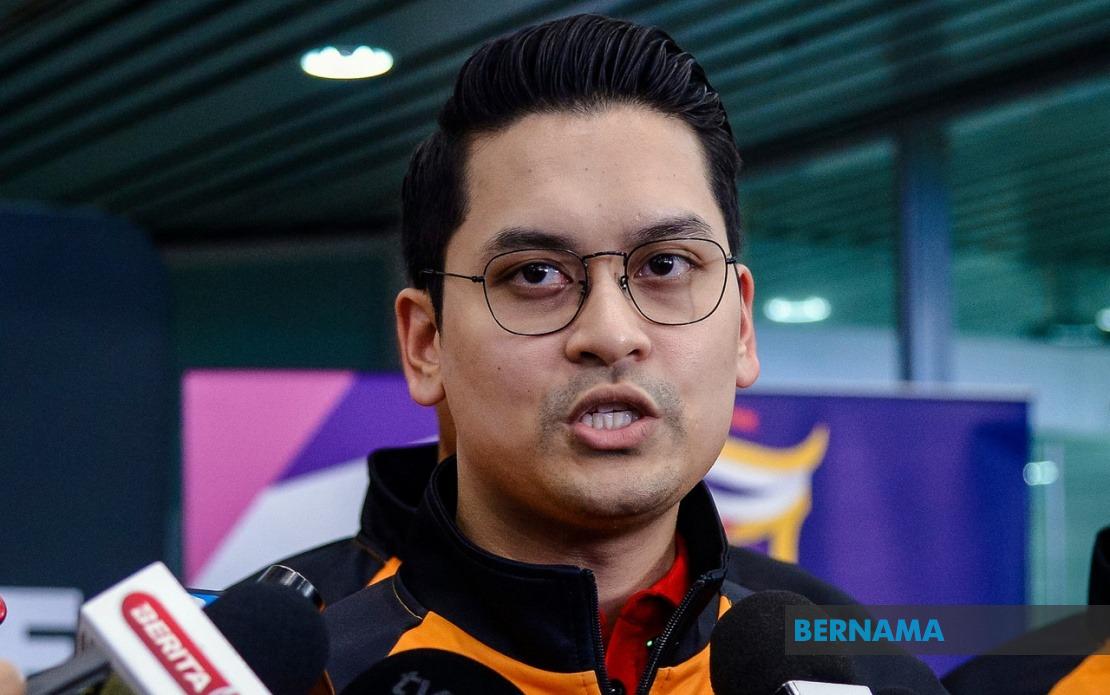
The Youth and Sports Ministry (KBS) has committed RM4.1 million towards advancing Malaysia's weightlifting programme in 2026, while remaining receptive to a supplementary RM1 million annual funding request from the Malaysia Weightlifting Federation (PABM). Minister Dr Mohammed Taufiq Johari announced the allocation shortly after receiving Malaysia's Commonwealth Games contingent at Kuala Lumpur International Airport, signalling the government's continued backing for a sport that has emerged as a medal-generating powerhouse for the nation.
The 2026 budget encompasses multiple development streams designed to nurture talent at different stages of their careers. Funds will support athlete preparation and coaching infrastructure, while also underwriting targeted programmes including Road to Gold (RTG), Podium, Pelapis, and grassroots initiatives. This multi-tiered approach reflects a strategic shift towards building sustainable pathways from community level through to elite competition, rather than relying solely on isolated pockets of success. The architecture suggests policymakers view weightlifting as a long-term investment requiring foundational support across all competitive tiers.
Dr Taufiq indicated that discussions regarding the additional RM1 million request are ongoing and not final. He emphasised that conversations with PABM president Datuk Ayub Rahmat and various weightlifting associations have already begun, though the ministry requires more detailed deliberation before committing to an increased allocation. A significant portion of the supplementary funding would address coaching remuneration and operational expenses, areas the minister acknowledged require careful examination within the broader sports funding landscape. The measured approach suggests the ministry intends to balance weightlifting's demonstrated potential against competing demands from other national sporting priorities.
Critically, Dr Taufiq framed weightlifting as a sport with genuine potential to deliver Malaysia's first Olympic gold medal, establishing a clear strategic rationale for preferential funding treatment. This positioning transforms the funding discussion from a purely administrative matter into one tied to Malaysia's broader Olympic aspirations. Given that weightlifting has historically underperformed at the Olympic Games relative to Southeast Asian competitors, the ministry's confidence appears linked to recent medal success and emerging athlete talent rather than historical precedent. This confidence carries implications for how Malaysia calibrates its sports development spending across disciplines.
The current athlete roster across development programmes provides insight into the sport's depth. Two weightlifters are enrolled in the prestigious Road to Gold programme, typically reserved for medal prospects at imminent major competitions. Eight athletes participate in the Podium programme, indicating mid-tier elite talent under intensive development. An additional two athletes occupy positions in the Pelapis programme, which serves as a bridge between grassroots and elite competition. This distribution across 12 athletes across three distinct competitive tiers suggests a functioning pipeline, though questions remain about conversion rates from lower programmes to international success.
Weightlifting's remarkable performance at the 2024 Commonwealth Games provides the immediate context driving this funding discussion. The sport delivered an outsized contribution to Malaysia's medal tally, capturing five gold, one silver, and one bronze medal. This achievement proved instrumental in helping the national contingent exceed its initial target, ultimately delivering eight gold, three silver, and five bronze medals overall. For context, weightlifting's seven medals represented approximately 41 percent of Malaysia's total medal count, a disproportionately high contribution from a single sport that typically receives less public attention than athletics, swimming, or badminton.
Beyond athletes, the minister pledged to examine the welfare conditions of state-level coaches working under National Sports Council (NSC) supervision. This commitment addresses a critical infrastructure gap that frequently constrains sporting development in Malaysia. Coaching salaries, career stability, and professional development opportunities in provincial locations lag considerably behind what athletes receive, creating bottlenecks in talent identification and nurturing. By prioritising coach welfare, the ministry acknowledges that sustainable medal production requires investment not only in athletes but in the human capital responsible for their technical and tactical development.
The stated urgency around coach welfare suggests the issue has reached critical proportions. Dr Taufiq's explicit commitment to implement measures "immediately" indicates awareness that further delays risk losing qualified coaching personnel to other sectors or overseas opportunities. This concern is particularly acute in weightlifting, where specialised technical knowledge remains concentrated among a limited cohort of experienced coaches. The loss of even one or two experienced coaches could significantly degrade the quality of technical instruction available to developing athletes, potentially explaining why the ministry views this as a matter requiring immediate attention rather than long-term planning.
From a regional perspective, Malaysia's weightlifting investment reflects broader Southeast Asian competition for Olympic medals. Thailand, Indonesia, and Vietnam have all increased sports funding in recent years, with weightlifting receiving particular attention in Thailand and Vietnam's development strategies. Malaysia's commitment signals determination not to cede competitive ground in a sport where relatively modest populations can achieve international success. The emphasis on finding Malaysia's first Olympic gold medal through weightlifting also reflects pragmatic assessment that this sport offers more realistic pathways to Olympic glory than some more crowded or expensive disciplines.
The funding landscape also raises questions about how the additional RM1 million would compare to investments in other sports. While the specific amounts allocated to other disciplines remain unstated, weightlifting's request for a 24 percent increase suggests either underfunding relative to other sports or recognition that achieving Olympic-level success requires escalating investment. The willingness to conduct "detailed discussions" rather than immediately approving the request indicates the ministry operates within constrained overall sports budgets and must make difficult prioritisation choices.
Implementation capacity represents another consideration. Moving from commitment to actual disbursement requires functional administrative machinery within both KBS and PABM. The ministry must establish clear funding disbursement schedules, performance metrics, and accountability mechanisms to ensure RM4.1 million delivers intended results. Similarly, the federation must demonstrate transparent financial management and realistic projections for medal outcomes tied to specific funding levels. Given Malaysia's historical challenges with sports governance transparency, success will partly depend on whether these structural safeguards function effectively.

