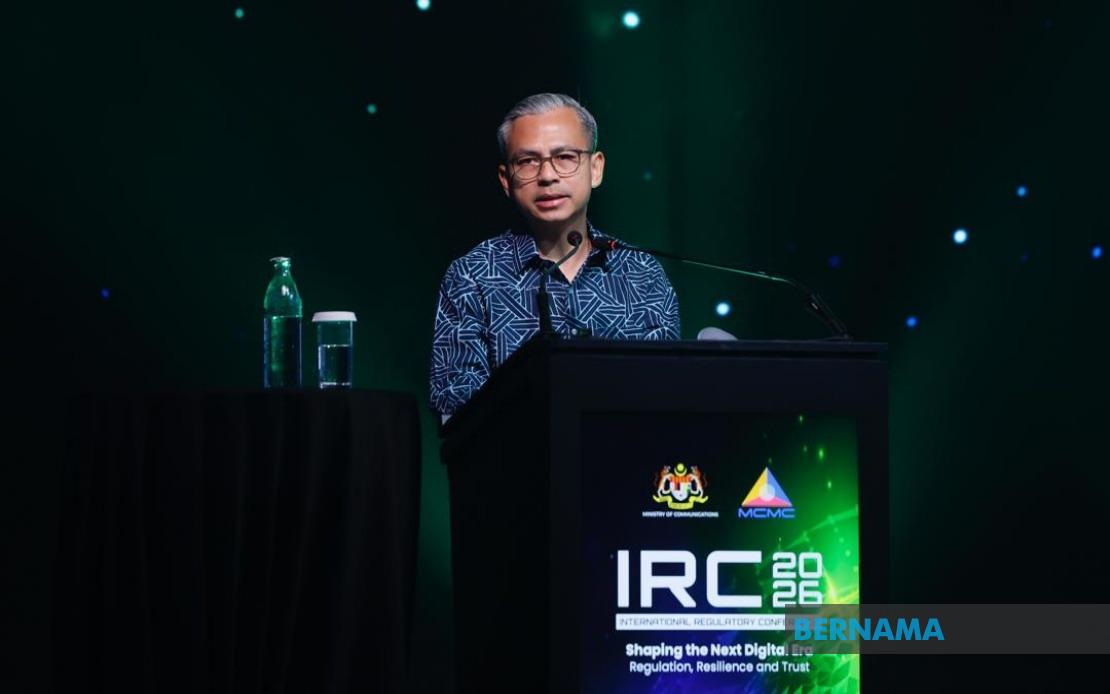
Malaysia is moving decisively to overhaul its digital governance architecture, recognising that trust has become the critical challenge as technology reshapes how citizens interact with information, platforms and essential services. Communications Minister Datuk Seri Fahmi Fadzil outlined the government's comprehensive strategy during the International Regulators Conference 2026 in Kuala Lumpur, emphasising that policymaking must evolve at the same pace as technological disruption to remain effective and credible.
The minister identified a fundamental mismatch between the speed of technological change and the legislative frameworks meant to govern it. This gap, he argued, has created vulnerabilities in how societies manage digital risks, from misinformation to data breaches. Malaysia's response encompasses multiple pillars spanning physical infrastructure, regulatory modernisation and accountability mechanisms designed to work in concert rather than isolation.
The National Digital Network Plan, or Jendela, represents the foundational layer of this strategy, creating the underlying connectivity infrastructure upon which safer digital services can be built. Running parallel to this are ambitious 5G deployment programmes and significant investments in submarine cable infrastructure, which position Malaysia not merely as a technology consumer but as a regional connectivity hub. These investments carry immediate practical benefits—faster broadband reaches underserved communities, supporting economic inclusion—but also serve a longer-term strategic purpose of reducing dependency on foreign digital infrastructure and enhancing national cybersecurity resilience.
The Online Safety Act 2025, or ONSA, signals a philosophical shift in how Malaysia approaches digital harms. Rather than enforcing reactive penalties after violations occur, the legislation emphasises prevention through platform accountability. This approach requires social media companies, content providers and digital services to implement robust safeguards protecting children and vulnerable populations before harmful material circulates widely. The framework reflects lessons learned from years of social media controversies across the region, where reactive regulation proved insufficient to contain the spread of harmful content or protect those most at risk.
Fahmi stressed that regulatory evolution must remain agile without sacrificing proportionality. Heavy-handed restrictions risk stifling innovation and driving businesses to more permissive jurisdictions, while insufficient oversight leaves citizens exposed. Malaysia's challenge, shared across Southeast Asia, involves finding that equilibrium. The minister noted that regulation must provide sufficient certainty for industry planning while remaining flexible enough to adapt as new technologies and threats emerge.
The IRC 2026 itself reflects Malaysia's ambitions to position itself as a thoughtful voice in global digital governance debates. Now in its third year, the conference originated from Malaysia's transition to a Dual Network 5G model, an approach that attracted international attention for its novel attempt to balance competition with infrastructure efficiency. The conference has since grown into a platform where regulators from diverse jurisdictions and legal traditions examine common challenges. This matters particularly for Malaysia and its neighbours, as many Southeast Asian nations face similar pressures—rapid digital adoption, growing cybersecurity threats, the need to protect marginalised populations from online exploitation, and the desire to foster homegrown tech industries.
The agenda for the two-day conference underscores the breadth of challenges confronting digital economies. Online safety, data governance and artificial intelligence dominate contemporary regulatory discussions globally, but Malaysia's inclusion of quantum communications and autonomous systems signals foresight about emerging technologies that will require governance frameworks within the next five to ten years. Quantum computing, for instance, threatens to render current encryption protocols obsolete, creating urgent implications for national security and financial systems. Building regulatory capacity now, before these technologies become mainstream, reflects strategic planning.
Fahmi's emphasis on international cooperation carries particular weight for a middle-income nation operating in a multipolar digital world. Malaysia cannot unilaterally solve digital challenges that transcend borders—cybercriminals operate across jurisdictions, data flows internationally, and platform policies determined in Silicon Valley or Beijing affect Malaysian users. By hosting the IRC and engaging with the International Telecommunication Union, Malaysia amplifies its voice in global standards-setting and gains early insight into regulatory approaches adopted elsewhere, identifying gaps in domestic law before they become acute problems.
The inclusion of Deputy Communications Minister Teo Nie Ching, MCMC leadership and senior ministry officials signals the government's commitment to treating digital governance as a cross-agency priority rather than a peripheral technical matter. This coordination is essential because effective digital policy requires simultaneous attention to competition policy, consumer protection, national security, intellectual property and public safety—domains that traditionally operate in separate bureaucratic silos.
For Malaysian businesses, these initiatives carry mixed implications. Companies operating in fintech, e-commerce, digital media and telecommunications will face more rigorous compliance requirements under ONSA and emerging data governance standards. However, businesses offering legitimate services gain the competitive advantage of operating in a more trustworthy ecosystem where consumer confidence translates to higher adoption rates. Startups in cybersecurity and safety technologies may find growing domestic demand as companies comply with new obligations.
The conference outcomes, to be shared with international bodies, could influence regulatory trajectories across Southeast Asia. Malaysia's peers—Thailand, Indonesia, Singapore and Vietnam—all grapple with similar tensions between enabling digital innovation and protecting citizens. If the IRC generates concrete policy templates or best-practice frameworks, these could catalyse more coherent regional approaches rather than a patchwork of conflicting national rules that complicate cross-border digital commerce and services.
Fahmi's framing of trust as the defining challenge of the next digital era reflects matured thinking about technology's role in society. Trust cannot be mandated by regulation alone; it emerges from genuine efforts to design systems that respect user rights, from transparent enforcement of rules, and from demonstrable accountability when harms occur. Malaysia's multi-dimensional approach—infrastructure investment, preventive regulation, international dialogue and platform accountability—acknowledges this complexity and suggests an administration grappling seriously with how to steward digital transformation in ways that benefit citizens rather than merely powerful interests.

