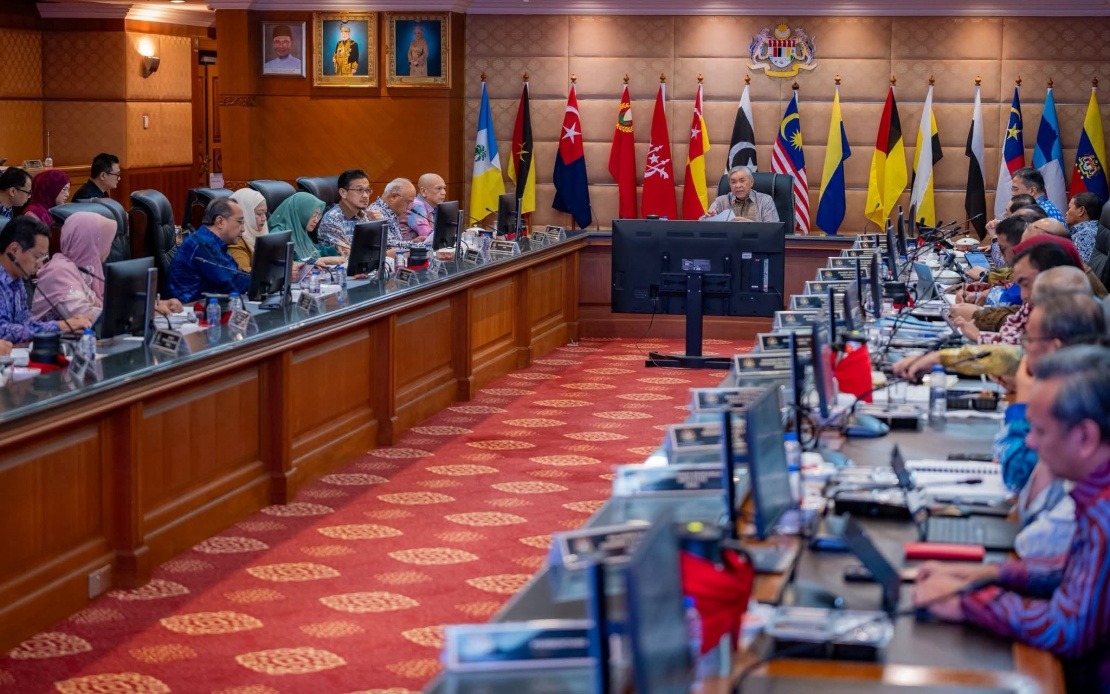
Deputy Prime Minister Datuk Seri Dr Ahmad Zahid Hamidi has steered the National Cost of Living Action Council through deliberations on domestic rice policy that signal a shift toward more nuanced economic management. At the council's 18th executive committee meeting in Putrajaya, policymakers examined a detailed roadmap for local white rice production and distribution, reflecting growing recognition that cost-of-living pressures cannot be adequately addressed through retail price controls alone.
The roadmap under examination represents a departure from blunt policy instruments. Rather than imposing price ceilings that might squeeze farmers or producers, the framework contemplates a transitional period in which targeted subsidies would shield economically disadvantaged households from sudden price adjustments. This approach acknowledges that abrupt policy shifts carry real costs for agricultural workers and smallholders who depend on rice production for survival. The inclusion of a "soft-landing" transition mechanism suggests policymakers are grappling with the fundamental tension between consumer affordability and producer viability—a challenge that has vexed Malaysian agricultural policy for decades.
The government's broader cost-of-living strategy extends well beyond rice to encompass interconnected challenges across food security, healthcare, and education. Ahmad Zahid emphasised that addressing living expenses requires simultaneous attention to production costs, logistics infrastructure, and access to nutritious food. This integrated perspective reflects understanding that household budgets are pressured not only by supermarket prices but by underlying structural costs that ripple through supply chains. For Malaysian consumers already grappling with rising expenditures across multiple categories, such recognition offers some promise that solutions will address root causes rather than symptoms.
A particularly significant proposal emerging from the meeting involves expanding the Sumbangan Asas Rahmah assistance programme to encompass fresh produce beyond rice. The potential inclusion of fruits, vegetables, and fresh protein within SARA represents an intentional pivot toward improving dietary quality for lower-income households rather than merely increasing their purchasing power. This distinction carries meaningful implications for public health outcomes, particularly in addressing malnutrition and diet-related diseases that disproportionately affect economically disadvantaged communities. Such a move would align Malaysia's welfare approach more closely with evidence-based nutrition policy.
The council's acknowledgement of external economic pressures demonstrates awareness of forces beyond direct government control. Geopolitical tensions in West Asia, global supply-chain volatility, and international regulatory compliance costs all contribute to agricultural production expenses in Malaysia. These factors, operating at scales and speeds beyond any single nation's immediate influence, constrain the options available to policymakers. By explicitly recognising such constraints, the government signals realistic expectations about what targeted interventions can achieve and the necessity of continuous international monitoring to anticipate inflationary shocks.
Efforts to refine assistance mechanisms for farmers and fishermen reflect acknowledgement that agricultural producers deserve support tailored to sector-specific challenges rather than generic relief measures. Malaysian agriculture has faced persistent headwinds from labour shortages, climate variability, and uneven competition with imported produce. Targeted assistance programmes, if properly designed and administered, could strengthen domestic agricultural competitiveness while maintaining farmer incomes. However, the success of such mechanisms depends heavily on implementation quality and protection against rent-seeking behaviour.
On the healthcare front, the government has committed to piloting eleven distinct initiatives under a RESET strategy intended to moderate private healthcare cost escalation. For Malaysia, where many citizens rely partly on private medical providers despite having public healthcare access, this initiative carries direct household budget implications. Private healthcare costs have grown substantially, creating inequitable access where wealthier Malaysians enjoy superior treatment options while lower-income households face constrained choices. The strategic focus on keeping private healthcare affordable while expanding public-sector capacity represents a recognition that healthcare affordability affects both immediate household welfare and long-term economic productivity.
Education funding mechanisms reveal substantial government commitment to maintaining tertiary education accessibility. Last year's distribution of assistance to 62,937 Form Six and university students, totalling RM589.6 million across thirteen distinct aid schemes, demonstrates the financial magnitude of this commitment. Yet the existence of multiple overlapping schemes also hints at potential inefficiencies in aid delivery. For Malaysian families, education costs represent a critical determinant of intergenerational mobility, making affordable higher education essential for broader development objectives.
The Cost of Living Action Plan 2030 framework under which these initiatives operate represents an attempt at systematic, multi-sectoral policy coordination rather than ad-hoc responses to individual pressure points. This longer-term perspective suggests policymakers recognise that cost-of-living challenges require sustained attention and coordinated action across government agencies. For Malaysian citizens and businesses, such strategic planning offers greater predictability than year-to-year policy shifts, though successful implementation depends on bureaucratic capacity and political commitment across multiple administrations.
The rice policy deliberations specifically carry symbolic importance for Malaysian agricultural politics. Rice represents both a staple food security concern and a sensitive political issue affecting rural constituencies heavily dependent on rice farming. Balancing consumer affordability with farmer viability in rice policy serves as a crucial test case for whether the government can manage comparable tensions in other agricultural sectors. The approach taken here may signal precedents for pork, palm oil, and other commodities where domestic production, consumer welfare, and export competitiveness intersect.
Regional dimensions merit consideration as Malaysia's cost-of-living challenges resonate across Southeast Asia. Indonesia, the Philippines, Thailand, and Vietnam all grapple with comparable pressures on household budgets and agricultural sustainability. Malaysian policy innovations, particularly regarding subsidy design and transitional frameworks, may offer instructive lessons for neighbours facing similar dilemmas. Conversely, regional dynamics—whether in agricultural competition or supply-chain disruptions—may constrain the effectiveness of purely domestic interventions.
The council's recognition that cost-of-living solutions must extend beyond single-sector interventions reflects maturing policy sophistication. Food affordability depends not only on producer economics but on healthcare access that keeps households healthy enough to work, education costs that don't force families into debt, and logistics infrastructure that minimises distribution markups. This systems-level thinking, if translated into coordinated implementation, offers prospect for more durable improvements in household financial resilience than traditional price-control mechanisms have delivered. The coming months will reveal whether such strategic vision translates into effective programmes that measurably improve living standards for vulnerable Malaysians.

