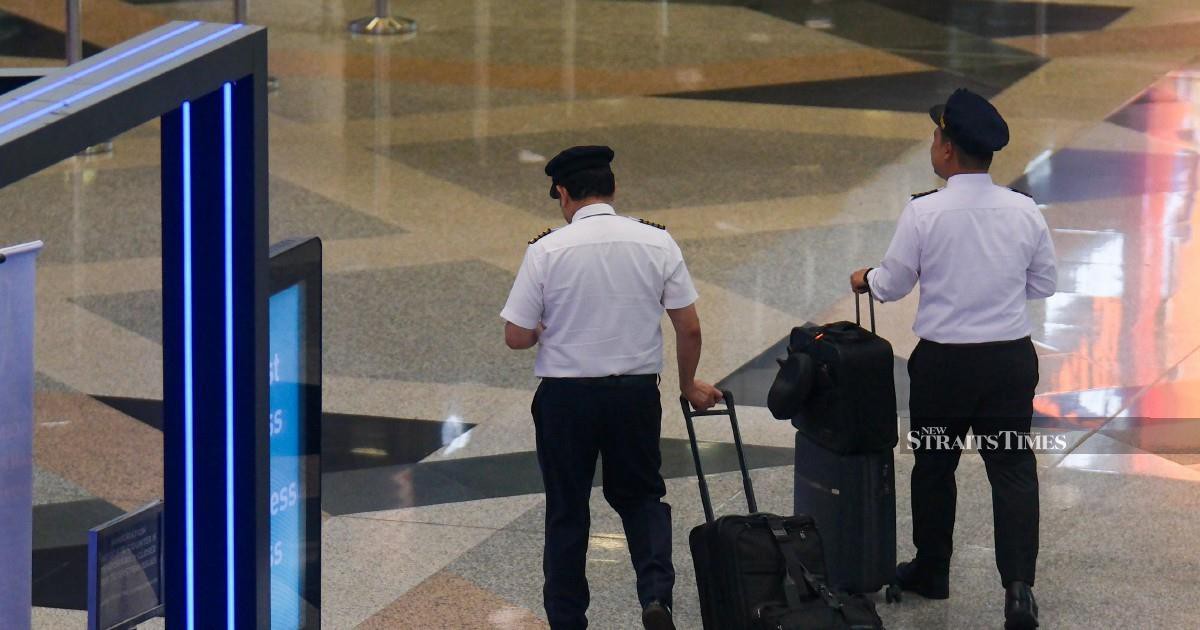
The arrest of a pilot discovered carrying drugs in Indonesia has sparked renewed scrutiny of Malaysia's premier aviation hub, with Malaysia Corruption Watch calling for authorities to pivot their investigative approach toward addressing fundamental security vulnerabilities at Kuala Lumpur International Airport rather than engaging in bureaucratic finger-pointing over which agency bears responsibility.
The intervention by MCW represents a strategic reframing of the inquiry. Rather than allowing investigations to devolve into disputes between government departments—a pattern that frequently characterises Malaysian institutional responses to security breaches—the watchdog is pressing authorities to adopt a systems-wide assessment of how contraband managed to bypass detection mechanisms designed to prevent exactly such incidents. This perspective aligns with international best practices in security auditing, where identifying root causes and structural weaknesses takes precedence over determining culpability.
KLIA, which processes millions of passengers annually and serves as Southeast Asia's fifth-busiest airport, operates under multiple layers of security oversight. Baggage screening, personnel vetting, airside access controls, and cargo handling procedures all fall under different departmental jurisdictions. When breaches occur, the natural institutional response involves each agency defending its operational domain, yet MCW's intervention suggests that such defensive posturing obscures the more pressing requirement to map vulnerabilities across the entire security ecosystem.
The catalyst for this examination—a pilot apprehended with drugs—raises particular concerns because aircrew members occupy a uniquely privileged position within airport operations. They enjoy legitimate access to restricted areas and less stringent screening protocols than ordinary passengers, based on the assumption that their professional standing and background checks provide sufficient security assurance. If this assumption has proven faulty, the implications extend beyond one individual to encompass how personnel credentialing and ongoing monitoring systems function throughout the aviation sector.
Malaysia's aviation regulatory framework has undergone substantial modernisation in recent years, yet security remains a persistent challenge across Southeast Asia's rapidly expanding air transport networks. KLIA's facilities represent the technological frontier for the region, incorporating biometric systems, advanced scanning equipment, and integrated surveillance infrastructure. The discovery that contraband reached an aircraft suggests either that these systems are inadequately calibrated, insufficiently monitored, or that procedures designed to complement technological safeguards have degraded through inconsistent implementation.
MCW's emphasis on systemic vulnerabilities rather than institutional accountability serves another important function: it depoliticises the investigation. When focus narrows to identifying which agency failed, investigations frequently become entangled with broader questions of political responsibility and ministerial accountability, potentially compromising the integrity of fact-finding. By directing attention toward structural assessment, MCW effectively insulates the inquiry from pressures to shield particular officials or institutions at the expense of comprehensive analysis.
For Malaysian travellers and businesses dependent on aviation infrastructure, the security architecture at KLIA carries significant implications. International investors evaluating Malaysia as a logistics hub make assessments based partly on the reliability and integrity of border security systems. Recurring breaches, particularly those involving aviation personnel, can erode confidence in Malaysia's ability to manage high-risk commodities and enforce regulatory compliance. Beyond reputational considerations, deficient security protocols create operational risks—unauthorised access to aircraft, compromised cargo integrity, and potential safety hazards directly threaten the travelling public.
The regional dimension merits consideration as well. KLIA functions as a major transit point for intra-Asian travel and cargo movement. Security lapses at Malaysia's gateway can facilitate smuggling networks that extend across the broader ASEAN region, undermining collective efforts to combat transnational crime. Southeast Asian aviation authorities have increasingly emphasised intelligence-sharing and harmonised security standards, making individual airport failures a concern for the entire regional aviation community.
Investigators confronting MCW's recommendations face a choice between a narrowly-scoped inquiry targeting institutional blame and a comprehensive review demanding substantive changes to security protocols. The former approach satisfies the need for immediate accountability and often provides political closure. The latter requires sustained commitment, potentially expensive technological upgrades, revised operational procedures, and sustained monitoring—investments that demand multi-year commitment and cross-departmental cooperation.
Historically, Malaysian institutional responses to security breaches have favoured the former approach. Post-incident investigations typically conclude with administrative reassignments or minor procedural adjustments, allowing the underlying vulnerabilities to persist until subsequent failures prompt renewed cycles of investigation. MCW's intervention suggests growing impatience with this pattern among civil society observers who recognise that cosmetic reforms generate only illusory security improvements.
The pilot case represents an opportunity to establish a different precedent. Should authorities embrace MCW's framework and conduct a genuine security audit addressing structural weaknesses, KLIA could emerge as a regional model for how airports systematically identify and remediate vulnerabilities. Conversely, should the investigation revert to institutional blame-shifting, the episode will likely join a lengthening catalogue of missed opportunities to strengthen Malaysia's aviation security infrastructure. The outcome will reveal whether policymakers genuinely prioritise functional security or remain content with the appearance of accountability.

