The 2026 National Day and Malaysia Day celebrations are set to capture public imagination through an ambitious schedule of special programmes, organisers revealed in Ipoh this week. The Ministry of Communications has invested considerable effort into crafting festivities that extend beyond the traditional ceremonial format, aiming to deepen the nation's collective sense of unity and pride. Datuk Aminurrahim Mohamed, Senior Undersecretary at the Communications Ministry and working secretary of the HKHM 2026 Main Committee, outlined the vision during an inspection of preparations at Dewan Sri Perdana ahead of tomorrow's official launch event.
Among the flagship initiatives announced are two major countdown programmes: Kembara Bahasa HKHM 2026 and RIUH Merdeka. These initiatives represent a deliberate shift towards making National Month observance more participatory and engaging for diverse segments of the population. Kembara Bahasa, in particular, suggests an effort to weave linguistic identity and cultural education into the patriotic narrative, recognising Malaysia's multicultural landscape where language serves as a bridge between communities. The RIUH Merdeka programme, meanwhile, appears designed to inject energy and celebration into the run-up to the main festivities, transforming what might otherwise be a passive waiting period into an active engagement opportunity.
Beyond these marquee attractions, organisers are planning additional programmes aimed at rekindling the spirit of patriotism and encouraging broader participation across Malaysian society. The Communications Ministry has chosen to maintain an element of surprise, deliberately withholding full details to build anticipation and create what officials term a "wow factor" for the public. This strategic approach reflects an understanding that sustained interest requires pacing and revelation rather than immediate disclosure of all elements. The ministry is also continuing the Qur'an Hour programme, indicating an intention to encompass spiritual and religious dimensions within the secular framework of national celebrations.
The official launch ceremony, scheduled for tomorrow at Dewan Sri Perdana at the Sultan Azlan Shah Institute for Health Training in Tanjung Rambutan, will set the tone for celebrations across the nation. Prime Minister Datuk Seri Anwar Ibrahim will officiate the event, underscoring the government's commitment to positioning these celebrations as a cornerstone of national cohesion efforts. The ceremony programme includes the Patriot Merdeka Run, a morning participation event that invites ordinary Malaysians to engage physically with the patriotic message, followed by the unveiling of the HKHM 2026 theme song performed by a prominent local male artist before approximately 3,000 invited guests.
Broadcast coverage will extend the reach of tomorrow's ceremony well beyond Ipoh's immediate vicinity, with Radio Televisyen Malaysia, the Malaysian National News Agency, and official Facebook platforms of the Communications Ministry and Information Department providing live streaming. This multimedia approach reflects recognition that modern patriotic engagement must accommodate diverse viewing habits and access points. The emphasis on digital broadcast ensures rural and urban audiences alike can participate in and witness the launch ceremony regardless of geographical proximity, democratising access to what would otherwise be an exclusive in-person event.
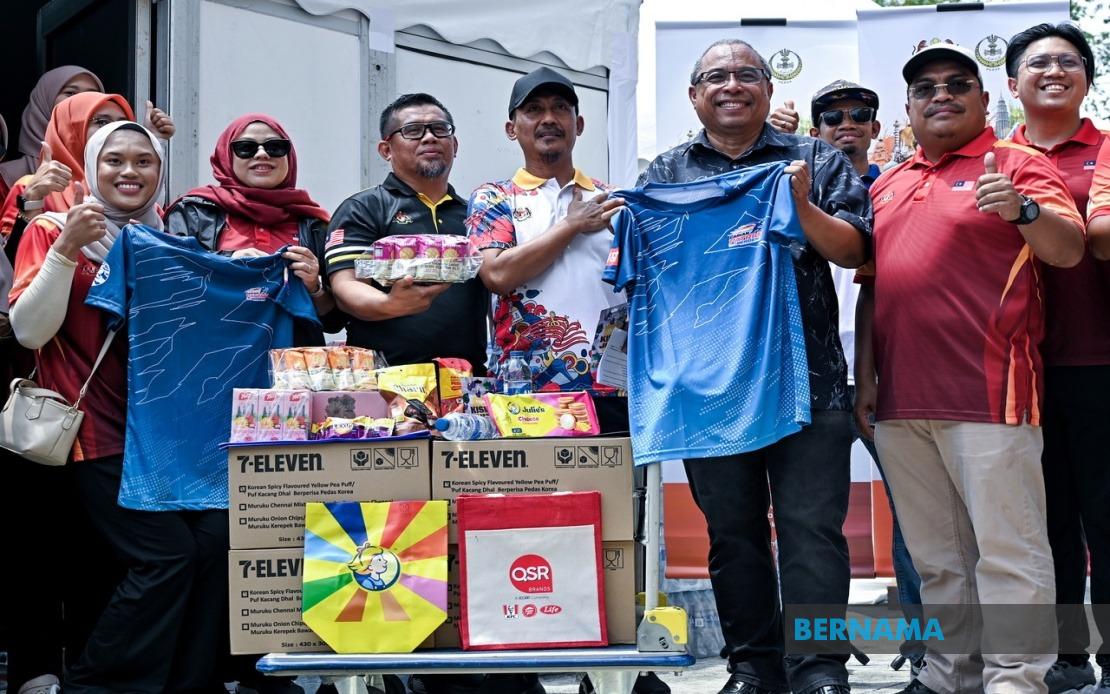
Corporate sector participation has emerged as a crucial enabler of the celebrations' scope and grandeur. Fifteen companies have already committed as sponsors for the Ipoh leg of festivities alone, including logistics firm J&T, convenience chain 7-Eleven, specialty coffee retailer ZUS Coffee, and QSR Brands. This private sector backing demonstrates business recognition that national celebrations serve broader social cohesion purposes beyond ceremonial obligation. The sponsorship commitment has reportedly matched or exceeded previous years' levels at this stage of planning, suggesting sustained corporate confidence in the value proposition of aligning with national patriotic messaging.
Among the public appeals issued by the Communications Ministry is an encouragement for all Malaysians to begin displaying the Jalur Gemilang flag at their homes and establishments as the National Month commences. Officials have similarly urged citizens to incorporate patriotic music into their daily routines during this period. These seemingly modest suggestions carry significance beyond surface appearance, functioning as low-friction entry points for patriotic participation that do not require formal registration, special skills, or substantial financial outlay. By normalising such visible expressions of national pride, the ministry appears intent on shifting patriotic sentiment from occasional ceremonial performance to ambient cultural atmosphere.
Among the ministry's strategic messaging is an invocation of spiritual dimensions, with officials urging prayer for the nation's continued peace and prosperity. This framing integrates religious sensibility into secular nationalism, acknowledging Malaysia's diverse faith traditions while positioning national wellbeing as a shared spiritual concern transcending denominational boundaries. Such language recognises that for many Malaysians, patriotic commitment intertwines with religious conviction, making spiritual appeals an authentic component of mobilisation rather than an addition imposed from external frameworks.
The 2026 celebrations represent a deliberate recalibration of how Malaysia approaches its most significant national commemorative moments. Rather than relying solely on top-down ceremonial structures, the Communications Ministry has engineered a calendar of activities spanning the entire month, corporate sector partnerships, digital engagement platforms, and invitation to citizen participation across multiple modalities. This diversified approach acknowledges that contemporary audiences, particularly younger Malaysians, engage with national narratives through varied channels and require substantive content beyond traditional flag-waving sentiment. The success of these 2026 celebrations will likely establish templates for how Malaysia approaches patriotic mobilisation in subsequent years, making the forthcoming months a significant test of whether expanded and modernised formats can genuinely deepen national cohesion or merely proliferate ceremonial activity.

