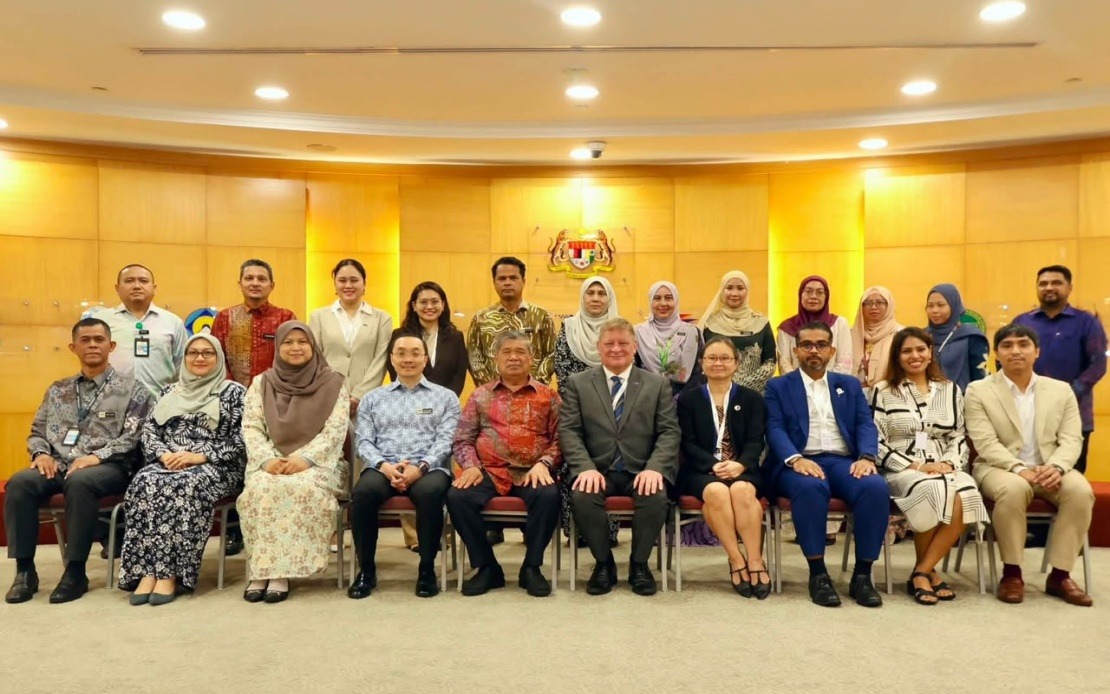
Malaysia is positioning itself as a strategic hub for agricultural innovation and food security collaboration with the European Union, following high-level discussions between Agriculture Minister Datuk Seri Mohamad Sabu and EU-ASEAN Business Council executive director Chris Humphrey at Wisma Tani in Putrajaya. The engagement underscores the nation's commitment to leveraging European expertise and investment to overhaul its farming systems amid mounting global pressures on food production and trade stability.
The dialogue centred on implementing Malaysia's National Agro-Food Policy 2.0, a comprehensive roadmap designed to enhance domestic food resilience while modernizing production methods. A critical component involves accelerating the integration of artificial intelligence and advanced agricultural technologies into farming operations across the country. This reflects growing recognition among policymakers that digital tools and data-driven approaches are essential for optimizing crop yields, reducing waste, and enabling smallholder farmers to compete in increasingly demanding international markets.
Beyond crop production, both sides examined opportunities to strengthen Malaysia's dairy sector through improved supply chain coordination and efficiency. The local dairy industry, which faces competition from regional and international producers, stands to benefit significantly from European know-how in animal husbandry, feed management, and product quality enhancement. Equally important were discussions on elevating animal health standards and biosecurity protocols—measures that protect livestock from disease while ensuring products meet stringent global safety requirements.
Official statements emphasize that the European Union represents one of Malaysia's most valuable technological and commercial partners in the broader transformation of its agri-food ecosystem. This partnership encompasses not merely the exchange of technology but also capacity-building initiatives that would equip Malaysian farmers and breeding specialists with skills in meeting international standards. Such collaboration is viewed as indispensable for addressing interconnected challenges: global food security threats, climate change impacts on agricultural productivity, and supply chain disruptions that have become routine since the pandemic.
A significant dimension of the talks involved the Malaysia-European Union Free Trade Agreement negotiations, with both parties reaffirming their commitment to advancing these discussions. A comprehensive trade pact would remove tariff barriers and regulatory obstacles, facilitating Malaysian agricultural exports to EU markets while enabling European technology firms and agribusiness companies to establish stronger footholds in Malaysia and across Southeast Asia. For Malaysian farmers and food producers, such an agreement could open substantial revenue opportunities in one of the world's most affluent consumer markets.
Mohamad emphasized the need for European corporations to provide sustained backing to Malaysia and the wider ASEAN region in building local expertise. Specific priorities include supporting farmers' compliance with demanding international quality standards and Sanitary and Phytosanitary measures—the regulatory frameworks that govern food safety and prevent disease transmission. EU businesses are also positioned to facilitate market access and trade facilitation, enabling Malaysian producers to identify new export destinations and simplify customs and logistics procedures.
The minister's vision extends beyond bilateral engagement toward a broader ecosystem of strategic partnerships between European enterprises and Malaysian counterparts. Such collaboration would concentrate particularly on agricultural technology deployment, with the dual aim of modernizing the nation's supply chains and guaranteeing consistent food availability across all population segments. This inclusive approach acknowledges that food security is not merely an economic concern but a social imperative affecting public health and political stability.
A tangible outcome of the meeting was an invitation to the EU-ABC delegation to participate in the Agriculture, Horticulture and Agro-Tourism Exhibition 2026, scheduled for August 28 to September 6 at the Malaysia Agricultural Expo Park in Serdang, Selangor. The biennial MAHA event serves as a major platform where overseas companies, policymakers, and farming organizations converge to showcase innovations, forge partnerships, and identify investment opportunities. European participation would amplify the exhibition's international profile while demonstrating Malaysia's openness to global collaboration in the agricultural sector.
For Southeast Asia more broadly, Malaysia's proactive engagement with European agricultural partners carries significant implications. As climate change and population growth intensify pressures on regional food systems, the knowledge transfer and technology adoption catalysed by such partnerships could establish models that other ASEAN economies might emulate. Furthermore, the emphasis on sustainable and resilient farming practices aligns with international commitments to environmental stewardship and climate mitigation.
The discussions also highlight Malaysia's strategic calculation that enhancing food self-sufficiency and agricultural productivity requires external partnerships rather than isolation. While the nation has invested substantially in domestic agricultural research and extension services, European expertise in high-tech farming, supply chain management, and quality assurance remains unmatched. By opening channels to this knowledge base, Malaysia seeks to compress the development timeline for modernizing its agri-food sector while reducing the capital and research burdens on domestic institutions.
Looking forward, the success of these initiatives will depend on translating diplomatic goodwill into concrete investments and knowledge-sharing arrangements. European firms must find compelling business cases for committing resources to Malaysian agriculture, while Malaysian farmers and enterprises must demonstrate the commitment and capacity to absorb new technologies effectively. Government incentives, regulatory clarity, and institutional support will prove essential to bridging the gap between aspirations and implementation.

