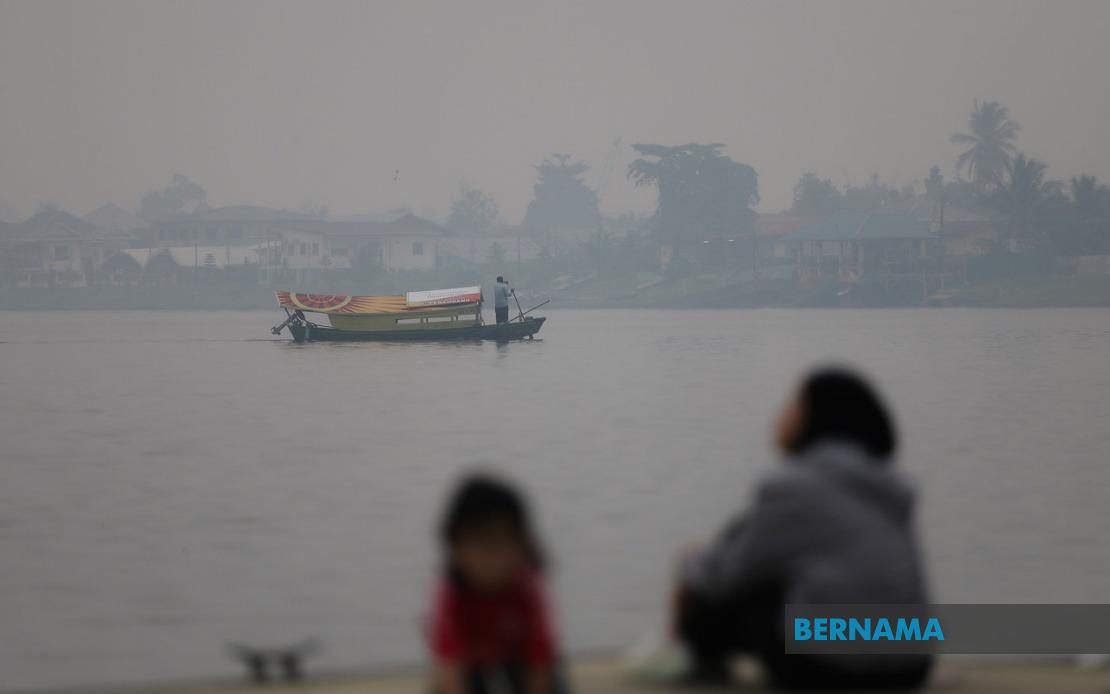
The Malaysian government has activated cloud seeding operations across multiple states to combat the dual challenges of severe haze and depleting water supplies, marking an escalation in environmental intervention strategies. Deputy Prime Minister Datuk Seri Dr Ahmad Zahid Hamidi announced that the initiative focuses on areas experiencing hazardous air quality and those facing acute water scarcity, reflecting growing concerns about the convergence of these two critical issues during the hot weather season.
The operations are being orchestrated through a coordinated effort involving the Malaysian Meteorological Department and the Royal Malaysian Air Force, demonstrating the scale of the response required to address the deteriorating conditions. Dr Ahmad Zahid emphasised that the measure represents a proactive approach to prevent potential disruptions to water supply infrastructure, which could have cascading effects on domestic consumption, industrial operations, and agricultural activities across the affected regions.
Sarawak has emerged as the most severely impacted state, with three monitoring stations recording hazardous air quality levels that demand immediate intervention. The Serian Police headquarters station registered an Air Pollutant Index reading of 412, a hazardous classification that typically warrants public health warnings and restrictions on outdoor activities. Samarahan followed closely with a reading of 332, while Kuching, the state capital, recorded 304. Sri Aman recorded a very unhealthy reading of 228, indicating that the haze situation extends across multiple population centres in the state.
Cloud seeding, a weather modification technique that involves dispersing substances into clouds to encourage precipitation, has become an increasingly important tool in Malaysia's environmental management arsenal. The process requires precise coordination between meteorological experts and air force personnel, as Dr Ahmad Zahid noted that successful operations depend not merely on the presence of clouds but on careful monitoring of their movement patterns and trajectories. The government's willingness to deploy this technology underscores the severity of the current situation and the need for immediate relief.
The sequencing of cloud seeding operations reveals the government's strategic prioritisation. Immediate operations were undertaken in Putrajaya on the announcement date, demonstrating the urgency of addressing the capital's environmental situation. Subsequent phases will target Sarawak, Kedah, and Perlis between September 3 and 5, reflecting a structured approach to address the worst-affected areas while considering weather patterns and operational feasibility across the peninsula's diverse geography.
The declining water levels at reservoirs present a distinct but interconnected challenge to Malaysia's infrastructure resilience. The relationship between haze events and water availability is complex yet critical—reduced sunlight penetration during haze episodes affects evaporation rates and plant transpiration, while simultaneously raising ambient temperatures, increasing demand for water in both domestic and agricultural sectors. The government's integrated approach addresses both symptoms and underlying environmental stressors.
For Malaysian readers and the broader Southeast Asian context, the deployment of cloud seeding represents an acknowledgment that traditional air quality and water management strategies alone are insufficient during extreme weather events. The frequency and intensity of such episodes have prompted governments across the region to explore technological interventions, raising important questions about effectiveness, environmental side effects, and the sustainability of relying on such measures rather than addressing root causes of transboundary pollution.
The situation in Sarawak carries particular significance given its geographic position and economic importance. The state's reliance on hydroelectric power generation means that falling dam levels directly threaten energy security, while simultaneously the haze undermines public health and economic productivity in sectors ranging from tourism to agriculture. The concentration of hazardous readings in specific municipalities suggests localised pollution sources that warrant investigation alongside regional haze patterns.
The technical complexities of cloud seeding operations deserve closer examination for readers seeking to understand the government's response. The technology's success depends on atmospheric conditions including moisture content, temperature profiles, and wind patterns—variables that meteorologists must assess continuously. The coordination with the Royal Malaysian Air Force involves deploying aircraft equipped to disperse cloud-seeding agents at precise altitudes and locations, a logistically demanding operation that requires significant resources and expertise.
Policymakers across Southeast Asia are increasingly aware that haze events transcend national boundaries, with transboundary pollution from agricultural burning and industrial activities in neighbouring regions contributing significantly to air quality degradation. Malaysia's cloud seeding initiative, while addressing immediate symptoms, sits within a broader regional challenge that demands diplomatic engagement and coordinated environmental governance. The initiative's effectiveness will provide valuable data for other nations confronting similar environmental pressures.
The government's intervention also reflects evolving public expectations regarding state responsibility for environmental management. Citizens in affected areas experiencing hazardous air quality and water supply concerns expect visible governmental action, making cloud seeding operations a politically significant demonstration of responsiveness, even as scientists continue debating the technique's efficacy and long-term implications.
Looking forward, the success of these cloud seeding operations will likely influence future Malaysian environmental policy. If the measures prove effective in improving air quality and augmenting water supplies, they may become institutionalised as standard responses to seasonal haze events. Conversely, if results disappoint, the experience may catalyse greater investment in pollution prevention at source and regional cooperation mechanisms aimed at reducing transboundary emissions that precipitate such crises.

