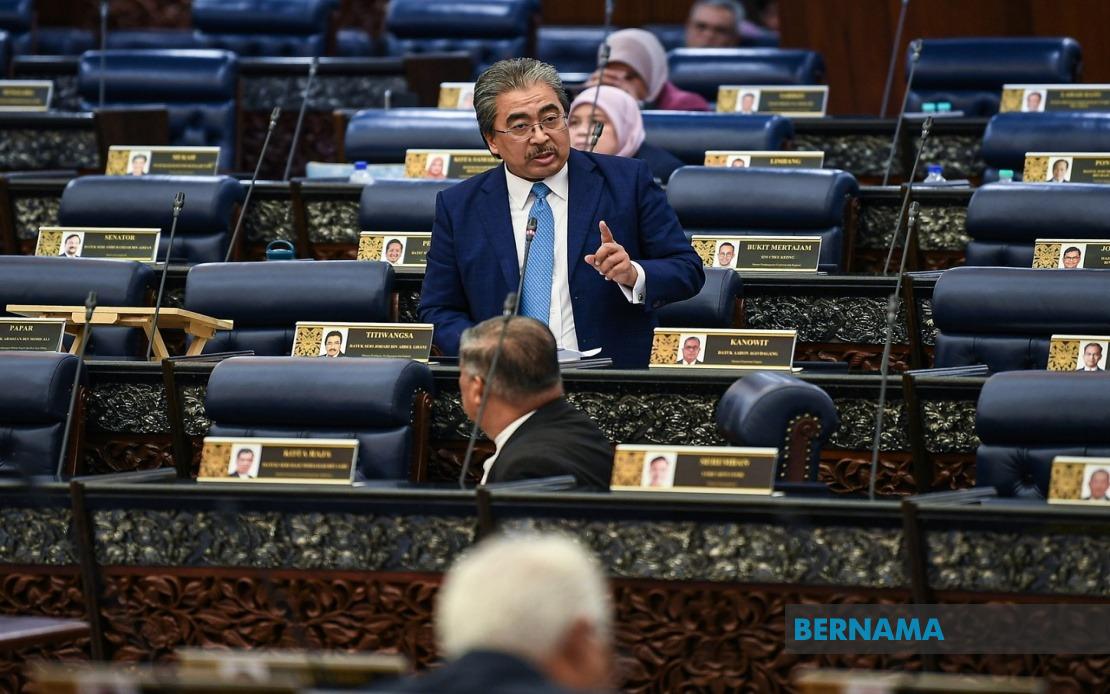
Malaysia is moving to establish a comprehensive system for preventing the import of goods manufactured using forced labour, according to Investment, Trade and Industry Minister Datuk Seri Johari Abdul Ghani. The initiative represents a significant shift in the country's trade compliance posture, driven partly by mounting international pressure and specific threats from Washington. This regulatory gap has become a critical vulnerability for Malaysia's trading relationships, particularly with the United States, which has begun imposing consequences on nations deemed non-compliant with labour standards.
The government has formally constituted an Inter-Agency Task Force on Forced Labour, with Johari's ministry providing leadership and coordination across multiple governmental bodies. The collaborative structure reflects the complexity of implementing such controls, requiring expertise spanning trade regulation, law enforcement, customs operations, and human resources policy. The Ministry of Finance, Ministry of Foreign Affairs, Ministry of Home Affairs, Ministry of Human Resources, and Ministry of Transport all contribute to the task force's work. Beyond ministries, participating entities include the Attorney-General's Chambers, Royal Malaysian Customs Department, Malaysian Border Control and Protection Agency, Royal Malaysian Police, Malaysian Investment Development Authority, and the Malaysian External Trade Development Corporation, underlining the whole-of-government approach necessary for effective enforcement.
Currently, Malaysia lacks specific legal frameworks or operational mechanisms to prevent the entry of products manufactured through forced labour. This absence leaves the country technically non-compliant with evolving international norms and creates exposure to trade sanctions. The absence of such safeguards became particularly evident when the United States launched investigations into 60 countries' labour import compliance in June 2026. Malaysia found itself among 54 nations identified as lacking dedicated legal restrictions against forced-labour goods, a classification that carries considerable diplomatic and economic implications for a country heavily reliant on export-oriented manufacturing.
The timing of Malaysia's initiative carries urgent significance. The United States has signalled its intent to impose an indicative tariff of 10 per cent on Malaysian imports following July 24, specifically targeting the forced labour compliance gap. This deadline creates a compressed timeline for Malaysia to demonstrate substantive progress toward establishing and operationalising the import-blocking mechanism. The tariff threat operates within the broader context of the Agreement on Reciprocal Trade between Malaysia and the United States, a framework designed to manage bilateral commercial relationships but also to enforce labour and environmental standards increasingly central to modern trade agreements.
Malaysia's vulnerability on forced labour issues intersects with broader US Section 301 investigations examining trading practices. While the forced labour investigation is described as nearly complete, a separate probe into market access concerns remains ongoing. The dual investigation structure suggests the United States is comprehensively reassessing its commercial relationship with Malaysia across multiple dimensions, with labour standards representing just one significant pillar. For Malaysian policymakers, addressing the forced labour component becomes essential to avoiding cascading trade restrictions that could encompass additional tariffs or market access limitations.
The economic implications extend beyond the threatened 10 per cent tariff. Such measures could prompt other trading partners—particularly European nations increasingly focused on supply chain transparency and labour compliance—to impose similar requirements on Malaysian goods. The European Union's evolving Corporate Sustainability Due Diligence Directive and other regulatory initiatives signal that forced labour scrutiny will intensify across major markets. Malaysia's early action on import controls positions the country more defensively against a potential wave of compliance demands, though the effectiveness of any mechanism will depend entirely on rigorous enforcement and genuine commitment to preventing problematic goods from entering local supply chains.
The task force faces complex technical and operational challenges in designing workable controls. Identifying goods produced with forced labour requires sophisticated supply chain tracing capabilities, intelligence gathering, and coordination with source countries often reluctant to acknowledge labour violations. Malaysia must develop protocols for inspecting shipments, verifying supplier credentials, and maintaining documentation standards that satisfy both domestic legal requirements and international scrutiny. The involvement of customs authorities and border agencies indicates recognition that physical checkpoint inspections will form part of the verification system, though technological solutions and third-party certification systems may provide complementary approaches.
The mechanism's development also raises questions about Malaysia's own domestic labour practices. While the task force targets imports, international observers will inevitably scrutinise whether Malaysia simultaneously strengthens protections for workers within its own manufacturing and agricultural sectors. The country's historical reliance on migrant worker populations in labour-intensive industries means that credibility on forced labour issues requires parallel domestic reforms alongside import controls. Any inconsistency between stringent import restrictions and lenient domestic enforcement would undermine Malaysia's position internationally and invite accusations of selective application motivated purely by trade considerations rather than genuine labour rights commitments.
Regional implications merit attention as Malaysia navigates this transition. Other Southeast Asian exporters may face similar US investigations and tariff threats, potentially driving coordinated or competitive responses across the region. Some neighbours might seek to leverage stricter labour compliance as a competitive advantage, while others could struggle with the technical and institutional capacity required for rigorous enforcement. Malaysia's approach may establish a template or serve as a cautionary example depending on implementation success, influencing how the region collectively responds to advanced economy pressure on labour standards.
The business community impact remains uncertain pending mechanism details. Malaysian manufacturers and exporters operating legitimate supply chains face potential compliance costs and administrative burdens associated with documentary requirements and verification processes. Small and medium enterprises may find navigation particularly challenging without sufficient guidance and support infrastructure. Import-competing industries could benefit from reduced competition from forced-labour goods, though consumer prices might increase if legitimate sourcing proves more expensive than problematic alternatives.
The government's timeline for completing the task force work remains unspecified, though the July 24 tariff threshold creates obvious urgency. Success will require not merely drafting legal provisions but establishing functional enforcement capacity, training personnel, and creating sufficient transparency to satisfy US trade officials that Malaysia operates meaningful controls rather than maintaining cosmetic compliance. The stakes extend beyond tariff mitigation to preserving Malaysia's reputation as a reliable trading partner committed to international standards.