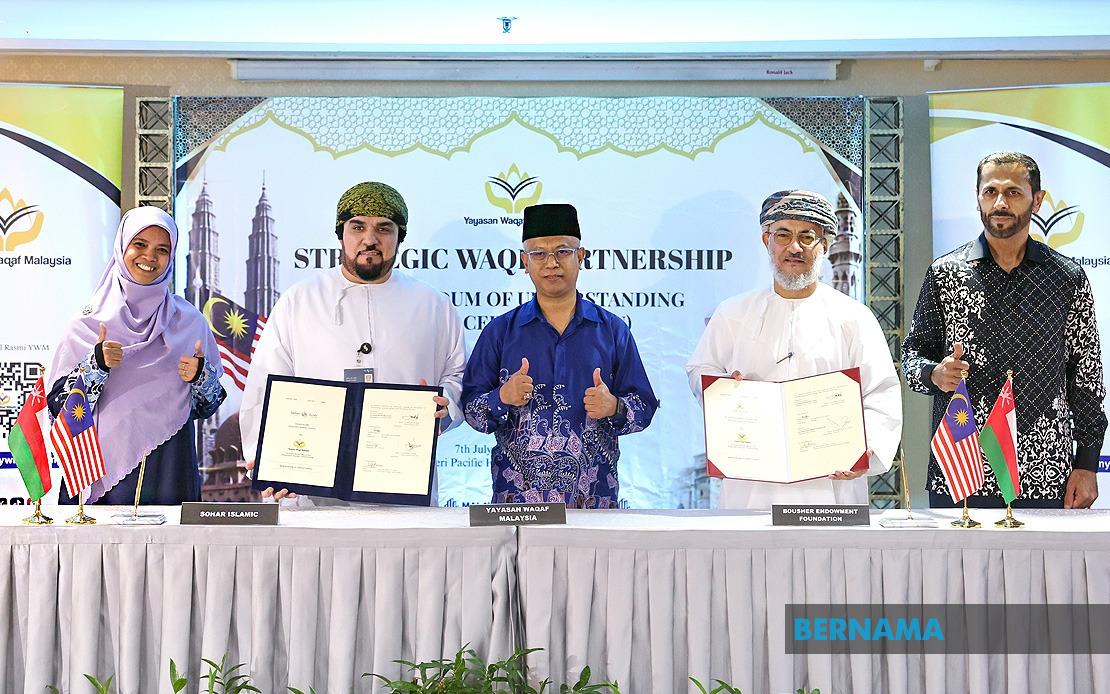
Malaysia has taken a significant step in establishing itself as a recognised authority in Islamic social finance through a strategic partnership with institutions from the Sultanate of Oman. The Malaysian Waqf Foundation (YWM) signed a memorandum of understanding with Sohar Islamic and the Boushar Endowment Foundation, marking a tangible shift in the country's profile as an exporter of expertise rather than merely an importer of knowledge in the Islamic finance domain. The agreement, formalised in Kuala Lumpur on July 7, encompasses collaborative efforts in waqf governance, asset management, technology transfer, and the dissemination of best practices across both nations.
The partnership carries symbolic weight beyond its immediate commercial scope. Deputy Minister in the Prime Minister's Department (Religious Affairs) Marhamah Rosli underscored the significance of Malaysia extending its technical knowledge to Gulf nations, reversing a conventional pattern where the country typically seeks expertise from more established Islamic finance hubs. This reversal speaks to the maturation of Malaysia's waqf ecosystem over the past decade, where sustained government investment and institutional development have culminated in world-class capabilities. The collaboration demonstrates that Malaysian expertise in structuring productive waqf assets has achieved international credibility, particularly among resource-rich Gulf states seeking to optimise their own philanthropic frameworks.
A striking component of the agreement involves the appointment of Dr Ridzwan Bakar, YWM's chief executive officer, as Waqf Adviser to the Sultanate of Oman. This recognition by Omani authorities reflects confidence in Malaysia's technical approach to waqf development, a distinction that would have seemed unlikely fifteen years ago when the Malaysian waqf sector was still consolidating its institutional foundations. The appointment signifies that Malaysia's methodologies—whether in asset valuation, fund management, or governance structures—are sufficiently developed and proven to merit adoption by another Muslim-majority nation seeking to strengthen its own philanthropic infrastructure.
The pathway to this partnership reveals deliberate Malaysian diplomacy and strategic outreach. YWM representatives undertook exploratory visits to Oman in 2023 and 2024, proactively identifying collaboration opportunities rather than waiting for external invitations. This initiative-taking approach mirrors Malaysia's broader strategy of positioning itself as a thought leader in Islamic finance across Southeast Asia and beyond. The receptivity of Omani institutions suggests that Malaysian expertise resonates with Gulf nations facing similar challenges in monetising waqf assets and attracting international capital to Islamic philanthropic structures.
Waqf development, particularly when focused on productive asset generation, represents a crucial mechanism for strengthening economic foundations within Muslim communities. Unlike traditional cash-based charitable giving, productive waqf—encompassing real estate, commercial ventures, and investment portfolios—generates sustainable revenue streams that multiply the impact of initial endowments. Malaysia's experience in structuring such assets positions it advantageously to guide other nations through this complex process. The strategic value lies not merely in immediate charitable distribution but in building long-term economic resilience that benefits expanding circles of beneficiaries as asset bases appreciate and earnings accumulate.
The collaboration opens pathways for attracting international investment capital, particularly from affluent Arab states seeking investment opportunities within Islamic social finance frameworks. YWM currently manages three investment products through Kenanga Investors that function as conduits for channelling international funds into Malaysian assets. The Oman partnership potentially expands these pathways by introducing Gulf investors to Malaysian investment vehicles embedded within waqf governance structures. This mechanism allows international capital to generate returns while simultaneously supporting philanthropic objectives, creating alignment between profit and social purpose.
For Malaysia's broader positioning within the Islamic finance ecosystem, the Oman agreement represents one link in a growing network of international collaborations. YWM maintains active relationships with similar institutions in Kuwait, Qatar, and the United Arab Emirates, constructing a Gulf-facing architecture that positions Malaysia as a trusted intermediary in Islamic social finance innovation. This network effect enhances Malaysia's soft power in the region by demonstrating that its expertise extends beyond traditional banking and capital markets into the less mainstream but increasingly important domain of structured philanthropy.
The implications for Malaysian communities remain substantial. As waqf assets develop and investment returns accumulate, the expanded economic base theoretically enables support for disadvantaged groups beyond traditional asnaf categories—the eight Quranic classes entitled to zakat assistance. YWM explicitly articulates the potential to extend benefits across B40 and M40 income groups, suggesting that optimised waqf structures could serve as complementary poverty alleviation mechanisms alongside government programmes. This diversification of funding sources for social welfare strengthens the overall architecture supporting vulnerable populations in Malaysia.
The partnership also carries implications for Islamic finance standardisation and best-practice harmonisation across Southeast Asia and the Gulf. As Malaysian methodologies in waqf governance spread through bilateral partnerships, they establish de facto standards that other institutions may adopt. This convergence potentially creates operational compatibility and regulatory alignment that facilitates cross-border Islamic finance flows and philanthropic collaborations. Malaysia's role in this standardisation process elevates its institutional influence within the broader Islamic finance ecosystem, complementing its established position in sukuk markets and Islamic banking.
Looking forward, the Oman collaboration likely represents an early manifestation of broader Malaysian engagement with Gulf nations on waqf and Islamic social finance issues. The success of this partnership may encourage YWM to expand its advisory functions across additional markets, potentially establishing Malaysia as a preferred consultant for waqf development strategies. This consultancy model generates revenue while simultaneously enhancing Malaysia's reputation as an Islamic finance knowledge centre, creating virtuous cycles where expertise attracts investment and investment generates resources for further innovation. The arrangement exemplifies how Malaysia can leverage institutional excellence to secure regional influence beyond traditional economic metrics.

