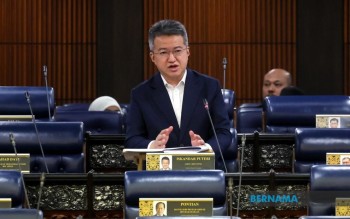
Parliament took a significant step towards institutionalising Malaysia's long-term financial security when Deputy Finance Minister Liew Chin Tong tabled the National Trust Fund Bill 2026 for first reading in the Dewan Rakyat on July 14. The legislation represents an ambitious attempt to create a dedicated sovereign wealth mechanism designed to benefit both current and future generations of Malaysians by establishing a permanent, professionally managed financial reservoir insulated from ordinary budget pressures.
The proposed National Trust Fund, to be administered through a statutory body called the National Trust Fund (Incorporated), reflects growing international recognition among policymakers that resource-dependent economies require structural safeguards against commodity price volatility and revenue depletion. Malaysia's approach, modelled partly on established trust fund frameworks elsewhere, establishes clear statutory obligations for regular government contributions, effectively removing discretionary elements that historically weakened such initiatives. This automaticity is crucial because it prevents budget cycles and political considerations from eroding funding commitments over time.
Contribution mechanics form the cornerstone of the fund's sustainability architecture. The Federal Government faces a tripartite obligation: channelling a minimum 0.1 per cent of projected annual revenue, securing at least two per cent of dividends earned from Petronas operations, and allocating no less than two per cent derived from export duties levied on depleting natural resources after accounting for state-level duty assignments. These provisions transform the fund from an optional savings mechanism into an entrenched fiscal institution with automatic replenishment. By anchoring contributions to actual revenue streams rather than fixed amounts, the framework adapts to economic conditions while maintaining real purchasing power accumulation.
The bill's treatment of Petronas dividends merits particular attention for Malaysian stakeholders. Petronas generates substantial returns from its petroleum operations, and reserving two per cent of these dividends for intergenerational welfare acknowledges the temporary nature of oil and gas reserves while converting extraction profits into permanent national assets. This approach echoes best practices from resource-rich nations that have successfully converted finite hydrocarbon wealth into diversified investment portfolios. For Southeast Asia, where several countries confront similar resource depletion timelines, Malaysia's legislative framework could serve as a replicable template.
Equally significant is the mechanism incorporating sub-national resource royalties. The bill explicitly permits state governments extracting petroleum or other depleting resources to contribute their own royalty revenues to the fund, creating a federal-state cooperative structure. This provision acknowledges constitutional divisions of resource rights while encouraging subnational participation in national wealth preservation. States retaining their primary income streams while directing portions toward collective intergenerational investment represent an elegant balance between fiscal autonomy and national interest, particularly relevant given Malaysia's federal architecture.
Administrative governance structures embedded within the legislation reveal careful consideration of fiduciary responsibilities. The National Trust Fund (Incorporated) board must formulate a comprehensive strategic asset allocation articulating long-term investment philosophy and risk parameters. This requirement ensures professional, forward-looking portfolio construction rather than reactive decision-making. Furthermore, mandatory reporting obligations requiring the board to furnish the Finance Minister with detailed returns, accounts, and information regarding fund assets and activities create accountability mechanisms. Transparency through parliamentary oversight, given that contribution amounts appear in annual financial statements tabled in the Dewan Rakyat, establishes democratic oversight of what would otherwise be a semi-autonomous institution.
The bill's provisions governing fund utilisation reflect a nuanced understanding of institutional sustainability. Moneys may fund board member remuneration, officer salaries, administrative costs, and investment-related expenses—recognising that professional stewardship requires adequate resources. However, explicit enumeration of permissible expenditures constrains scope creep, preventing the fund from evolving into a general revenue source. This disciplined approach distinguishes genuine sovereign wealth structures from quasi-budgetary devices that governments historically raid during fiscal pressures.
The timing of the National Trust Fund Bill 2026 situates Malaysia within broader regional and global trends toward institutionalised sovereign wealth management. Global commodity cycles and climate-driven energy transitions create urgency around converting temporary resource revenues into permanent prosperity mechanisms. Neighbouring resource economies observe these developments closely, and Malaysia's legislative success would position the country as a regional thought leader in fiscal sustainability. The second reading scheduled during the current parliamentary session suggests government determination to complete legislative processes before year-end, reflecting genuine commitment rather than rhetorical positioning.
For Malaysian households and businesses, the fund represents more than abstract fiscal engineering. A well-managed trust fund provides economic stabilisation during commodity downturns, supporting government capacity to maintain essential services without procyclical budget cuts. During periods of resource scarcity, such funds typically finance infrastructure, education, and healthcare—investments that enhance long-term competitiveness. The 0.1 per cent minimum revenue contribution threshold, while modest, compounds substantially over decades, creating meaningful reserves that can absorb shocks without requiring emergency taxation or spending reductions that impose real costs on ordinary Malaysians.
Investment strategy formulation by the National Trust Fund (Incorporated) board will determine whether the initiative achieves intergenerational objectives or merely accumulates cash. Global experience demonstrates that trust funds pursuing conservative, inflation-indexed strategies outperform nominal wealth preservation, while diversified portfolios spanning equities, fixed income, and alternative assets tend to generate returns exceeding inflation plus fund expenses. The bill's requirement that the board establish strategic asset allocation indicates sophisticated understanding that passive accumulation squanders opportunity costs. Successful implementation depends on appointing board members with genuine investment expertise and insulating their decision-making from short-term political pressures.
The National Trust Fund Bill 2026 embodies pragmatic recognition that Malaysia's resource endowments, while significant, remain finite. Petroleum reserves deplete predictably, and export commodity prices fluctuate beyond government control. Rather than hoping for perpetual high commodity prices or deferring difficult choices to future administrations, this legislation accepts resource finitude and institutionalises wealth preservation mechanisms. For Malaysian readers concerned about intergenerational equity, political fiscal discipline, and long-term prosperity, this bill represents meaningful structural reform that transcends electoral cycles and political administrations. The second reading will reveal whether parliamentary consensus supports this forward-thinking approach or whether opposing voices challenge provisions affecting contributions or governance.

