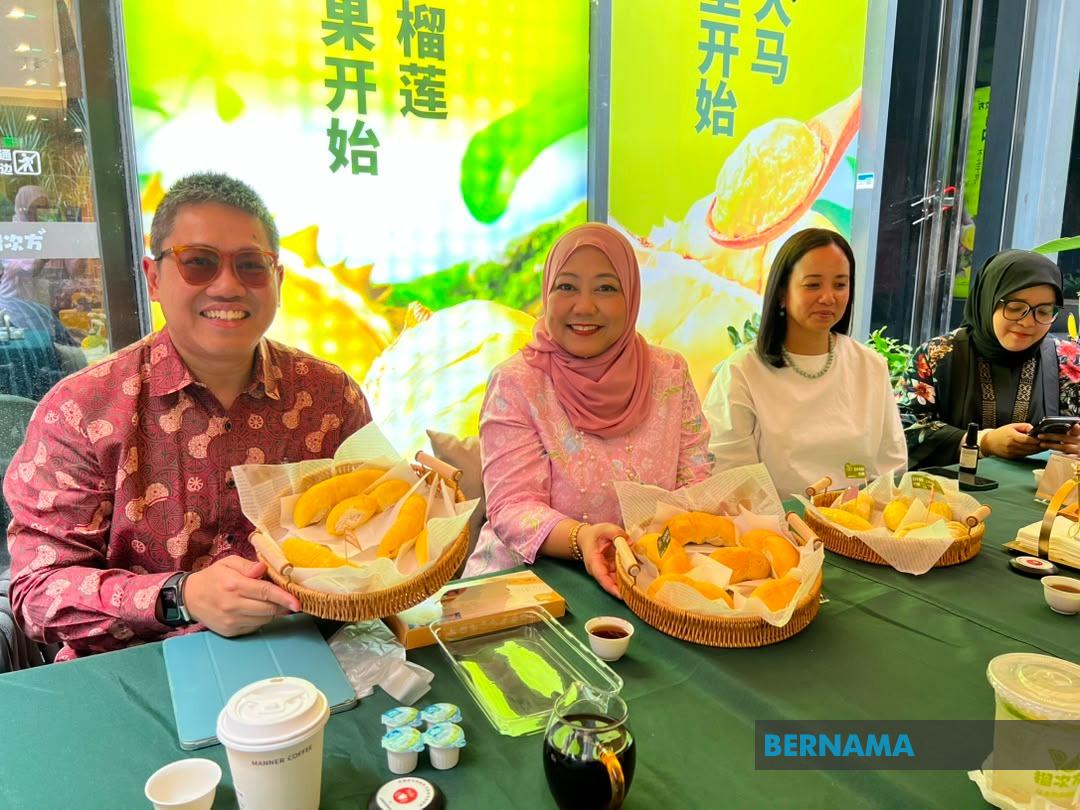
Malaysia is charting an ambitious course in the Chinese durian market, setting its sights on exports valued at US$229 million (RM932.3 million) by 2030. The strategy reflects a seismic shift in the global fresh fruit trade, where the tropical delicacy has become one of Asia's most coveted agricultural commodities. Speaking at the launch of Durian Cube, an exclusive Malaysian durian retail outlet in Beijing, MATRADE Minister Counsellor Niqman Rafaee M. Sahar revealed the scale of Malaysia's expansion plans and the dramatic acceleration that has already materialised since the country's breakthrough into the Chinese market.
The trajectory of Malaysian durian shipments since market access was granted in August 2024 has been remarkable by any measure. Fresh durian exports have grown more than 500 per cent in less than a year, surging from approximately US$5 million to US$37 million by 2025 alone, demonstrating the ravenous appetite among Chinese consumers for premium varieties. This explosive growth occurred even as Malaysia is still establishing supply chains and distribution networks in what remains a relatively new frontier. The frozen durian sector has proven equally lucrative, reaching nearly US$202 million in value during 2025, with momentum continuing into 2026 when first-quarter shipments hit US$77 million.
Malaysia's positioning within the global durian market is distinctive yet represents only a modest foothold in a far larger opportunity. China imports approximately US$7 billion in durians annually, predominantly sourced from ASEAN nations, yet Malaysia currently captures just four to five per cent of this massive market. Rather than pursuing market dominance through volume, Malaysian exporters and government agencies are deliberately pursuing a premium positioning strategy. This differentiation is not accidental but reflects deliberate policy choices and quality standards that distinguish Malaysian fruit from competitors across Southeast Asia.
The premium positioning rests on several tangible attributes that exporters emphasise to justify price premiums. Malaysian Black Thorn and Musang King varieties have cultivated strong brand recognition among discerning Chinese consumers willing to pay more for superior taste and quality. The production methodology itself becomes part of the marketing narrative: Malaysian durians are allowed to ripen naturally on the tree and fall to the ground before collection, rather than being harvested mechanically. Fruit is then exported to China within 48 hours of collection, preserving freshness and flavour profiles that frozen or conventionally harvested competitors cannot match. This commitment to natural ripening and rapid logistics creates a product differentiation that supports higher prices.
Ambitions to expand Malaysia's market share from the current four to five per cent to between eight and 10 per cent within five years depend critically on sustained supply growth. Officials acknowledge that supply constraints may limit the pace of expansion, suggesting that increasing production capacity remains a bottleneck. This represents a significant constraint compared to larger ASEAN rivals, particularly Thailand and Vietnam, which have substantially greater planted acreage and production volumes. Yet Malaysian officials appear content with this limitation, viewing supply scarcity as a strategic asset that supports premium pricing rather than a problem to be solved through rapid expansion.
Downstream processing and value-added durian products represent an emerging frontier that extends market opportunities beyond fresh fruit sales. Hotels, restaurants and catering establishments throughout China are increasingly sourcing Malaysian durians to produce premium desserts, pastries, chocolates, mochi and frozen delicacies. This burgeoning industrial demand creates multiplier effects throughout the supply chain, as processed durian products command price premiums while utilising fruit that may not meet fresh export standards. The diversification into processed products also provides buffer capacity during seasonal gluts and helps stabilise export revenues across the calendar year.
Malaysia's durian varieties represent an untapped asset in terms of both agricultural biodiversity and market development. The country produces more than 100 distinct durian varieties, yet fewer than 30 have been approved for export to China. This suggests substantial room for expanding the product portfolio if phytosanitary negotiations with Chinese authorities can be expedited. Different varieties appeal to distinct consumer segments and regional preferences within China, potentially allowing exporters to capture demand across multiple demographic and geographic segments simultaneously.
The diplomatic dimensions of Malaysia's durian push extend well beyond narrow commercial considerations. Officials explicitly frame durian exports as cultural ambassadorship, using the fruit as a vehicle for introducing Chinese consumers to Malaysian agriculture, traditions and values. This positioning aligns strategically with Visit Malaysia Year 2026, as officials recognise that premium durian consumers represent high-income visitors likely to undertake leisure travel. Cultural and culinary diplomacy through durian therefore potentially generates tourism revenue streams in addition to direct export earnings, multiplying the economic value of the agricultural trade.
Private sector exporters confirm that market dynamics support official projections and validate the premium strategy. Sri Walis (M) Sdn Bhd, a major exporter, has tripled sales over the past year while expanding distribution across five major Chinese cities: Shenzhen, Guangzhou, Beijing, Shanghai and Hangzhou. The company currently exports approximately 1,000 tonnes annually, generating roughly RM30 million in revenue, and anticipates doubling or tripling shipments to between 2,000 and 3,000 tonnes within the next year. These commercial results substantiate claims of rising demand and validate the feasibility of official export targets.
Operational challenges remain significant despite commercial success. Fresh durians possess a shorter shelf life than many competing fruits, particularly problematic during Chinese summer months when heat accelerates spoilage. Transport, storage and handling procedures require constant refinement to minimise losses while maintaining the quality attributes that justify premium pricing. These logistical constraints may ultimately limit the pace at which export volumes can expand, even if market demand continues accelerating. Companies continue investing in cold chain infrastructure and handling procedures to push fresh durian exports toward volumes of 2,000 to 3,000 tonnes annually.
The Malaysia-China durian trade exemplifies how agricultural products can drive strategic partnerships and mutual benefit within the region. Chinese demand reflects urbanisation, rising incomes and shifting consumer preferences toward premium food experiences, while Malaysian exports provide growers with premium markets and stable revenues. The bilateral relationship strengthens through trade, cultural exchange and people-to-people connections centered on the valued fruit. Government agencies including MATRADE and diplomatic missions view durian not merely as a commodity but as a comprehensive strategic asset supporting trade, tourism and cultural objectives simultaneously.
Looking forward, Malaysia's durian sector faces both opportunities and constraints that will determine whether ambitious 2030 targets prove achievable. The premium positioning strategy appears sound and validated by early market responses, yet expansion depends on increasing orchard production, upgrading supply chain infrastructure and winning phytosanitary approval for additional varieties. Success would position Malaysia as a premium durian supplier to the world's largest consuming nation, supporting thousands of farmers and export companies while advancing broader diplomatic and tourism objectives. The Durian Cube flagship store in Beijing symbolises this broader transformation, representing not merely a retail outlet but a tangible manifestation of Malaysia's agricultural and cultural presence in China.

