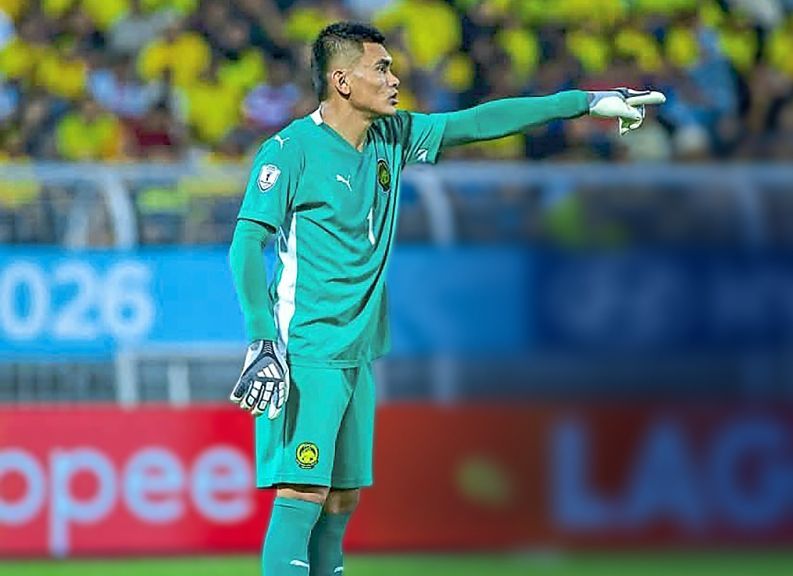
Malaysia's hopes of advancing to the Hyundai AFF Cup final took a significant hit on Sunday when they fell to a 0-2 defeat against Vietnam in the first leg semi-final at the Cheras Football Stadium. The comprehensive nature of the loss has left interim coach Tan Cheng Hoe's side facing an uphill battle when they travel to the MyDinh Stadium in Hanoi for the decisive second leg. Against a Vietnam team defending their crown as regional champions, the Malaysian outfit will need to overturn a two-goal deficit—a tall order in knockout football where away goals carry enormous psychological weight.
The match unfolded poorly for Malaysia from the outset, with early misfortune compounding the difficulties ahead. In only the 15th minute, centreback Rodney Celvin Akwensivie was forced to exit the field through injury, forcing Harimau Malaya into an unscheduled defensive reshuffle with young centre-back Aysar Hadi Sapri entering the fray. The loss of an established defensive figure so early placed additional strain on a backline already challenged by Vietnam's fluid attacking movements, a factor that would prove consequential as the game progressed.
Yet Malaysia did create genuine opportunities to breach the Vietnamese goal during the opening period, moments that would later haunt the team given the eventual outcome. In the 34th minute, the home side conjured two clear-cut chances within three seconds. Leftback Faris Danish Asrul delivered a low, driven cross that captain and striker Paulo Josue met with a close-range attempt, only to be denied by Vietnam goalkeeper Patrick Le Giang's sharp save. The very next moment, midfielder Daryl Sham George found himself with an open net beckoning but inexplicably sent his effort sailing into the stands—a miss that epitomised Malaysia's finishing woes on the night. Such profligacy in attack often determines semi-final outcomes, and this sequence would prove the turning point in the contest.
Vietnam capitalised on their defensive solidity to take the lead before the interval, catching Malaysia's backline in an uncharacteristic moment of inattention. In the 37th minute, attacker Xuan Son was left completely unmarked in the box and rose unmarked to power home a precise cross from wingback Truong Tien Anh. The goal underscored a recurring tactical vulnerability in Malaysia's defensive organisation, particularly in set-piece situations and crosses delivered from wide areas—defensive deficiencies that would require urgent addressing before the return fixture.
The second half saw Malaysia seize possession with greater assertiveness, attempting to impose their rhythm on proceedings while Vietnam shifted into a more reactive posture, seeking to exploit spaces through counter-attacking football. In the 60th minute, the match was briefly disrupted by an incident involving Vietnam goalkeeper Le Giang, who was initially sent off by referee Rustam Lutfullin for what appeared to be a handball offence outside his penalty area. However, after consultation with the video assistant referee system, the Uzbekistan official reviewed the incident and determined that the goalkeeper had not used his hands to clear the ball, overturning the original red card decision. The VAR intervention proved significant in keeping Vietnam's goalkeeper on the field and maintained their defensive structure.
Tan Cheng Hoe responded to Malaysia's attacking struggles by introducing fresh personnel into the midfield and attacking line. Winger Haqimi Azim Rosli and midfielder Ibrahim Manusi, the latter making his international debut, replaced Mahamadou Sumareh and Syafiq Ahmad in an attempt to inject greater creativity and dynamism into Malaysia's play. However, the tactical adjustments failed to yield the desired results, as Vietnam's defence remained sufficiently organised and disciplined to repel Malaysian advances. The substitutes, despite their technical qualities, could not unlock the resolute Vietnamese rearguard that had clearly been well-prepared for this fixture.
Vietnam sealed the match in the 86th minute through a devastating own goal by Faris Danish Asrul, the same player who had created Malaysia's best first-half opportunity. The misadventure appeared to stem from uncertainty in dealing with pressure from Vietnamese attackers, resulting in a fatal lapse in concentration. The own goal effectively ended Malaysian hopes of salvaging something from the encounter and left them facing the prospect of needing to overturn a two-goal deficit in a hostile Hanoi environment.
For Malaysian football supporters and observers, the defeat represents a significant setback in what had been a promising campaign leading into the semi-finals. Vietnam, as defending champions, demonstrated why they hold regional supremacy through their methodical defensive approach and clinical finishing when opportunities presented themselves. Malaysia's inability to convert their first-half chances, coupled with defensive lapses at critical moments, proved ultimately decisive. The second leg now becomes something of a must-win proposition, requiring Malaysia to abandon their natural caution and commit significant resources to attacking play.
The road to recovery begins in Hanoi, where Malaysia must produce a performance of considerably greater intensity and precision than Sunday's display. While the deficit appears daunting, semi-final football has occasionally produced remarkable turnarounds, particularly when teams play with nothing to lose. However, Vietnam's experience in tournament football and their proven quality suggests that Malaysia faces a monumental challenge in orchestrating such a comeback. The pressure now falls squarely on Tan Cheng Hoe's coaching staff and the players to demonstrate the resilience and tactical acumen necessary to mount a credible challenge.

