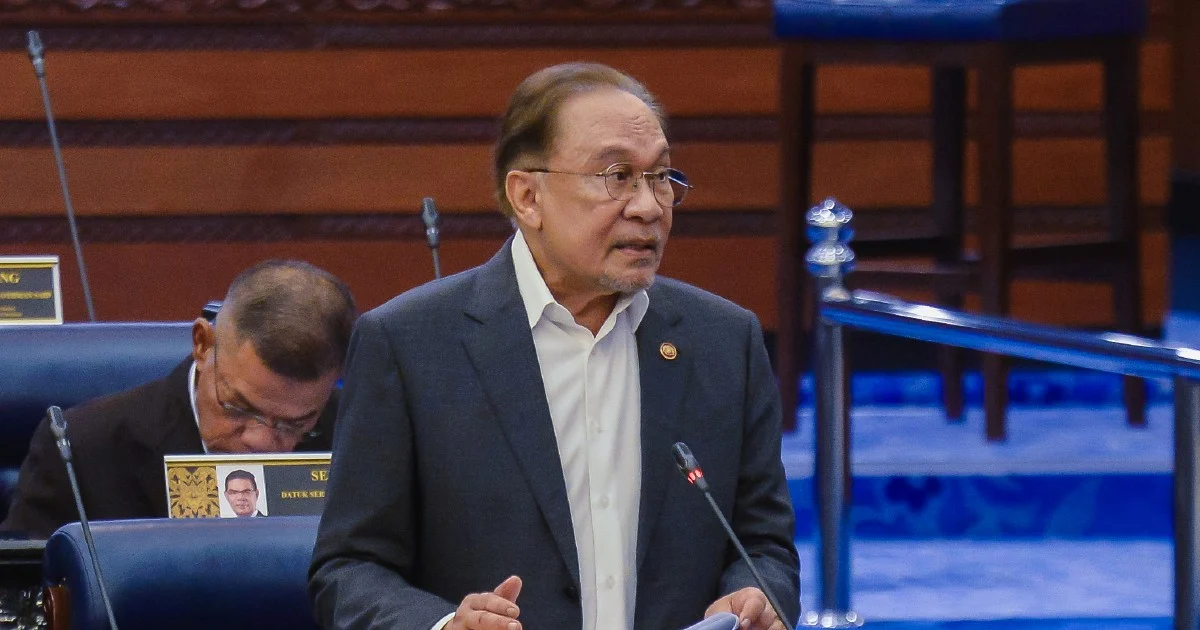
Putrajaya is actively engaged in discussions with Sarawak to expand the state's financial allocation under the Malaysia Agreement 1963 (MA63), Prime Minister Datuk Seri Anwar Ibrahim confirmed recently. The development signals a fresh commitment from the federal administration to address long-standing fiscal concerns raised by Malaysia's eastern gateway state, which has historically claimed that its constitutionally-mandated revenues have fallen short of reasonable expectations.
The MA63 framework, signed in 1963 when Sarawak and Sabah joined the Federation, enshrines specific revenue-sharing arrangements and special rights for both states. These provisions have become increasingly contentious as development needs have grown and state coffers face mounting pressures. Sarawak's leadership has periodically called for upward revision of its special grant to reflect contemporary economic realities and infrastructure demands.
Anwar's public confirmation of these negotiations represents a notable shift in tone from previous federal administrations, which often sidestepped such discussions or treated them as lower-priority agenda items. The acknowledgement comes at a politically sensitive juncture, as maintaining strong ties with Sarawak remains strategically vital for federal coalition stability. The state's 31 parliamentary seats carry substantial weight in any government formation, making constructive engagement on fiscal matters a practical necessity alongside principled recognition of MA63 obligations.
Sarawak has consistently argued that the special grant mechanism, while important, has not kept pace with inflation, population growth, or the state's expanding developmental aspirations. Unlike peninsular states with more diversified revenue streams, Sarawak's reliance on federal allocations for major infrastructure projects places particular importance on the quantum of support flowing from Kuala Lumpur. The ongoing economic diversification efforts in the state—moving beyond traditional extractive industries—require substantial capital investment that the current grant structure may inadequately support.
The timing of these discussions also reflects broader regional considerations within Southeast Asia. Sarawak's geographic proximity to Brunei and Indonesian Kalimantan positions it as a crucial hub for cross-border economic cooperation and development initiatives. Enhanced federal support would signal confidence in the state's potential as an economic engine and facilitate regional integration projects that benefit Malaysia's overall strategic positioning.
From a constitutional perspective, reopening MA63 discussions carries delicate implications. The agreement's provisions are foundational law, and any modification requires careful navigation of historical sensitivities surrounding East Malaysia's relationship with the federation. Federal negotiators must balance genuine fiscal expansion with political sustainability, ensuring that agreements reached can withstand scrutiny from both peninsular constituencies and East Malaysian stakeholders.
For Malaysian readers beyond Sarawak, these negotiations underscore the continuing relevance of federal-state fiscal arrangements and the constitutional protections that define Malaysia's federalist architecture. The outcome may establish precedents affecting how future discussions with Sabah unfold, and could influence broader conversations about equitable resource distribution across Malaysia's diverse geography and demography.
Economic analysts point out that strategic investment in Sarawak's development can generate multiplier effects benefiting the broader region. Enhanced federal grants, if deployed toward infrastructure modernisation, human capital development, and industrial diversification, would strengthen the state's competitive positioning and potentially attract greater private investment—benefits that would ultimately accrue to the Malaysian economy as a whole.
The negotiations also reflect changing political dynamics within the ruling coalition. The federal government's willingness to engage substantively on fiscal matters suggests recognition that governance stability depends on delivering tangible benefits to constituent states and communities. For Sarawak voters and policymakers, such engagement represents acknowledgement of legitimate grievances regarding resource allocation and an opening for productive dialogue on economic partnership.
The quantum of any eventual increase remains undisclosed, though observers expect discussions to centre on mechanisms for inflation adjustment, needs-based assessments, and alignment with contemporary development priorities. Whether the federal government proposes a fixed percentage increase, revised calculation methodology, or structural redesign of the grant allocation system will significantly influence both the immediate fiscal impact and longer-term implications for federal-state relations.
Civil society observers and fiscal policy experts are monitoring these developments closely, recognising that successful MA63 renegotiation could set positive precedent for managing federal-state tensions through transparent dialogue rather than political confrontation. The outcome may demonstrate whether Malaysia's federalist framework can adapt responsively to changing circumstances while honouring its foundational constitutional commitments to East Malaysian states.

