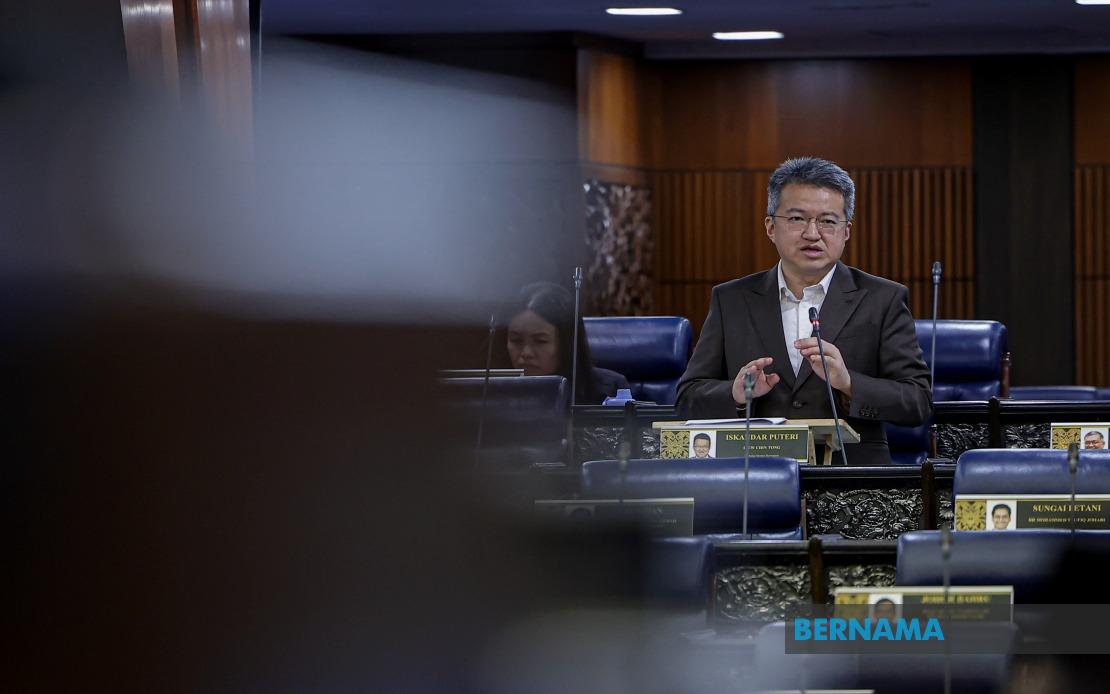
Malaysia's Government is doubling down on institutional reforms aimed at restoring the nation's tarnished international reputation and preventing another financial catastrophe like the 1Malaysia Development Berhad scandal. Deputy Finance Minister Liew Chin Tong told Parliament that the administration under Prime Minister Datuk Seri Anwar Ibrahim recognises the damage inflicted by the 1MDB affair and is pursuing a comprehensive overhaul of governance systems to rebuild confidence among investors, trading partners, and global markets.
The scale of 1MDB's impact on Malaysia extends far beyond the billions in lost public funds. The scandal triggered investigations by foreign law enforcement agencies, sparked widespread international media scrutiny, and prompted cross-border legal proceedings that fundamentally undermined perceptions of Malaysia's institutional integrity. Liew acknowledged that these reputational wounds have lingered, making it harder for policymakers to attract foreign capital and sustain confidence in Malaysian fiscal management. The challenge facing the current administration is not merely accounting for past losses but demonstrating systemic change through credible reforms that foreign investors and credit rating agencies can evaluate.
The centrepiece of the government's reform agenda is the Public Finance and Fiscal Responsibility Act 2023, landmark legislation designed to impose strict disciplines on how public money is managed and deployed. This statute represents a critical shift toward transparency and accountability in state financial affairs. By establishing enforceable frameworks for fiscal discipline, the law aims to create structural barriers against the kind of uncontrolled borrowing and opaque fund management that characterised the 1MDB episode. The act's passage signals that the Government is willing to constrain its own discretionary powers, a message intended to reassure both domestic and international stakeholders about the seriousness of the reform effort.
Complementing the fiscal legislation, the Government has amended the Audit Act to dramatically expand the Auditor-General's investigative reach. The "follow the public money" approach represents a fundamental shift in how government audits operate, allowing investigators to trace expenditure across institutional boundaries rather than remaining confined to individual departmental silos. This enhanced surveillance capability makes it significantly more difficult for funds to disappear into opaque channels or be diverted through complex webs of related entities. For Malaysia, which is seeking to rebuild credibility with international financial institutions and foreign investors, demonstrating robust independent auditing represents a crucial confidence-building measure.
Beyond these legislative achievements, the Government is actively drafting a Government Procurement Bill and undertaking comprehensive reform of the legal framework governing state-owned enterprises. These parallel initiatives address vulnerability points that previous scandals exposed. Government procurement processes had been implicated in 1MDB's troubled history, and state-owned enterprises lacked adequate governance safeguards. By modernising both domains simultaneously, the administration is attempting to close multiple potential avenues for financial misconduct. The procurement bill, in particular, is likely to introduce competitive tendering requirements and transparency provisions that make it harder to award contracts through non-competitive processes favoring connected parties.
Liew's comments to Parliament reveal the enormity of Malaysia's financial reckoning with 1MDB's legacy. Since 2017, the Government has committed RM18.7 billion from its operating and development budgets to satisfy 1MDB's outstanding obligations. This expenditure represents a persistent drag on public finances that competing priorities—infrastructure, education, healthcare—must accommodate. The situation deteriorated further when the MADANI Government assumed office in March 2023 and discovered that RM13 billion from that year's development budget would need to be allocated to redeem USD3 billion in government-guaranteed 1MDB bonds. This allocation alone consumed approximately 13.1 per cent of the entire year's development expenditure, a massive opportunity cost that underscores the ongoing fiscal burden imposed by the scandal.
For Malaysian policymakers, these constraints highlight why preventing future scandals is not merely a matter of institutional virtue but economic necessity. Every ringgit devoted to meeting 1MDB obligations is a ringgit unavailable for productive public investment. Schools remain underfunded, transportation infrastructure lags behind regional peers, and rural areas struggle with inadequate service delivery, partly because public resources remain committed to resolving a crisis that occurred years ago. This reality creates political pressure to demonstrate that governance improvements are yielding tangible results—not just in reputation management, but in restoring the Government's capacity to invest in citizen welfare.
The reforms are already producing measurable outcomes that the Deputy Minister highlighted. Malaysia has achieved its highest-ever approved investments, suggesting that the international business community perceives genuine improvement in governance environments. Trade performance has strengthened, and Malaysia's ranking in global competitiveness indices has climbed. These metrics suggest that careful messaging about institutional reform, combined with substantive legislative action, can gradually restore investor appetite. However, these gains remain fragile and conditional on continued demonstrated commitment to higher governance standards.
For Southeast Asian observers, Malaysia's governance crisis and subsequent reform trajectory offers important lessons. The region includes several nations grappling with institutional vulnerabilities and investor concerns about asset protection and contract security. Malaysia's experience demonstrates both the staggering costs of governance failure—measured not just in stolen assets but in years of diminished growth potential—and the possibility that determined reform can restore confidence. Yet it also illustrates how slowly trust accumulates after major institutional breaches. The global attention focused on 1MDB will likely fade only gradually as new governance systems demonstrate sustained effectiveness over multiple election cycles and budget rounds.

