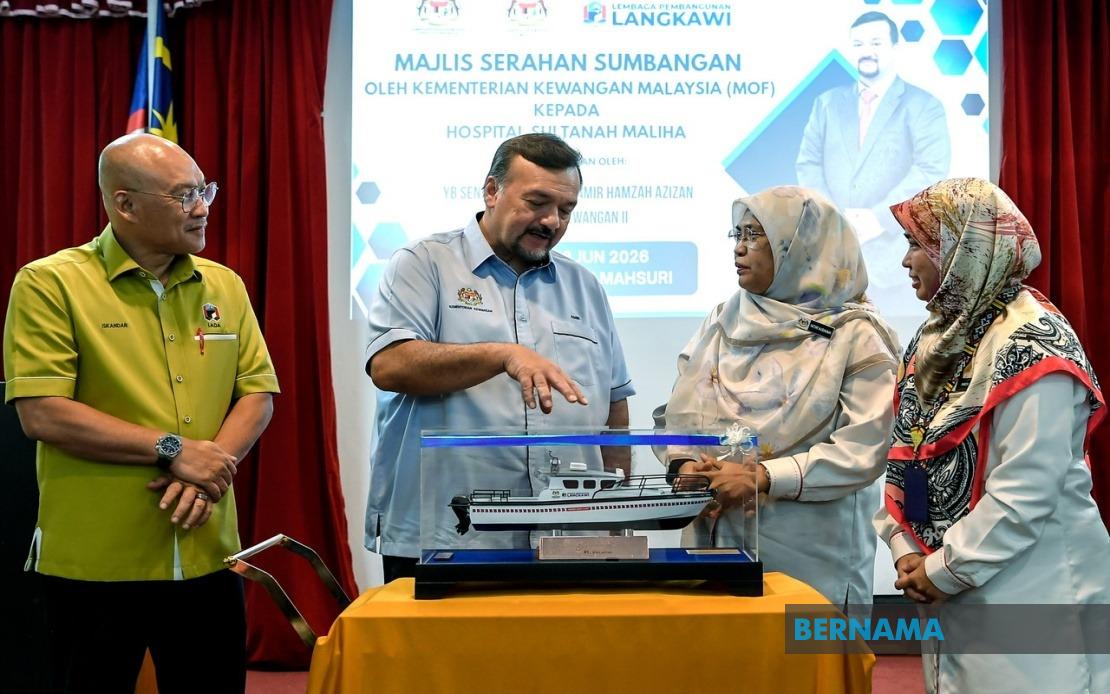
Malaysia's Ministry of Finance has committed RM5.5 million towards establishing a dedicated sea ambulance service for Langkawi, marking a significant step in improving healthcare accessibility for both residents and the millions of tourists who visit the island annually. The allocation, announced by Finance Minister II Datuk Seri Amir Hamzah Azizan, encompasses both the procurement of the vessel and its initial operational expenses, with the service anticipated to become operational in early 2024. This development represents a recognition of the unique geographical and logistical challenges facing island communities in delivering emergency medical care.
The genesis of this initiative lies in the current inefficiencies plaguing patient transfers from Langkawi to mainland referral hospitals. At present, the process depends entirely on commercial passenger ferry services, creating significant bottlenecks in emergency situations when timely transfer can mean the difference between recovery and deterioration. Amir Hamzah highlighted how the problem intensifies during periods when ferry frequencies are reduced, leaving critically ill patients with limited transport options when immediate medical intervention becomes necessary. This reliance on civilian ferries has underscored the urgent need for a dedicated emergency transport solution designed specifically for medical cases.
Hospital Sultanah Maliha will operate the sea ambulance, with the vessel serving primarily as a conduit for transferring patients from the island facility to specialised treatment centres on the mainland. The dedicated ambulance boat will be equipped to handle multiple emergency cases simultaneously, featuring capacity for two stretchers and accommodating twelve personnel who will provide continuous medical support throughout the voyage. This staffing arrangement ensures that patients receive uninterrupted care during the potentially volatile sea journey, addressing not only the physical transport challenge but also safeguarding patient dignity, comfort and privacy during what can be an otherwise distressing experience.
Beyond the sea ambulance project itself, the Finance Ministry simultaneously advanced healthcare infrastructure on Langkawi through an additional RM700,000 grant to Hospital Sultanah Maliha comprising various medical equipment and systems. This complementary investment demonstrates a holistic approach to strengthening the island's healthcare ecosystem rather than treating emergency transport as an isolated solution. The equipment portfolio includes sophisticated medical devices, information technology systems, furniture, vehicles and security infrastructure, all designed to enhance the hospital's capacity to deliver contemporary, efficient healthcare services.
A particularly notable component of this healthcare modernisation initiative involves the implementation of the Electronic Medical Record system, which represents part of a nationwide digital transformation within Malaysia's health sector. The deployment of mobile computing solutions, described as computers on wheels, will enable medical professionals to input patient data directly during clinical rounds rather than relying on traditional paper-based documentation. This technological advancement facilitates real-time information sharing across the broader healthcare network, allowing medical personnel at different facilities to access comprehensive patient histories instantaneously.
For Malaysian policymakers, this Langkawi initiative carries broader implications about healthcare equity in geographically dispersed regions. Islands and remote peninsular areas often face proportionally higher healthcare delivery costs and logistical complexities compared to urban centres, yet populations in these areas deserve equivalent access to emergency services. The sea ambulance model, if successfully implemented in Langkawi, could provide a template for similar initiatives in other Malaysian island communities facing comparable challenges. Penang, Sabah and Sarawak authorities may find valuable lessons in how Langkawi addresses the intersection of emergency medicine and maritime geography.
The timing of this announcement carries political significance as well, occurring during a period when the government actively promotes infrastructure development and service expansion across diverse regions. Amir Hamzah's dual role as Finance Minister II and co-chairman of the Langkawi Development Authority positions him as a key advocate for the island's development priorities, suggesting that the sea ambulance project enjoys ministerial-level commitment and oversight. This political backing increases the likelihood of timely implementation and adequate resource allocation for ongoing operations.
From a regional perspective, Southeast Asian governments increasingly recognise that emergency healthcare delivery requires investment beyond traditional hospital infrastructure. Thailand, Indonesia and the Philippines similarly operate ambulance services in island and remote regions, though standardisation and efficiency vary significantly. Malaysia's approach, emphasising both capital investment and integrated digital systems, reflects contemporary best practices in comprehensive emergency medical services. The integration of Electronic Medical Records with emergency transport logistics represents a more sophisticated model than many regional counterparts currently employ.
Operational sustainability will prove crucial for this project's long-term success. Beyond the initial RM5.5 million allocation, the government must ensure adequate funding for fuel, maintenance, crew training and medical supplies on an ongoing basis. The involvement of Hospital Sultanah Maliha in direct operations suggests these costs will likely be incorporated into the facility's operating budget, though projections for demand and expenditure will require careful monitoring. Public health officials will need to establish clear protocols for when the sea ambulance should be deployed versus alternative transport methods, ensuring optimal resource utilisation.
Tourist safety considerations also underpin this initiative, given that Langkawi welcomes millions of international visitors annually. Travel insurance companies and tourism operators frequently cite medical evacuation access as an important factor influencing destination selection, particularly for visitors from developed nations accustomed to rapid emergency response systems. A dedicated sea ambulance enhances Langkawi's competitive positioning within the regional tourism market, potentially attracting higher-value tourists who prioritise healthcare security during their travels.
The Electronic Medical Record integration accompanying the sea ambulance procurement demonstrates increasingly sophisticated thinking about how transportation and information systems must operate in tandem for effective emergency medicine. A rapidly transported patient arriving at a mainland hospital means little without comprehensive medical history accessible to receiving physicians. By ensuring seamless data transmission between Langkawi facilities and mainland referral centres, the government creates an integrated emergency response ecosystem rather than disconnected components. This systems-level approach distinguishes modern healthcare planning from earlier infrastructure projects that treated capital investments in isolation.
Looking ahead, the success metrics for this initiative will extend beyond simple operational statistics to encompass patient outcomes, response times, and satisfaction among both local residents and tourists. The government should establish clear benchmarks for service performance and commit to transparent public reporting of results. Early implementation challenges should be anticipated and addressed methodically, with feedback mechanisms allowing for continuous improvement. If effectively executed, the Langkawi sea ambulance service could evolve into a national model for addressing healthcare access challenges in geographically dispersed populations throughout Malaysia and potentially across Southeast Asia.

