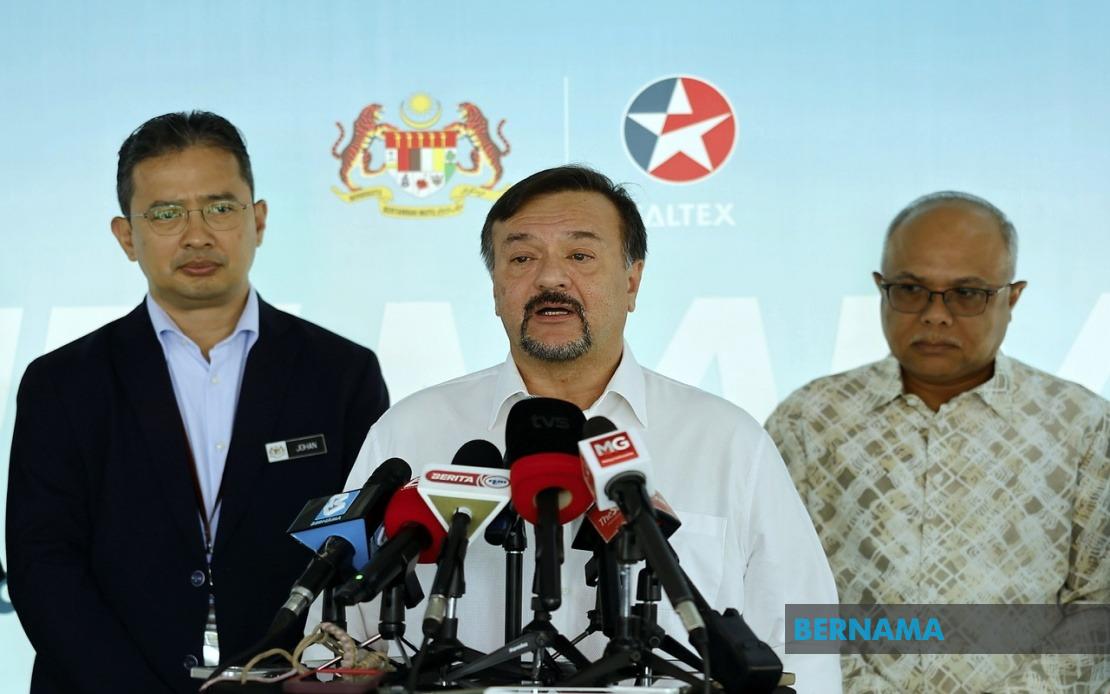
The Malaysian government has formally commenced consultation sessions for Budget 2027, marking the start of an intensive period of policy coordination and stakeholder engagement ahead of the budget's presentation to Parliament this October. Finance Minister II Datuk Seri Amir Hamzah Azizan disclosed that the Ministry of Finance is conducting the sessions in partnership with other government ministries and departments at various locations nationwide, signalling a comprehensive attempt to incorporate diverse perspectives into the nation's largest fiscal policy instrument.
The timing of these engagement sessions reflects the standard budgeting cycle in Malaysia, though the scope and breadth of consultation underscore the government's determination to align the spending plan with multiple policy frameworks that have recently been unveiled or are under implementation. Amir Hamzah stressed during a public appearance at a petrol station in Putrajaya that the process is being approached methodically to ensure consistency with the government's overarching economic and development agenda, rather than as a reactive or ad-hoc exercise.
At the conceptual heart of Budget 2027 lies the MADANI Economy framework, a guiding philosophy introduced to reshape Malaysia's approach to economic growth and development. This framework operates on a dual principle: simultaneously raising the "ceiling" of the economy by enhancing competitiveness and productivity at the higher end of the income and business spectrum, while elevating the "floor" by ensuring that vulnerable and lower-income segments of society benefit from economic expansion through targeted support and expanded opportunities. This dual focus reflects a strategic departure from purely growth-centric approaches, incorporating elements of inclusive development that have become increasingly central to government messaging.
Several other major policy initiatives announced recently are also shaping the contours of Budget 2027. The 13th Malaysia Plan, which outlines the nation's strategic development priorities for the coming years, provides a medium-term roadmap. Alongside this, the National Semiconductor Strategy represents the government's push to develop Malaysia as a regional player in high-value semiconductor manufacturing and design, recognising the global importance of this sector. The National Energy Transition Roadmap, meanwhile, charts Malaysia's path toward cleaner energy sources and reduced carbon emissions, addressing both environmental imperatives and long-term energy security.
Amir Hamzah made clear that these policies are not operating in silos but are being actively integrated into the budget formulation process. The minister indicated that subsequent budget allocations will reflect commitments made under each of these frameworks, suggesting that Budget 2027 will be substantially shaped by semiconductor investment priorities, energy transition initiatives, and the broader development objectives outlined in the 13th Malaysia Plan. This coordinated approach reflects a more integrated form of policy planning than has historically characterised Malaysian budgeting.
The minister stopped short of revealing specific budget measures or allocation priorities, citing the convention of not pre-empting announcements that will be formally presented to Parliament. However, his remarks provided insight into the philosophical consistency that will underpin the spending plan, emphasising that despite the range of policy initiatives, the government's core approach and institutional structure remain grounded in established frameworks. This messaging appears designed to reassure both the market and civil society that Budget 2027 will not represent a radical departure from stated government direction.
For perspective on the scale of government spending, Budget 2026 totalled RM419.2 billion, with RM338.2 billion directed toward operating expenditure covering routine government functions and RM81 billion allocated to development expenditure for infrastructure and long-term projects. Beyond these headline figures, the government also optimised RM50.8 billion in investments channelled through government-linked investment companies, Federal statutory bodies, and public-private partnerships to supplement direct government spending. This layered approach to public spending—combining direct budgetary allocation with leveraged investment through semi-autonomous entities—has become a standard mechanism for amplifying the government's economic impact.
The ongoing engagement sessions represent an opportunity for different government agencies to articulate their budgetary requirements and justify their funding needs in light of the MADANI framework and other policy priorities. Ministries responsible for implementing the National Semiconductor Strategy, for instance, will be presenting cases for resources needed to attract semiconductor investments and develop local capabilities. Similarly, agencies overseeing energy transition will be advocating for allocations that support renewable energy infrastructure and grid modernisation.
For Malaysian businesses and investors, the Budget 2027 consultation phase signals where government priorities lie and which sectors are likely to receive enhanced policy support and investment. Companies operating in semiconductors, renewable energy, and sectors aligned with inclusive growth objectives have reason to monitor these consultations closely, as budget allocations often translate into tax incentives, infrastructure investment, or regulatory support that materially affects business environments.
The October presentation date provides a window of several months for the Ministry of Finance to synthesize inputs from across the government, conduct economic forecasting, and model the fiscal impact of proposed measures. This timeline also allows for potential refinement of proposals based on emerging economic conditions, global market developments, and the outcomes of the consultation process itself. Given Malaysia's economic exposure to global trade and commodity markets, the team preparing the budget will need to factor in uncertainties surrounding international demand, supply chain dynamics, and currency movements.
Amir Hamzah's emphasis on consistency and the MADANI framework also reflects a political consideration: demonstrating that the government has a coherent, forward-looking economic vision rather than responding reactively to circumstances. The alignment of Budget 2027 with the 13th Malaysia Plan, semiconductor strategy, and energy transition roadmap presents the budget not merely as an annual spending document but as a tool for implementing long-term national transformation. This framing is particularly important given the government's stated ambition to achieve developed-nation status by 2030—a goal that requires sustained, coordinated policy effort across multiple years and domains.
As the engagement sessions proceed nationwide, the Ministry of Finance will be synthesizing feedback from dozens of government entities, each with distinct priorities and resource requirements. The challenge lies in balancing competing demands while maintaining fiscal sustainability and adhering to the overarching MADANI Economy framework. Budget 2027 will ultimately reflect how successfully the government negotiates these tensions, and it will serve as a concrete test of whether the various policy initiatives announced in recent months can be translated into coherent, funded action.

