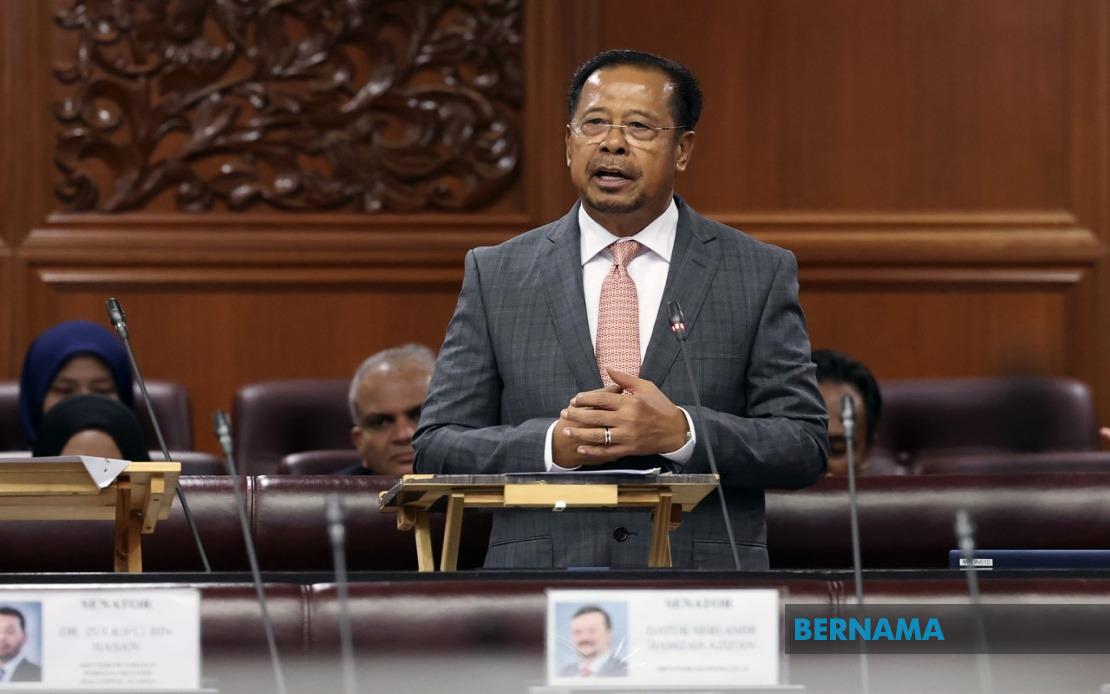
The Ministry of Energy Transition and Water Transformation (PETRA) has announced plans to undertake an extensive 12-month research initiative aimed at crafting a comprehensive Industrial Water Reclamation Policy, signalling the government's commitment to addressing Malaysia's water resource challenges through alternative supply mechanisms. Deputy Minister Datuk Seri Abdul Rahman Mohamad revealed the timeline during parliamentary proceedings in the Dewan Negara, responding to Senator Musoddak Ahmad's inquiry about implementation prospects and necessary preconditions for the policy's successful deployment across the nation.
The study represents a strategic pivot towards incorporating reclaimed water into Malaysia's industrial sector, particularly for applications where potable-quality water remains unnecessarily expensive or wasteful. The scope encompasses diverse industries ranging from food and beverage manufacturers and data centre operators to semiconductor production facilities and public cleaning services—sectors that consume substantial volumes of water but do not inherently require water treated to drinking standards. This targeted approach offers potential relief to Malaysia's increasingly pressured freshwater reserves while simultaneously reducing operational costs for businesses that currently depend on premium-grade municipal supplies.
Malaysia confronts mounting pressures on its water infrastructure, with rapid urbanisation, industrial expansion, and climate variability straining existing sources. The Klang Valley and other urban centres have experienced periodic water rationing, prompting policymakers to explore diversified supply strategies. Water reclamation—treating wastewater to quality levels suitable for industrial reuse—presents a pragmatic supplementary source that could insulate the nation from supply disruptions whilst simultaneously reducing environmental strain on extraction zones. The government frames this initiative as foundational to establishing long-term water security rather than merely addressing immediate shortfalls.
Abdul Rahman emphasised that the extended study period would permit thorough examination of technical dimensions, encompassing treatment methodologies, quality assurance frameworks, and the infrastructure investments necessary to deliver reclaimed water reliably to industrial consumers. Beyond engineering considerations, the research team will investigate legal structures required to govern reclaimed water allocation, pricing mechanisms that ensure affordability whilst encouraging adoption, and financial models that distribute infrastructure costs equitably among government, private operators, and industry beneficiaries. This multifaceted analytical approach acknowledges that policy success depends upon alignment across technical, regulatory, and economic domains.
A critical component of the investigation will examine infrastructure prerequisites, particularly the storage capacity, distribution networks, and treatment facilities needed to deliver reclaimed water at scale. Malaysia's existing wastewater treatment plants, currently optimised for environmental discharge rather than industrial reuse, would require retrofitting or supplementation with advanced treatment technologies. The study must determine whether current facilities can be upgraded cost-effectively or whether new dedicated infrastructure represents a better long-term investment. Geographic distribution proves equally important, as concentrating reclamation capacity in water-stressed regions could yield greater strategic benefits than nationally dispersed systems.
REGULATORY and quality-control mechanisms form another cornerstone of the policy development process. Reclaimed water quality standards must be sufficiently rigorous to protect industrial equipment and final products, yet achievable through economically viable treatment processes. Different industrial applications demand varying quality specifications, requiring the regulatory framework to establish differentiated standards rather than imposing uniform requirements. The study will examine international precedents from countries like Singapore and Australia, where reclaimed water schemes have matured, extracting lessons applicable to Malaysia's regulatory context and industrial landscape.
PETRA has launched proactive stakeholder engagement sessions involving state governments, water operators including Indah Water Konsortium (IWK), and representatives from targeted industries. This consultative approach recognises that industrial water reclamation cannot succeed through top-down imposition; industry adoption requires confidence that reclaimed water quality meets performance requirements and pricing remains competitive with conventional sources. State governments must align regulatory frameworks and support infrastructure development within their jurisdictions, whilst water operators need clarity on operational responsibilities, revenue models, and integration with existing systems.
The involvement of multiple state governments reflects Malaysia's federal structure, wherein water management remains substantially a state function. Harmonising policies across diverse state systems presents inherent coordination challenges, yet the national policy framework could establish baseline standards whilst permitting state customisation. States facing acute water stress—such as those supplying Kuala Lumpur or undergoing rapid industrial expansion—may prioritise reclamation infrastructure, whilst others might defer investment pending demonstrated returns elsewhere.
Industrial stakeholders bring practical insights regarding quality expectations, volume requirements, and willingness to invest in on-site treatment or distribution infrastructure. The semiconductor and data centre sectors, for instance, represent high-value water consumers in Malaysia and demonstrate particular interest in alternative supplies that enhance operational resilience. Food and beverage manufacturers, conversely, face consumer perceptions regarding product safety that demand transparent communication about reclaimed water quality and safety protocols. Engagement sessions provide opportunities to address these sector-specific concerns during policy formulation rather than encountering resistance during implementation.
The 12-month timeline reflects realistic assessment of the complexity involved in policy development at this scale. Rushing the process risks overlooking critical implementation obstacles, whilst excessive delays allow water stress to intensify. The extended period permits comprehensive data collection, modelling of various implementation scenarios, and iterative refinement through stakeholder feedback. Interim findings will likely inform related policy decisions regarding water pricing reform, wastewater treatment investment, and urban planning that assumes diversified water supplies rather than reliance upon single sources.
Successful industrial water reclamation could substantially reshape Malaysia's water economy. If the policy attracts significant industrial adoption, aggregate demand on conventional freshwater sources could decline meaningfully, potentially deferring expensive new extraction infrastructure. Environmental benefits extend beyond consumption reduction, as treating wastewater to industrial standards represents beneficial reuse of resources that otherwise require discharge to receiving waters. Economic benefits encompass reduced treatment costs for industries, enhanced supply security enabling growth in water-intensive sectors, and export opportunities for Malaysian companies with expertise in reclamation technologies.
The policy's success hinges ultimately upon establishing reclaimed water as commercially viable and quality-assured supply that industries voluntarily adopt because it serves their operational and financial interests. The 12-month study provides opportunity to construct the technical, regulatory, and economic foundations necessary for transformation of Malaysia's industrial water landscape.

