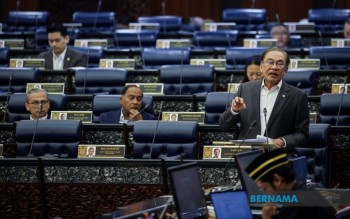
Prime Minister Datuk Seri Anwar Ibrahim announced on July 7 that Malaysia is introducing an e-Invoice Voluntary Declaration Programme extending through December 31, 2027, designed to alleviate the regulatory and financial pressures facing the nation's business community, particularly micro, small and medium enterprises. Speaking during parliamentary question time in the Dewan Rakyat, Anwar, who simultaneously serves as Finance Minister, outlined how the initiative represents a deliberate policy shift to reduce compliance burdens at a time when MSMEs face mounting operational challenges in an increasingly uncertain global economic environment.
The centrepiece of this programme is a remarkable concession: businesses making voluntary updates, reviews, and corrections to their tax positions during the three-and-a-half-year window will face no punitive measures from the Inland Revenue Board of Malaysia. Anwar emphasised that such lenient treatment in income tax matters is extraordinarily rare in Malaysian tax administration, underscoring the government's commitment to encouraging transparent compliance rather than imposing punitive measures. This approach reflects a philosophical shift toward incentivizing voluntary adherence over enforcement-driven compliance, a stance that could reshape how Malaysia administers its tax regime.
The parliamentary question, posed by Lee Chuan How, the PH representative for Ipoh Timor, specifically addressed government strategies for supporting businesses navigating contemporary global economic headwinds. Lee's inquiry highlighted the acute challenges confronting entrepreneurs, particularly those operating at the micro and small scale where operational margins are typically thinnest and administrative capacity most constrained. The government's response through Anwar signals recognition that regulatory compliance, while necessary, should not become an additional barrier to business viability.
Crucially, the government is coupling the voluntary declaration amnesty with accelerated tax incentives. The finance ministry will permit eligible businesses to claim full capital allowances within a single fiscal year for expenses directly incurred in implementing e-invoice systems and processes. This measure essentially front-loads tax relief, allowing immediate recognition of investment costs rather than spreading deductions across multiple years. Such acceleration improves cash flow dynamics for MSMEs, many of which operate on razor-thin liquidity margins and cannot afford prolonged periods waiting for tax benefits to materialise.
The incentive structure reveals strategic thinking about business incentivization. By offering both penalty forgiveness and accelerated tax deductions, the government is creating dual motivations for compliance: businesses gain breathing room to rectify any historical discrepancies while simultaneously recovering implementation costs through faster tax relief. This carrot-and-stick approach, notably skewed heavily toward carrots, represents a departure from conventional tax administration in Southeast Asia, where compliance regimes typically emphasise deterrence and penalties.
Contextualising this announcement requires understanding Malaysia's evolving e-invoice landscape. In December 2025, the government had already elevated the income threshold for e-invoice exemption from RM500,000 to RM1 million, a substantial increase that benefited over one million taxpayers. This progressive adjustment demonstrates a pattern of policy refinement responding to real-world implementation challenges and business feedback. The expansion essentially liberated a significant cohort of smaller operators from mandatory electronic invoicing requirements, recognising that implementation costs and technical infrastructure demands pose disproportionate burdens for enterprises with limited administrative resources.
The cumulative effect of these measures—threshold expansion combined with voluntary declaration programmes and accelerated capital allowance claims—creates a layered support structure for MSMEs. Businesses earning under RM1 million remain exempt entirely, eliminating compliance obligations altogether. Those above the threshold now face a more navigable transition period with explicit financial incentives. Those with historical compliance gaps gain explicit opportunity for correction without fear of revenue board enforcement action. This architecture suggests sophisticated policy design addressing different segments of the MSME ecosystem with appropriately calibrated interventions.
For Malaysian businesses, particularly those in labour-intensive sectors like manufacturing, hospitality, and retail where MSME representation is substantial, these initiatives carry immediate operational significance. The voluntary declaration window offers genuine value—a rare opportunity in tax administration to correct historical discrepancies without incurring penalties, interest, or audits. Small business owners who have struggled with e-invoice system implementation or harboured concerns about inadvertent compliance lapses now have explicit pathways to resolution.
Regionally, Malaysia's approach invites comparison with peer economies in Southeast Asia. While Singapore and Thailand maintain relatively stringent tax compliance regimes with limited amnesty provisions, Malaysia is positioning itself as a more business-friendly jurisdiction willing to adapt regulations in response to MSME pressures. This positioning could enhance Malaysia's attractiveness to entrepreneurs, particularly for regional small business operations considering jurisdiction selection for tax and operational purposes.
The programme's three-and-a-half-year timeframe suggests government confidence in business participation. Unlike compressed amnesty windows that create artificial urgency, this extended horizon allows businesses to plan systematically for compliance and system implementation. It signals that the government understands MSME resource constraints and is willing to accommodate deliberate, non-rushed transitions to digital tax infrastructure.
Implementation challenges will inevitably emerge. Revenue board staff will require training in administering penalty-free correction procedures. Taxpayers must understand eligibility criteria and documentation requirements. The Inland Revenue Board will need to clarify precisely which corrections qualify for penalty forgiveness and establish clear procedural frameworks. The coming months will test whether the administrative apparatus can translate ambitious policy intentions into consistent, business-friendly implementation.
Ultimately, this initiative reflects broader government philosophy prioritising MSME survival and growth during economically fragile periods. By reducing perceived risks associated with tax compliance, lowering effective implementation costs through accelerated deductions, and offering explicit forgiveness mechanisms, the government is attempting to remove friction from the business operating environment. Whether these measures sufficiently address MSME concerns or merely represent incremental adjustment will become apparent as businesses respond to the programme and operational reality emerges.

