Malaysia is embarking on an ambitious overhaul of its public spaces through the newly announced MY Public Space initiative, a partnership between the Ministry of Housing and Local Government (KPKT) and UN-Habitat designed to transform how communities access and experience urban green areas. The programme was unveiled at the 2026 National Landscape Day Celebration in Melaka, officiated by Prime Minister Datuk Seri Anwar Ibrahim, signalling the government's commitment to reimagining public realm development across the country.
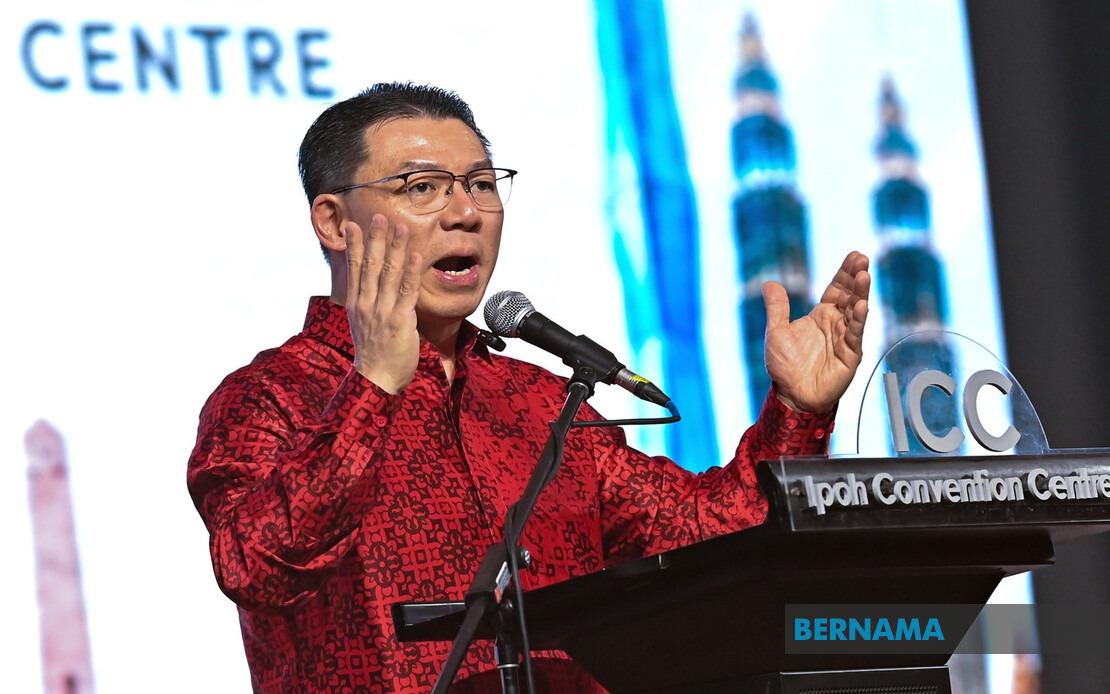
At the heart of this initiative lies a recognition that public spaces form the backbone of liveable, equitable cities. Housing and Local Government Minister Nga Kor Ming outlined how the MY Public Space framework will embed international best practices into Malaysia's urban planning while respecting local contexts and aspirations. Rather than importing foreign models wholesale, the initiative seeks to adapt proven methodologies to address Malaysia's specific demographic, climatic, and developmental challenges. This calibrated approach reflects growing sophistication in how developing nations adopt global standards—not as rigid templates but as flexible guides tailored to national circumstances.
The strategic collaboration with UN-Habitat carries particular significance given Malaysia's elevated standing within global urban governance circles. As President of the UN-Habitat Assembly, Malaysia has committed to accelerating the achievement of the Sustainable Development Goals through enhanced international cooperation. The MY Public Space initiative thus positions the country not merely as a recipient of best practices but as a thought leader capable of synthesizing global expertise with regional innovation. This positioning has tangible benefits for Malaysia's soft power and economic standing, particularly as cities worldwide increasingly compete to attract talent and investment based on quality-of-life metrics.
The implementation framework comprises four interlocking components that collectively address different dimensions of public space management. First, a national recognition framework aligned with the Rosa Sinensis Award will establish quality benchmarks and celebrate exemplary projects. Second, the MY Public Space Toolkit will undergo pilot testing to ensure its practical applicability across diverse municipal contexts, from metropolitan Kuala Lumpur to smaller district towns. Third, the initiative focuses on professionalizing public space management practices, recognizing that even well-designed spaces deteriorate without sustained stewardship. Finally, the toolkit will be mainstreamed into national landscape development guidelines, embedding these standards into the regulatory apparatus that shapes future development.
Parallel to this initiative runs an equally ambitious infrastructure commitment: the government targets creating 1,000 MADANI Parks nationwide by 2035. This decade-long programme represents a substantial investment in distributed green infrastructure, ensuring that park access is not concentrated in affluent urban cores but systematically extended to underserved communities. The preliminary results are encouraging. Between 2024 and 2025, developers completed 217 MADANI Recreational Parks across the country, overshooting the annual target of 100 parks. Melaka alone accounts for ten of these parks, with three additional facilities planned for Ayer Keroh and Masjid Tanah.
The expansion of public green space carries implications extending far beyond aesthetics or leisure. Research consistently links accessible parks to improved physical and mental health outcomes, reduced social fragmentation, and enhanced property values in surrounding areas. For Malaysia, a nation grappling with rising urbanization rates and the associated pressures on mental health and social cohesion, systematic park development functions as preventive public health infrastructure. The emphasis on inclusivity and safety within the MY Public Space framework acknowledges that parks serve different populations—elderly residents seeking gentle exercise spaces, children requiring safe play areas, and workers needing respite from urban intensity.
Economic dimensions of this initiative warrant equal attention. The government projects that Malaysia's landscape industry will contribute up to RM40 billion to GDP by 2035, a substantial increase from current levels. Landscape products and services already generated export revenues of RM534.3 million in 2025, reaching markets including Singapore, Japan, Australia, and the United States. This export performance reveals that Malaysian landscape expertise commands international competitive advantage, yet remains significantly underexploited. The Malaysian Landscape Industry Blueprint, currently being developed by KPKT's National Landscape Department, targets enhanced export competitiveness through workforce capacity building, industry standard coordination, green technology innovation, and value chain strengthening.
The landscape industry's growth potential is particularly relevant for Southeast Asian economies seeking to diversify revenue streams beyond traditional sectors. As regional countries invest in urban greening and climate adaptation, demand for landscape design, horticultural expertise, and environmental restoration services will intensify. Malaysian firms positioned at the forefront of these developments—backed by government recognition frameworks and aligned with international standards—stand to capture meaningful market share. The emphasis on local industry competitiveness suggests that the MY Public Space initiative operates simultaneously as urban development programme, environmental strategy, and economic development tool.
Implementing such multi-faceted programmes across a geographically dispersed, economically diverse nation presents substantial coordination challenges. Municipal authorities, state governments, private developers, and civil society organizations must align on standards, funding mechanisms, and maintenance protocols. The toolkit approach addresses this challenge by providing standardized yet adaptable guidelines that different stakeholders can operationalize within their specific contexts. Success will ultimately depend on consistent political commitment across election cycles and sufficient budgetary allocation to avoid the common pattern where ambitious infrastructure programmes falter during implementation phases.
The climate dimension of public space development merits explicit recognition, though not extensively detailed in current announcements. Green spaces function as natural infrastructure for managing urban heat islands, absorbing stormwater runoff, and providing habitat corridors for urban biodiversity. As Malaysia experiences intensifying weather volatility, the 1,000 MADANI Parks programme simultaneously delivers recreation benefits and climate resilience. Parks designed with permeable surfaces, native plantings, and integrated water management contribute to the nation's adaptation strategy while enhancing community well-being—a synergy that underscores why public space investment transcends conventional urban planning considerations.
Looking forward, the MY Public Space initiative represents a maturing approach to public realm development in the Southeast Asian context. Rather than oscillating between top-down imposition of bureaucratic standards and reactive, uncoordinated development, Malaysia is attempting to establish participatory, evidence-based frameworks that balance consistency with flexibility. The involvement of UN-Habitat ensures access to global networks and methodologies, while the emphasis on localization prevents the initiative from becoming disconnected from Malaysian urban realities. Success in this endeavour could establish a regional model that other Southeast Asian nations might adapt, further elevating Malaysia's influence in how emerging economies approach sustainable urbanization.

