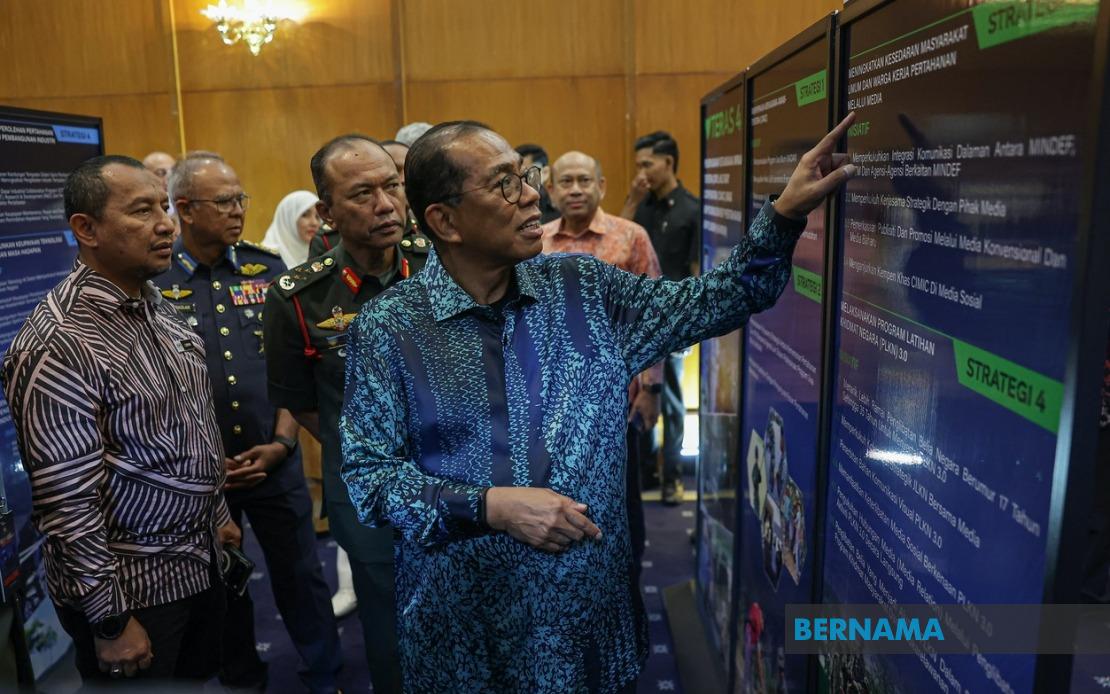
Malaysia's Defence Ministry has introduced an ambitious strategic overhaul, launching the National Defence Strategic Plan (PSPN) and Defence Capacity Blueprint (RTKP) for the 2026-2030 period. Defence Minister Datuk Seri Mohamed Khaled Nordin unveiled both documents at a ceremony in Kuala Lumpur on June 25, positioning them as integral components that build upon the existing Defence White Paper. The timing reflects growing regional concerns about maritime security, great power competition in Southeast Asia, and transnational threats that conventional military planning alone cannot address.
These two frameworks represent a deliberate shift towards comprehensive defence planning that acknowledges the fundamental transformation in how national security operates in the contemporary era. Rather than viewing defence strategy and implementation capacity as separate exercises, the ministry has integrated them into a cohesive system where the PSPN identifies strategic objectives while the RTKP ensures the armed forces possess the resources and institutional capability to achieve them. This approach recognises that even well-crafted strategy fails without adequate financial allocation, skilled personnel, technological infrastructure, and seamless coordination between government agencies.
The global security environment has become markedly more complex, with Malaysia and other regional nations grappling with multiple simultaneous challenges. Geopolitical uncertainty continues to rise as major powers compete for influence across Southeast Asia, affecting shipping lanes and economic interests critical to Malaysian prosperity. Simultaneously, disruptive technologies including artificial intelligence and automation are reshaping military doctrine and capability requirements. These technological advances offer strategic opportunities but also create vulnerabilities that adversaries might exploit. The Mid-Term Review that informed these new frameworks explicitly examined how Malaysia's defence posture must evolve to remain credible and effective against threats that were largely theoretical just a decade ago.
Beyond traditional security challenges, non-traditional threats have proliferated across the region. Cybersecurity breaches, maritime terrorism, human trafficking, and organised crime exploit state vulnerabilities and take advantage of porous borders and limited inter-agency coordination. The strategic plan acknowledges that purely military responses prove insufficient against these challenges, requiring coordination across police, customs, coast guard, and intelligence services. This whole-of-government approach represents institutional maturation, moving beyond the siloed thinking that characterised earlier defence planning.
The PSPN rests on seven strategic pillars that collectively define Malaysia's defence ambitions through 2030. Operational readiness of the Malaysian Armed Forces remains foundational, ensuring personnel are trained, equipped, and positioned to respond swiftly to threats. Enhancement of defence capabilities addresses the gap between current military equipment and the advanced systems required to deter potential adversaries and protect national interests. Personnel welfare and veterans' support recognise that soldier retention and morale directly impact military effectiveness. Defence technology and innovation pillar acknowledges that Malaysia cannot indefinitely rely on imported systems and must develop indigenous technological capacity in critical areas.
The Defence Capacity Blueprint approaches implementation systematically, identifying that strategic goals collapse without corresponding investment in four critical areas. Financial resources represent the first pillar, requiring sustained budget commitment despite competing developmental priorities. Malaysia's defence spending must remain competitive regionally while maintaining fiscal sustainability. Human capital encompasses recruitment, training, and retention of military personnel across all ranks, plus development of specialised technical expertise in emerging fields. Technological expertise includes both current capabilities and research and development capacity to adapt to evolving threats. Inter-agency coordination ensures that maritime authorities, air defence, intelligence services, and ground forces operate as an integrated system rather than competing bureaucracies.
Minister Mohamed Khaled's characterisation of the relationship between the two frameworks clarifies their complementary nature. The PSPN answers the strategic question of where Malaysia's defence aspirations lie, while the RTKP addresses the practical question of how to achieve those objectives. This separation prevents strategic documents from becoming disconnected wish-lists divorced from operational reality. By explicitly planning for implementation capacity, Malaysia acknowledges that ambition without resources produces only disappointment and erodes public confidence in defence institutions.
The whole-of-society dimension reflects sophisticated understanding that national defence ultimately depends on broad public support, industrial capacity, and social cohesion. Defence manufacturing, logistics, intelligence gathering, and supply chain resilience extend far beyond military institutions into civilian sectors including telecommunications, energy, transportation, and manufacturing. Private companies, research universities, and civil society organisations all contribute to national defence capacity. The strategic frameworks must therefore incentivise participation from these actors through clear communication of national security priorities and transparent processes for defence procurement and partnership.
Concrete capability acquisitions underpin these strategic documents. The Malaysian Armed Forces received three ANKA Medium Altitude Long Endurance unmanned aircraft systems in March, now deployed at Labuan Air Base in Sabah. These systems extend surveillance capabilities across the South China Sea and surrounding waters, addressing critical intelligence gaps. Additional acquisitions scheduled through the plan period include FA-50M light combat aircraft, maritime patrol aircraft, and a second batch of Littoral Mission Ships. These platforms address specific vulnerabilities: light combat aircraft enhance air superiority and ground support capabilities, maritime patrol aircraft extend coastal surveillance reach, and littoral mission ships improve naval presence in shallow waters and archipelagic regions.
For Malaysian readers, these strategic initiatives carry profound implications. A well-prepared defence establishment enhances national independence and credibility in regional negotiations, from maritime boundary disputes to trade negotiations with major powers. Defence spending stimulates domestic industrial development as defence manufacturers establish supply chains and training programmes. Military technological advancement creates opportunities for civilian technological spillovers in areas including communications, materials science, and automation. More fundamentally, defence preparedness protects the economic and political stability that underpins Malaysian development aspirations.
The strategic plan also carries implications for Southeast Asian security architecture. Malaysia's neighbours including Thailand, Indonesia, Philippines, and Vietnam face similar security challenges and emerging threats. Successful implementation of these frameworks could establish models for regional defence cooperation, shared intelligence, and coordinated responses to transnational crime and maritime security threats. Conversely, inadequate implementation might create security vacuums that regional or extra-regional powers exploit to their advantage and Malaysia's detriment.
Implementation success depends fundamentally on sustained political commitment and institutional discipline across electoral cycles. Defence strategic plans often languish when political attention shifts or when initial budget allocations prove insufficient. The explicit separation of strategy from capacity building suggests the ministry recognises this risk and has attempted to create mechanisms that force periodic reassessment of implementation progress. Transparency regarding defence spending and strategic outcomes, while respecting legitimate security classifications, will be essential for maintaining public confidence in these ambitious frameworks.
As Malaysia navigates the remainder of the decade, these strategic documents will shape military modernisation, budget allocation, and inter-agency cooperation. Their success will determine whether Malaysia maintains a defence posture adequate to protect national interests amid geopolitical turbulence, technological disruption, and emerging transnational threats. The frameworks represent thoughtful strategic thinking, but ultimately only disciplined implementation will translate intention into actual military capability and national security.

