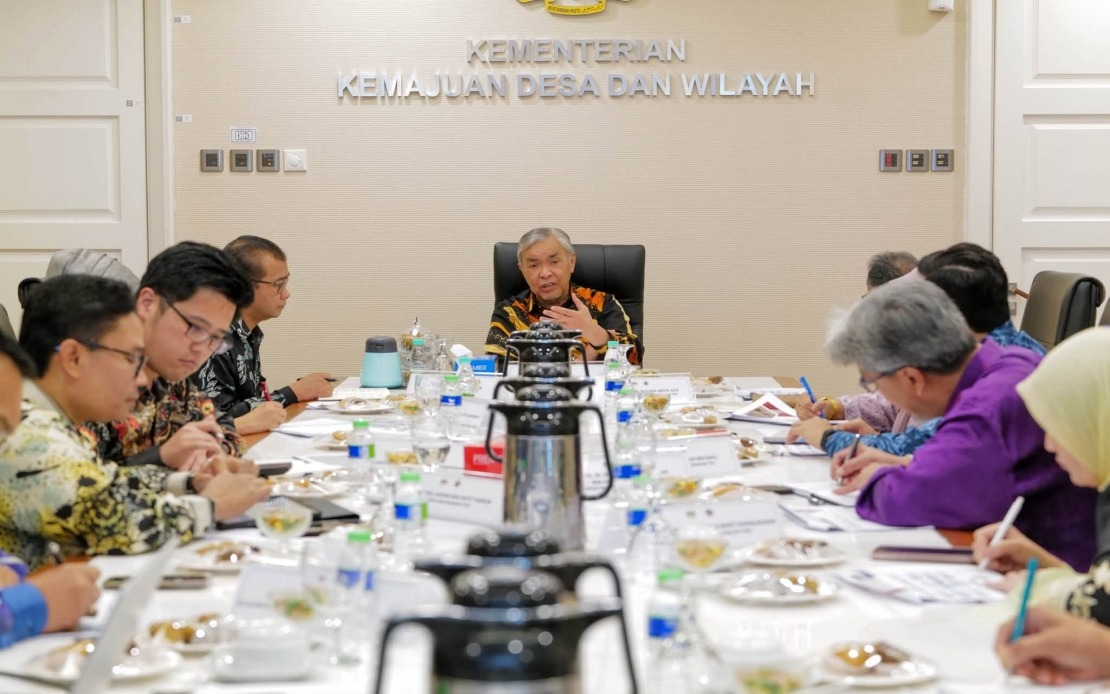
Malaysia is launching an ambitious overhaul of its technical and vocational education landscape, with the government announcing the creation of the Strategic TVET 2.0 Task Force 2026-2035 alongside 10 dedicated TVET Strategic Committees. Deputy Prime Minister Datuk Seri Dr Ahmad Zahid Hamidi, speaking in his capacity as Chairman of the National TVET Council, outlined the initiative as a cornerstone of the country's human capital strategy, designed to forge stronger connections between education providers and industry employers while preparing workers for tomorrow's economic realities.
The task force operates as a coordinating body meant to centralise policy implementation across Malaysia's fragmented vocational training landscape. Rather than allowing individual institutions to operate in isolation, the new framework creates institutional accountability and ensures that TVET programmes respond dynamically to employer demands and technological disruption. Ahmad Zahid emphasised that this structural change reflects a shift toward more strategic, integrated, and impact-driven coordination—language that suggests previous efforts lacked sufficient synergy or measurable outcomes. By consolidating decision-making authority, the government hopes to eliminate duplication and accelerate the modernisation of curriculum, teaching standards, and facility investment across Malaysia's polytechnics, community colleges, and private training providers.
Leadership of the task force falls to Emeritus Professor Datuk Dr Siti Hamisah Tapsir, president and vice-chancellor of UCSI University, signalling that the initiative draws heavily on academic expertise alongside government direction. Her appointment underscores a deliberate effort to ground TVET policy in empirical research and international best practice rather than purely bureaucratic or political considerations. The 10 supporting committees reflect a comprehensive approach to system redesign, each addressing distinct but interconnected challenges within the vocational training ecosystem.
The governance committee, chaired by Datuk Dr Asyraf Wajdi Dusuki, will focus on institutional reform and regulatory coherence—a critical undertaking given Malaysia's history of fragmented oversight across multiple agencies. The TVET Industry and Employers Committee, led by Datuk Khairul Azwan Harun, positions employers as active partners in curriculum design and labour market forecasting rather than passive consumers of graduate talent. This shift carries genuine significance for Malaysia, where employers have long complained that graduates lack practical skills and industry awareness. By formalising employer representation on strategic committees, the government creates mechanisms for real-time feedback and collaborative problem-solving.
Financing remains a persistent constraint on TVET expansion and quality improvement across Southeast Asia, making the Financing and Sustainability Committee, chaired by Ramelle Ashram Ramli, arguably the most consequential body in the task force structure. This committee must devise funding models that allow rapid infrastructure modernisation, competitive instructor salaries, and accessible student support—all prerequisites for attracting talented individuals to vocational pathways. Malaysia's reputation for generous public spending on education remains under pressure from competing budgetary demands, rendering sustainable financing mechanisms essential to programme longevity.
The prominence of the Women Empowerment in TVET Committee, chaired by Datuk Dr Masilla Kamalrudin, addresses a critical demographic imbalance within Malaysia's vocational system. Female participation in technical fields remains substantially below their representation in academic streams, a pattern that squanders human potential and limits the pool of skilled workers available to employers. By creating dedicated structures to address gender barriers—whether through targeted recruitment, workplace culture change, or curriculum adaptation—the government acknowledges that systemic reform requires explicit attention to inclusion alongside programme quality.
The timing of this initiative, anchored to a decade-long 2026-2035 planning horizon, signals patient commitment to institutional transformation rather than quick political victories. A 10-year timeline allows for iterative learning, generational turnover in institutional leadership, and compound returns on infrastructure investment. For Malaysian policymakers and regional observers, this extended timeframe suggests seriousness about embedding change into structural systems rather than pursuing symbolic gestures.
The announcement arrives against a backdrop of regional competition for skilled workers and multinational manufacturing investment. Thailand, Vietnam, and Indonesia have all invested heavily in TVET expansion, recognising that comparative advantage in labour-intensive sectors depends on maintaining productivity and quality advantages over lower-wage competitors. Malaysia's historical reliance on high-skilled foreign workers and its aspirations toward higher-value manufacturing make workforce development a strategic imperative. By strengthening domestic TVET capacity, Malaysia reduces dependence on expatriate labour while building export competitiveness in sectors demanding technical expertise.
Ahmad Zahid framed the initiative within the MADANI government's broader commitment to human capital development, positioning TVET alongside university education rather than as a subordinate track. This rhetorical repositioning matters considerably, as Malaysian society has historically ranked vocational pathways below academic credentials in social prestige and earning expectations. Sustained messaging about TVET's strategic importance may gradually reshape family and student attitudes, potentially increasing application rates and completion rates among cohorts currently underrepresented in technical fields.
The structural multiplication of committees reflects recognition that TVET reform cannot succeed through top-down directives alone; it requires sustained engagement with employers, educational institutions, financing bodies, and community organisations. By distributing leadership across multiple chairpersons and committee structures, the government distributes both decision-making authority and accountability. This distributed model may reduce political pressure on individual ministers while creating institutional resilience against leadership changes.
Implementation success will ultimately depend on resource allocation, institutional capacity, and the willingness of entrenched actors—including universities protecting their market share and private training providers protecting their revenue streams—to participate in genuine system-wide coordination. The Strategic TVET 2.0 Task Force must navigate these competing interests while maintaining focus on student outcomes and employer satisfaction. For Malaysia's regional standing and economic trajectory, the effectiveness of this initiative will carry consequences extending well beyond vocational classrooms.

