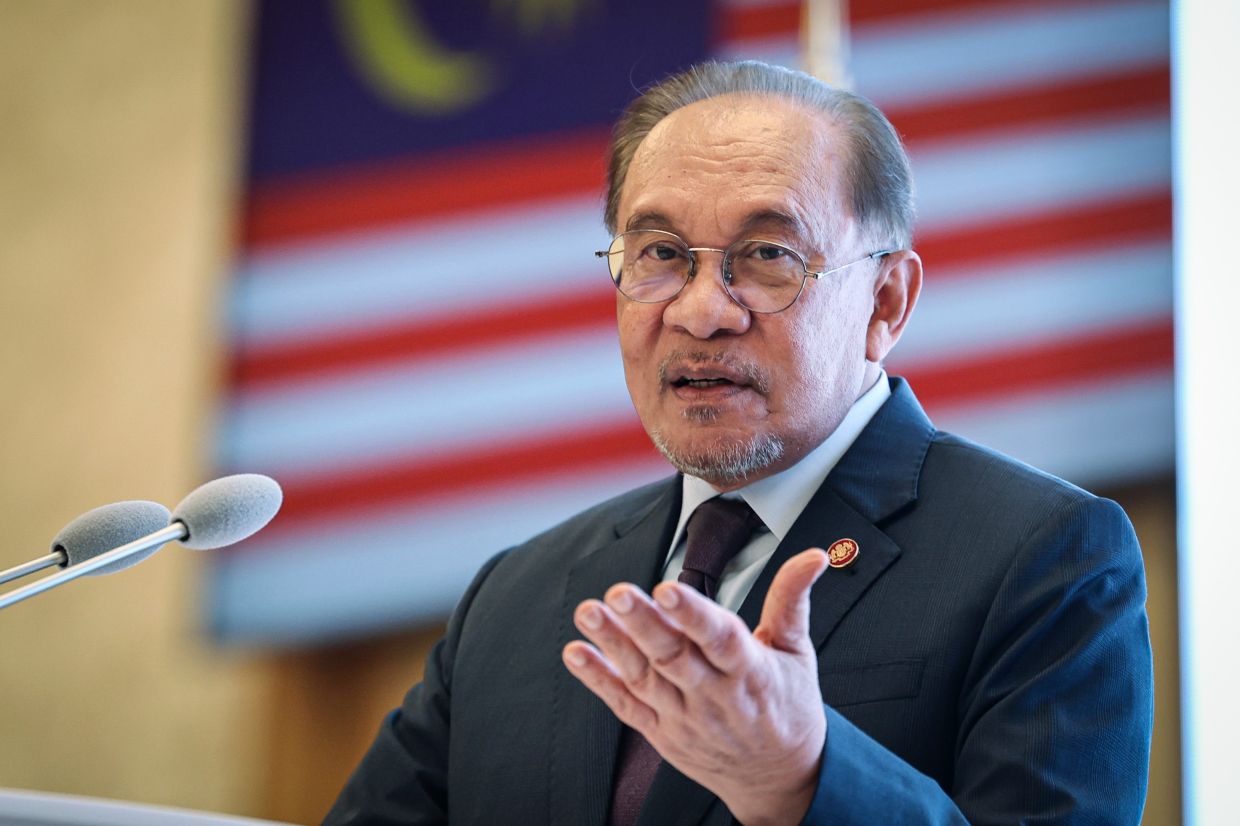
Malaysia's standing as a pivotal trading nation positioned at the intersection of major global commerce routes forms the backbone of its economic diplomacy strategy, Prime Minister Datuk Seri Anwar Ibrahim articulated during the 39th Asia-Pacific Roundtable in Kuala Lumpur. The premier, who simultaneously holds the Finance Ministry portfolio, framed this geographic advantage and commercial influence as defining characteristics of how the country engages internationally and pursues national economic objectives.
For Malaysia, maintaining and deepening economic relationships with established trading counterparts has become a deliberate governmental priority. Anwar explained that successive administrations have invested significant effort in nurturing these bonds, recognizing that durable partnerships with familiar markets provide both stability and opportunity. This approach reflects a calculated strategy to balance continuity with evolution, ensuring Malaysia benefits from longstanding relationships while simultaneously preparing for shifting global conditions.
The country has positioned itself prominently within existing multilateral trade frameworks designed to enhance market access and facilitate investment. Through mechanisms including the ASEAN Free Trade Area, the Regional Comprehensive Economic Partnership, and the Comprehensive and Progressive Agreement for Trans-Pacific Partnership, Malaysia actively pursues initiatives to lower trade barriers, negotiate favourable tariff arrangements, and create conditions for more equitable cross-border investment flows. This participation underscores Malaysia's commitment to rules-based international commerce rather than bilateral arrangements alone.
At the heart of Malaysia's strategic vision lies unwavering commitment to ASEAN centrality, notwithstanding periodic skepticism about regional integration effectiveness. Anwar stressed that maintaining ASEAN as the foundation of foreign policy remains essential, despite acknowledged challenges and reservations some quarters occasionally voice. This regional platform serves dual purposes: advancing Malaysian interests while simultaneously contributing to broader Southeast Asian peace, prosperity and stability—a formulation that positions Malaysia's prosperity as inseparable from collective regional wellbeing.
Beyond the Southeast Asian orbit, Malaysia actively pursues economic expansion into geographically dispersed markets previously underexploited or considered peripheral to traditional trade patterns. The government has strategically targeted West Asia, Central Asia, Latin America and Africa as priority regions for deepened economic engagement. This geographic diversification responds to Malaysia's recognition that over-reliance on any single regional market or trade partner introduces vulnerability in an increasingly volatile international environment.
The intersection of economic strategy with geopolitical calculation represents a sophisticated dimension of Malaysia's external engagement. Anwar characterized this fusion as enabling "genuine collaboration" in sectors offering mutual benefit and aligned interests. The halal industry, digital economy, agricultural production, and green technology emerge as domains where Malaysia can contribute distinctive capabilities while addressing partner nation priorities. These sectors transcend mere commodity exchange, instead building relationships rooted in complementary development objectives and shared technological advancement.
Energy cooperation exemplifies how Malaysia translates economic diplomacy into concrete commercial advantage. Anwar highlighted recent developments in Turkmenistan, where state-owned Petronas concluded agreements with local entities for exploration and development of two substantial gas reserves. Such arrangements extend beyond immediate hydrocarbon extraction, encompassing a longer-term framework governing cooperation in human capital development and technical expertise transfer. These dimensions create enduring institutional linkages that outlast individual projects.
Malaysia's overarching objective encompasses both preservation of existing partnerships and systematic cultivation of new relationships. The strategic ambition involves maintaining economic ties that prove broadly diversified, demonstrating resilience against market fluctuations or regional disruptions, and remaining oriented toward future opportunities rather than becoming locked into historical patterns. This forward orientation acknowledges that past partnerships, while valuable, cannot alone secure Malaysia's medium and long-term prosperity.
Diversification, as Anwar emphasized, transcends conventional economic planning—it represents fundamental national necessity. In an international context characterized by unpredictability, trade tensions, and competing power interests, Malaysia cannot depend upon any single market, commodity, or relationship to guarantee stability. The strategy demands continuous calibration, ongoing relationship management, and willingness to enter new economic territories. This approach particularly resonates for Southeast Asian nations navigating between major powers while seeking autonomous development pathways.
Malaysia's economic diplomacy framework reflects broader recognition that commercial relationships generate political and strategic dividends beyond immediate financial transactions. Strong trade partnerships build constituencies for stability, create mutual dependence that discourages conflict, and establish communication channels that facilitate cooperation across multiple domains. For a mid-sized nation like Malaysia, such comprehensive relationship-building compensates for limited military or demographic weight.
The Asia-Pacific Roundtable, organized by the Institute of Strategic and International Studies Malaysia, provided an appropriate venue for articulating these strategic priorities. Bringing together regional and international policy figures, the three-day June 30-July 2 forum enabled Malaysia to communicate its vision to influential audiences, potentially attracting new partners and deepening existing dialogues. Such forums function as important mechanisms through which mid-sized powers reinforce their positions within international discourse and advance their particular interpretations of regional and global priorities.
Looking forward, Malaysia's success increasingly depends upon executing this multifaceted economic diplomacy strategy with consistency and adaptability. The country must simultaneously maintain ASEAN solidarity, preserve relationships with traditional partners, develop new markets, and remain responsive to emerging opportunities. This balancing act requires sophisticated institutional capacity, clear strategic priorities, and flexibility in implementation—capacities Malaysia has historically demonstrated but must continuously strengthen.

