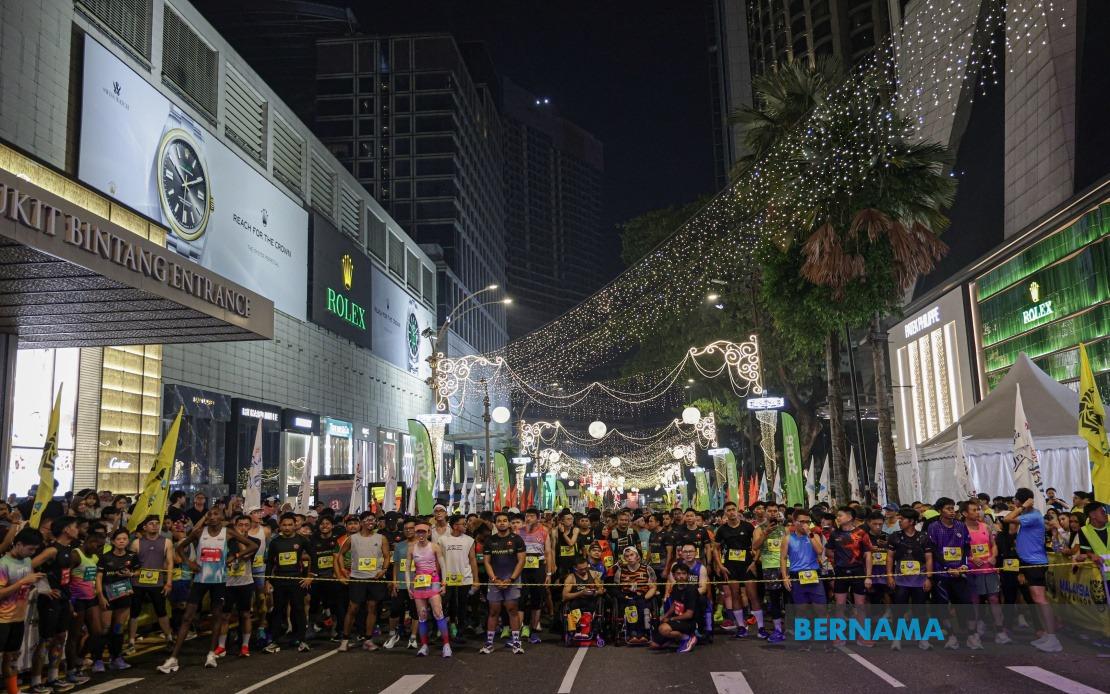
The Malaysia Marathon 2026 commenced in the early hours of National Day, with the flagship 42-kilometre Full Marathon category launching just after midnight from the vicinity of Pavilion Kuala Lumpur. Minister of Tourism, Arts and Culture Datuk Seri Tiong King Sing presided over the ceremony, signalling the start of what organisers have positioned as a marquee sporting event for the nation. The event ultimately mobilised 25,000 participants from Malaysia and abroad, representing one of the region's largest running competitions and marking a significant moment in the country's sporting calendar.
The staggered start times reflected the scale of the undertaking, with the Full Marathon's 2,000 elite and amateur runners departing at 12:30 am on August 30, followed by the 21-kilometre Half Marathon cohort of 8,000 participants two and a half hours later. The 10-kilometre category, attracting 5,000 runners, began at 3:30 am, while the 5-kilometre Fun Run, open to 10,000 participants, started at 7:30 am. This phased approach allowed the Kuala Lumpur Police to manage traffic flow across the city whilst maintaining safety and crowd control throughout the marathon window.
A defining feature of this inaugural edition lay in its unconventional route design and finishing venue. Rather than concluding at the traditional Dataran Merdeka location, organisers routed all four categories to finish at the Kuala Lumpur City Centre (KLCC) precinct, a choice that reflected both logistical modernisation and symbolic alignment with the city's contemporary identity. The selection represented a departure from established marathon conventions in Malaysia, positioning the event within the commercial and architectural heart of the capital rather than its civic and ceremonial centre.
The Full Marathon course presented particular physical demands, incorporating a 900-metre elevation gain as runners navigated the Ampang-Kuala Lumpur Elevated Highway (AKLEH). This challenging topography distinguished the race from typical urban marathon profiles in Southeast Asia, where courses generally favour flatter terrain. The inclusion of such gradient demands served both to test participant endurance and to showcase the diverse topographical features available within the Klang Valley metropolitan area.
Internationally, the marathon secured recognition from World Athletics, the sport's global governing body, validating the event's standards and infrastructure. Participants hailed from diverse nations, including Japan and Nigeria, signalling the race's appeal beyond Malaysia's borders and its positioning within an international competitive calendar. Such international participation carries significance for Malaysia's standing in global sports tourism and soft power projection, particularly amongst growing middle-class runner demographics across Asia.
A striking technological element emerged through the participation of an HONOR-made humanoid robot competing within the 10-kilometre category. This novel inclusion represented an attempt to inject innovation and media appeal into the event, blending traditional sporting competition with emerging artificial intelligence and robotics sectors. The robot's participation served multiple purposes: generating international media interest, demonstrating Malaysian engagement with cutting-edge technology, and creating a visually distinctive narrative hook for spectators and digital audiences.
The logistical coordination required to execute the marathon necessitated comprehensive traffic management throughout Kuala Lumpur. Police authorities implemented phased road closures and diversions commencing from the evening of August 29 and extending through the afternoon of August 30, affecting major arterial routes including Jalan Bukit Bintang, Jalan Ampang, Jalan Sultan Ismail, and Jalan Raja Chulan. The AKLEH and SUKE highways also experienced restrictions, positioning this sporting event amongst the city's most significant traffic management exercises and requiring coordination across multiple government agencies.
The timing of the marathon as a National Day celebration mechanism reflected broader strategic thinking about how Malaysia positions itself domestically and internationally. By anchoring the event to the 69th National Day rather than treating it as a standalone sporting venture, organisers embedded patriotic symbolism within athletic achievement. This approach resonates within regional contexts where sporting events increasingly serve as platforms for national narrative-building and cultural expression, particularly within competitive Southeast Asian markets.
For Malaysian sports tourism, the marathon's scale and international recognition represent accumulating infrastructure and expertise in hosting major athletic competitions. The event's success contributes to an expanding portfolio of sporting occasions that attract overseas visitors, generate media coverage, and establish Malaysia as a credible host destination within the Asia-Pacific region's sporting calendar. This positioning carries economic implications extending beyond the marathon itself, influencing perceptions of Malaysian organisational capacity and modern infrastructure.
The participation surge, particularly the 10,000-strong Fun Run category, indicates substantial grassroots engagement with organised running culture within urban Malaysia. This demographic trend, observable across Southeast Asian cities, reflects evolving leisure patterns and health consciousness amongst middle and upper-income populations. The marathon's multi-tiered structure, accommodating both competitive athletes and recreational participants, maximised accessibility whilst maintaining elite-level competition standards, a formula increasingly adopted by successful events throughout the region.

