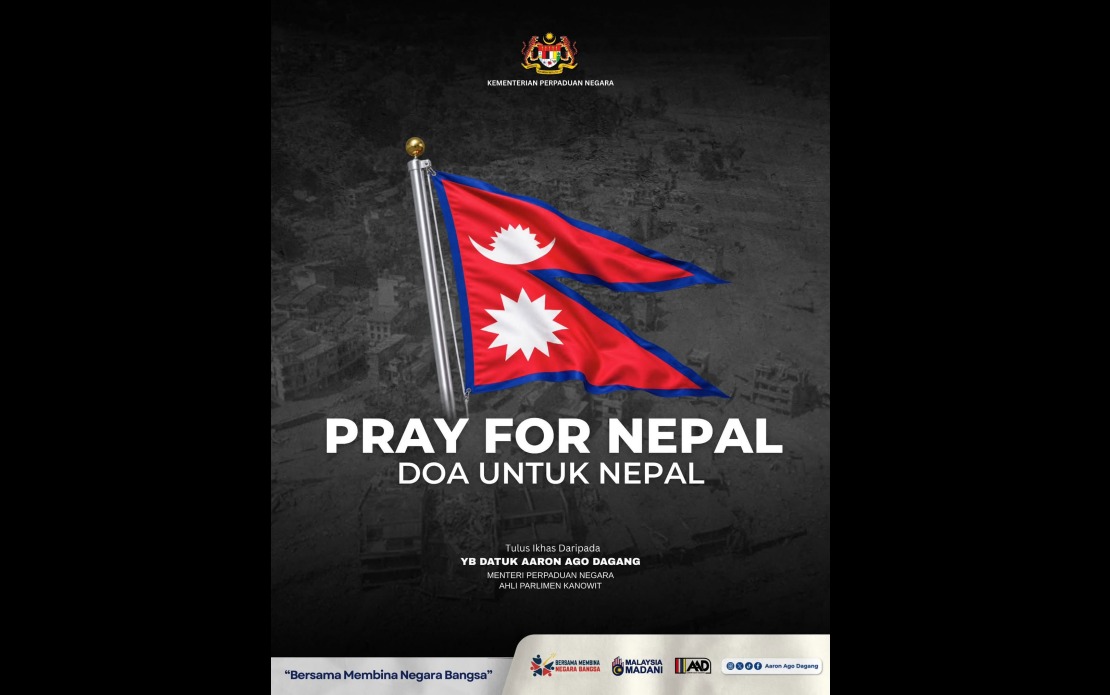
Malaysia has activated a coordinated diplomatic and humanitarian response following catastrophic flooding in Nepal's Rasuwa district, with the government prioritising the location and welfare of Malaysian nationals caught in the disaster. The swift mobilisation underscores the country's commitment to supporting its diaspora during international crises whilst extending solidarity to affected Southeast Asian neighbours facing increasingly severe climate-related hazards.
Datak Aaron Ago Dagang, Minister of National Unity, has publicly expressed his deep concern over the disaster through social media, calling on Malaysians to join in prayers for those affected and for the success of ongoing relief and recovery operations. His statement reflects the gravity with which the government views both the immediate humanitarian tragedy unfolding in Nepal and the specific vulnerability of Malaysian citizens in the region. The minister's appeal frames the crisis not merely as a foreign affairs matter but as one requiring collective national compassion and spiritual support.
The scale of uncertainty surrounding Malaysian nationals remains significant. As of 11 pm on 27 August, the Foreign Ministry had documented 57 Malaysians as uncontactable following the flooding, based on reports submitted by concerned family members, friends, and employers. This figure highlights the challenges inherent in rapid disaster assessment, particularly when communications infrastructure is compromised and affected individuals may be isolated in remote or damaged areas. The gap between the total Malaysian population in Nepal and those accounted for creates anxiety for many households awaiting confirmation of loved ones' safety.
Prime Minister Datuk Seri Anwar Ibrahim has directed comprehensive action across relevant government agencies to systematically identify and make contact with affected Malaysian citizens. This directive encompasses multiple ministries and security agencies, with the National Security Council and Ministry of Foreign Affairs taking lead roles. The coordinated approach aims to cut through bureaucratic silos and deploy resources efficiently, reflecting international best practice in consular crisis management during major disasters.
The flooding in Rasuwa district represents a significant meteorological event with widespread consequences for the region. Nepal's terrain, characterised by steep valleys and concentrated rainfall zones, creates particular vulnerability to flash flooding and landslides. The Rasuwa district, situated in Nepal's central mountainous region close to the Tibetan border, is especially prone to such disasters due to its geography. Climate change is intensifying extreme weather patterns across South Asia, making such incidents more frequent and severe, a development with implications for Malaysian residents and travellers throughout the region.
Matthew Aaron Ago Dagang's emphasis on the safety of Malaysian citizens reflects the government's dual responsibility: to provide consular protection and to demonstrate humanitarian concern for the broader affected population. By simultaneously expressing concern for both Malaysian nationals and Nepali communities, the minister positions Malaysia as a responsible regional actor engaged in genuine crisis solidarity rather than self-interested protection of citizens. This messaging carries weight in regional diplomacy, particularly given Malaysia's substantial economic and cultural ties with Nepal through tourism, labour migration, and educational exchange.
The Foreign Ministry's activation of family contact lines and coordination with relevant authorities represents a crisis communication protocol designed to provide anxious relatives with verified information and support resources. In disasters of this magnitude, rumours and misinformation frequently circulate through social media, causing unnecessary panic. Official channels help establish ground truth and enable targeted assistance to those genuinely in need. The ongoing verification process will likely refine the current figure of 57 uncontactable Malaysians as communications gradually restore across affected areas.
Nepal's disaster response capacity, whilst improving over recent years, remains constrained by infrastructure limitations and funding challenges. Malaysian assistance, whether through diplomatic channels, bilateral aid mechanisms, or non-governmental contributions, can meaningfully supplement local efforts. The government's public expressions of solidarity lay groundwork for potential humanitarian assistance, medical support, or search-and-rescue coordination if requested by Nepali authorities.
For the broader Malaysian diaspora in Nepal, this incident serves as a reminder of the inherent risks associated with residence in seismically and meteorologically active regions. Many Malaysians in Nepal are engaged in tourism, education, religious study, and business, creating distributed communities that rely heavily on functional communication networks and effective consular support during emergencies. The government's swift response provides reassurance that crisis protocols are operational and taken seriously at the highest policy levels.
The disaster also illuminates the interconnected nature of regional vulnerability in South Asia. Climate projections indicate that monsoon-related flooding will intensify across Nepal, Bhutan, and downstream areas of the Indian subcontinent in coming decades. Malaysia's experience with flood management in tropical and subtropical contexts may offer valuable technical knowledge for regional cooperation on disaster preparedness. This crisis, whilst immediately focused on rescue and relief, may catalyse longer-term regional dialogue on climate resilience and mutual assistance frameworks.
As information continues to flow from affected areas in Nepal, the Malaysian government's ongoing coordination efforts remain focused on establishing contact with remaining unaccounted citizens, providing consular support to those injured or displaced, and offering appropriate humanitarian assistance to Nepal's government. The situation exemplifies both the real risks faced by Malaysian nationals abroad and the institutional mechanisms designed to protect them during unforeseen catastrophes.

