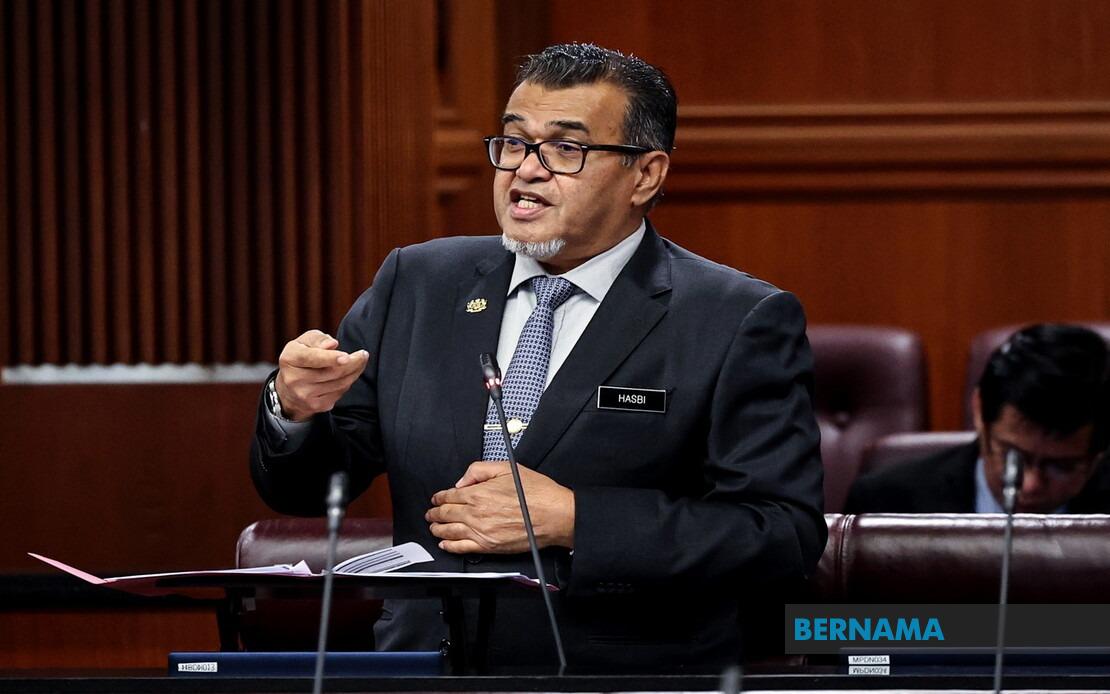
Malaysia's government is making substantial progress on a comprehensive overhaul of railway security laws designed to combat persistent theft, vandalism and trespassing affecting the country's rail infrastructure. Deputy Transport Minister Datuk Hasbi Habibollah announced that legislative amendments are being finalised for parliamentary presentation later in 2024, targeting what authorities describe as inadequate penalties under existing statutes that have emboldened criminal activity across the railway network.
The catalyst for these reforms is the alarming scale of cable theft plaguing Malaysian railways. Over the past three years, authorities documented 393 separate incidents resulting in the loss of 19,756 metres of railway cable valued at approximately RM16.3 million. These figures underscore a systemic vulnerability affecting both operational safety and financial viability of the nation's rail services. Cable theft is particularly concerning because stolen cabling undermines signalling systems, communications infrastructure and power distribution networks essential for safe train operations.
Current legal provisions are widely acknowledged as insufficient deterrents. Trespassing offences carry penalties ranging merely from RM500 to RM1,000, sums considered trivial relative to potential gains from organised cable theft rings. The deputy minister indicated that proposed amendments will introduce substantially harsher sentences for cable theft offences, particularly those involving security-critical infrastructure. By reclassifying such crimes and escalating punishments, policymakers aim to fundamentally alter the risk-reward calculus that drives criminal syndicates operating along Malaysian rail corridors.
Beyond legislative action, the government is pursuing a multi-layered enforcement strategy recognising that criminality often hinges on downstream markets rather than immediate theft alone. Strategic partnerships with the Royal Malaysian Police focus deliberately on disrupting the scrap metal trade, where stolen cable typically flows for rapid conversion to cash. By pressuring metal dealers and scrap operators to reject suspicious materials and implement verification protocols, authorities hope to eliminate the final economic incentive sustaining theft operations. This approach targets the structural economics underlying railway crime rather than merely apprehending individual perpetrators.
Technological deployment represents another critical pillar of the security enhancement programme. The Railway Assets Corporation has installed 1,146 artificial intelligence-enabled closed-circuit television systems across high-risk locations nationwide, representing an investment of RM14 million in surveillance infrastructure. These systems transcend conventional CCTV by employing machine learning algorithms capable of identifying suspicious behaviour patterns, intrusions and potential criminal activity in real-time rather than depending on manual review of recordings. Placement prioritises vulnerable segments where theft concentrations historically peak, from isolated sections prone to unauthorised access through to critical urban rail corridors.
Aerial surveillance using drone technology complements ground-based systems, extending monitoring capabilities to remote or physically inaccessible locations that would be impractical to patrol conventionally. Drones enable rapid response mobilisation once suspicious activity is detected, facilitating intervention before theft progresses to completion. This innovation proves particularly valuable across Malaysia's extensive rail network where geographical coverage would otherwise prove prohibitively expensive through traditional patrolling alone.
Operational enforcement capacity is being expanded through expanded auxiliary police presence. Keretapi Tanah Melayu Berhad obtained approval to procure twenty scrambler motorcycles equipped for the Auxiliary Police, specifically designated for enhanced patrols in high-risk rail areas. These lightweight vehicles enable rapid mobility through constrained spaces bordering rail corridors where conventional vehicles cannot readily navigate. The mobility advantage translates into faster incident response times and visible enforcement presence functioning as both deterrent and active crime-prevention mechanism along vulnerable stretches.
For Malaysian policymakers, railway security improvements carry implications extending beyond mere asset protection. Reliable rail infrastructure underpins broader economic connectivity and supply chain efficiency. Frequent thefts disrupting service reliability deter commuter and freight usage, eroding revenue streams and competitive positioning against road transport alternatives. The scale of losses—RM16.3 million across three years—represents resources diverted from network maintenance, safety upgrades and service expansion that would otherwise benefit the travelling public and freight operators.
Regionally, Malaysia's experience reflects broader challenges across Southeast Asia where railway networks face similar organised theft networks exploiting porous enforcement environments and inadequate legal frameworks. Thailand, Indonesia and the Philippines confront comparable cable theft epidemics threatening service reliability and safety. Malaysian regulatory innovations, particularly legal framework enhancements and technological deployments, may offer valuable lessons for neighbouring jurisdictions developing their own railway protection strategies.
The multi-pronged approach adopted demonstrates recognition that effective crime prevention requires simultaneous action across legal, technological and operational dimensions. Legislation alone proves ineffective without enforcement capacity and criminal market disruption. Conversely, surveillance technology and patrols cannot succeed absent adequate legal consequences deterring participation. Successful implementation will require sustained coordination between transport authorities, law enforcement agencies and scrap metal industry stakeholders, maintaining pressure across all intervention points simultaneously. The government's timeline of parliamentary tabling before year-end suggests commitment to legislative completion, though the real test of effectiveness will emerge through rigorous enforcement during the coming operational years.

