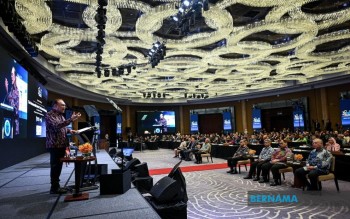
Prime Minister Datuk Seri Anwar Ibrahim has made a compelling case for Malaysia to develop its own sovereign cloud infrastructure, framing the initiative as essential protection against foreign data access while the nation navigates an increasingly digital regional landscape. Speaking at the 39th Asia-Pacific Roundtable in Kuala Lumpur, Anwar articulated a nuanced position on balancing national security interests with the inevitability of global interconnectedness, particularly as Southeast Asia deepens its reliance on digital technologies and critical infrastructure that underpins modern governance and commerce.
The Prime Minister's remarks were prompted by questions about how Malaysia and its Southeast Asian neighbours could maintain meaningful agency within an interconnected digital ecosystem dominated by technologically advanced foreign powers. His response centred on a strategic imperative: Malaysia must establish dedicated sovereign cloud infrastructure specifically designed to house and protect sensitive governmental, security-related, and personal citizen data from potential foreign access or surveillance. This proposal reflects growing international concern about data sovereignty and the vulnerability of nations that outsource critical digital infrastructure to foreign entities without adequate safeguards.
Anwar specifically referenced the US Cloud Act as a illustrative concern, noting that American legislation permits companies headquartered in the United States to access data held within their systems regardless of where those data originated or where they are physically stored. He attributed this stance to President Trump and American policy decisions, framing it as a reality Malaysia must accept while simultaneously taking protective countermeasures. Rather than viewing this as confrontational, Anwar presented the creation of sovereign cloud infrastructure as a pragmatic defensive measure that acknowledges the realities of US technological dominance without abandoning the principle of engaging constructively with American investors and technology partners.
The sovereign cloud concept, as articulated by Anwar, would function with integrated firewall protections and security protocols designed specifically to safeguard information deemed critical to national security and personal privacy. This architectural approach recognises that while absolute protection remains elusive in an interconnected world, strategic compartmentalisation of the most sensitive data represents a defensible middle ground. The proposal implicitly acknowledges that blanket protections are unrealistic for a nation deeply integrated into global digital ecosystems, yet demonstrates that selective protection of genuinely critical information remains achievable and necessary.
Anwar openly conceded that perfect data protection is impossible within a globalised framework, particularly for a self-described free and democratic country committed to open information exchange and digital accessibility. This candour distinguishes his position from more isolationist approaches to data security that prioritise absolute protection over economic and social connectivity. Malaysia's commitment to democratic governance and openness necessarily creates vulnerabilities that no firewall can entirely eliminate, yet this reality should not paralyse policymakers from implementing protections where feasible and most consequential.
Beyond data infrastructure, Anwar identified emerging challenges arising from the weaponisation of digital platforms and social media, highlighting abuses that manifest across political, economic, personal, and sexual dimensions. These harms extend beyond traditional cybersecurity concerns to encompass information warfare, financial manipulation, harassment, and exploitation facilitated by platforms with minimal accountability to Malaysian citizens or regulatory oversight. The Prime Minister positioned responsible government action to establish safeguards—particularly protecting vulnerable populations including young Malaysians—as not merely legitimate but necessary, even while maintaining overall commitment to digital openness and free expression.
The timing of Anwar's statements reflects Malaysia's positioning within a broader geopolitical context where technological decoupling and competing spheres of digital influence have become defining features of international relations. Malaysia remains attractive to technology investments from the United States, China, and Germany, as Anwar emphasised, but the calculus of which external partners to cultivate involves weighing technological capacity against data security risks and broader strategic alignment. This multipartisan approach to foreign investment, combined with the sovereign cloud proposal, suggests Malaysia intends to deepen relationships with multiple technological powers while erecting selective barriers to protect information deemed nationally sensitive.
Anwar situating ASEAN's collective strength as central to Malaysia's strategic approach introduces a regional dimension to these data governance challenges. Rather than portraying Malaysia as a singular middle power capable of independently navigating geopolitical digital competition, Anwar emphasised that Malaysia's leverage and security derive substantially from coordinated ASEAN positioning and collective regional standards for data protection and digital governance. This framing has significant implications for broader Southeast Asian digital policy, suggesting that a coordinated regional approach to sovereign infrastructure and data governance might be more effective than individual national efforts.
The Prime Minister's self-characterisation as representing a small nation rather than a great power reflects diplomatic pragmatism about Malaysia's genuine structural position relative to the United States, China, and other technological superpowers. This humility, however, masks considerable sophistication about leveraging regional platforms, economic importance as a major Asian market, and geopolitical significance as a maritime power at the intersection of critical global trade routes. Small nations that succeed internationally typically do so not through challenging great powers directly but through strategic coalition-building and selective deployment of their distinctive advantages—a principle embedded in Anwar's emphasis on ASEAN centrality.
Anwar's vision ultimately represents a recalibration of how Malaysia engages with globalisation rather than a rejection of it. The sovereign cloud proposal accepts that Malaysia cannot and should not attempt to isolate itself from international digital commerce and information flows, yet recognises that responsible government must establish protected spaces for the most sensitive aspects of national life and citizen privacy. This balanced approach may serve as a model for other Southeast Asian nations wrestling with comparable questions about maintaining digital sovereignty while remaining integrated into global technology networks.
The establishment of such infrastructure will require substantial technical investment, international collaboration on standards and interoperability, and potentially coordination with other ASEAN members to achieve economies of scale and collective bargaining power. Malaysia's capacity to execute this vision depends not only on technological expertise but also on political will to resist pressure from technology-dominant nations opposed to such sovereignty measures, and international diplomatic skill to frame data protection as compatible with—rather than hostile to—continued technology partnerships with the world's leading digital powers.

