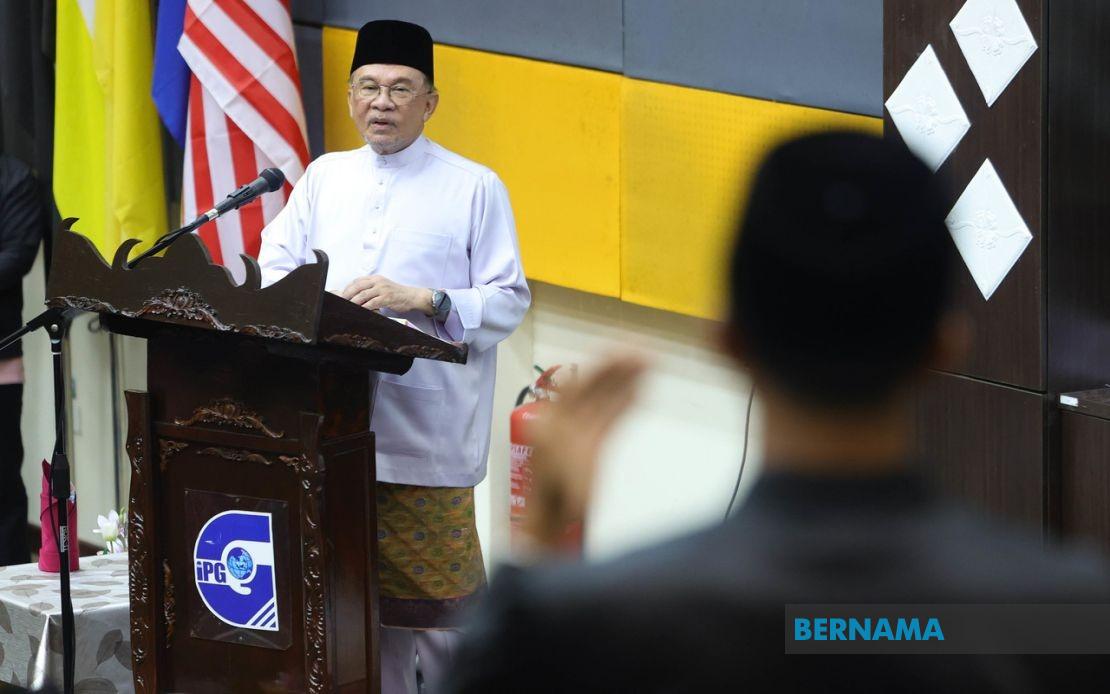
Prime Minister Datuk Seri Anwar Ibrahim has issued a stark challenge to Malaysia's education sector: the country must develop teachers who excel not only in cutting-edge technological fields but also demonstrate unwavering commitment to ethical principles and human values. Speaking at an event in Nilai, Anwar emphasised that this dual competency represents the only viable pathway for Malaysia to remain competitive globally whilst preserving the social fabric that underpins a stable, prosperous nation.
The rapid acceleration of technological change across the world has rendered static educational approaches obsolete, Anwar argued, warning that Malaysia risks falling behind if its schools and institutions do not fundamentally reshape their teaching methodologies and curricula. The Prime Minister specifically highlighted artificial intelligence, along with broader Science, Technology, Engineering and Mathematics disciplines, as critical areas where Malaysian educators must build genuine expertise. This is not merely aspirational rhetoric; it reflects genuine anxiety within policymaking circles that Malaysia's education system, despite its strengths, struggles to match the technological sophistication of regional competitors and developed economies investing heavily in digital literacy.
Yet Anwar's remarks contained a crucial caveat that reveals deeper anxieties about the direction of educational reform. He rejected the notion that technological prowess alone constitutes adequate preparation for students entering the modern workforce and society. Instead, he articulated a holistic vision of education that weaves together mastery of emerging fields with the cultivation of character, moral reasoning, and appreciation for human dignity. This framing echoes a broader global debate about whether education systems optimised purely for technical capability inadvertently undermine the ethical judgment and interpersonal skills necessary for responsible leadership and citizenship.
The Prime Minister employed a memorable phrase to encapsulate this philosophy: Malaysia must "reach for the skies while keeping our roots on the ground." This aphorism attempts to reconcile two potentially competing imperatives—embracing technological innovation whilst maintaining connection to cultural heritage, religious principles, and moral traditions. For Malaysia, a nation where education has historically been intertwined with nation-building and social cohesion, this balance carries particular weight. The phrase itself suggests that rapid modernisation need not entail wholesale rejection of the values and traditions that have shaped Malaysian society, an important message in a context where rapid change sometimes provokes cultural anxiety.
Anwar identified education as the cornerstone of national development, prioritising it above all other capabilities. However, he coupled this assertion with an equally important claim: the ability to adapt swiftly to global changes represents the second pillar of competitive advantage. This sequencing is significant; it suggests that whilst foundational education matters enormously, the capacity to learn continuously and adjust course represents an increasingly vital survival skill in the contemporary world. For Malaysia's education policymakers, this implies not just overhauling initial teacher training programmes but also establishing robust systems for continuous professional development.
Crucially, Anwar warned against permitting ideological divisions—particularly those rooted in racial or religious sentiment—to corrupt the educational enterprise. He contended that if teachers or students harbour prejudices against other communities, education fails to fulfil its fundamental purpose of developing informed, compassionate citizens. This warning carries particular resonance in Malaysia, where the country's multicultural composition represents both tremendous strength and, historically, a source of periodic tension. The Prime Minister's insistence that diversity must strengthen mutual understanding rather than deepen division reflects an understanding that educational institutions are not merely technical knowledge-transfer mechanisms but crucibles where attitudes toward difference are formed.
The Prime Minister articulated a bold claim: no nation, regardless of its material wealth or military strength, can achieve genuine security by fostering racial or religious animosity. This assertion challenges any notion that Malaysia could pursue technological advancement whilst tolerating communal discord, suggesting instead that the two are inextricably linked. A society rent by hatred and suspicion lacks the social cohesion necessary to mobilise resources effectively, innovate collaboratively, or retain talented citizens who might otherwise emigrate. From this perspective, tolerance and mutual respect are not merely ethical desiderata but practical necessities for national competitiveness.
The event was attended by Education Minister Fadhlina Sidek and Dr Kartini Abdul Mutalib, director of the Institut Pendidikan Guru Kampus Pendidikan Tinggi, indicating that the Prime Minister's remarks carried the endorsement and engagement of key education sector stakeholders. The presence of these officials suggests that the government intends to translate these philosophical commitments into concrete policy measures and institutional changes within Malaysia's teacher education infrastructure.
For Malaysian educators and policymakers, Anwar's intervention reflects recognition that teacher quality represents the ultimate determinant of whether Malaysia's education system rises to contemporary challenges. Teachers serve as the crucial intermediaries between educational policy and student outcomes; they must simultaneously model technical competence, ethical integrity, and intercommunal respect. Building a cadre of educators capable of executing this multifaceted role demands significant investment in teacher selection, training, remuneration, and ongoing support—a challenge that extends well beyond rhetorical affirmation to require sustained resource allocation and institutional commitment.

