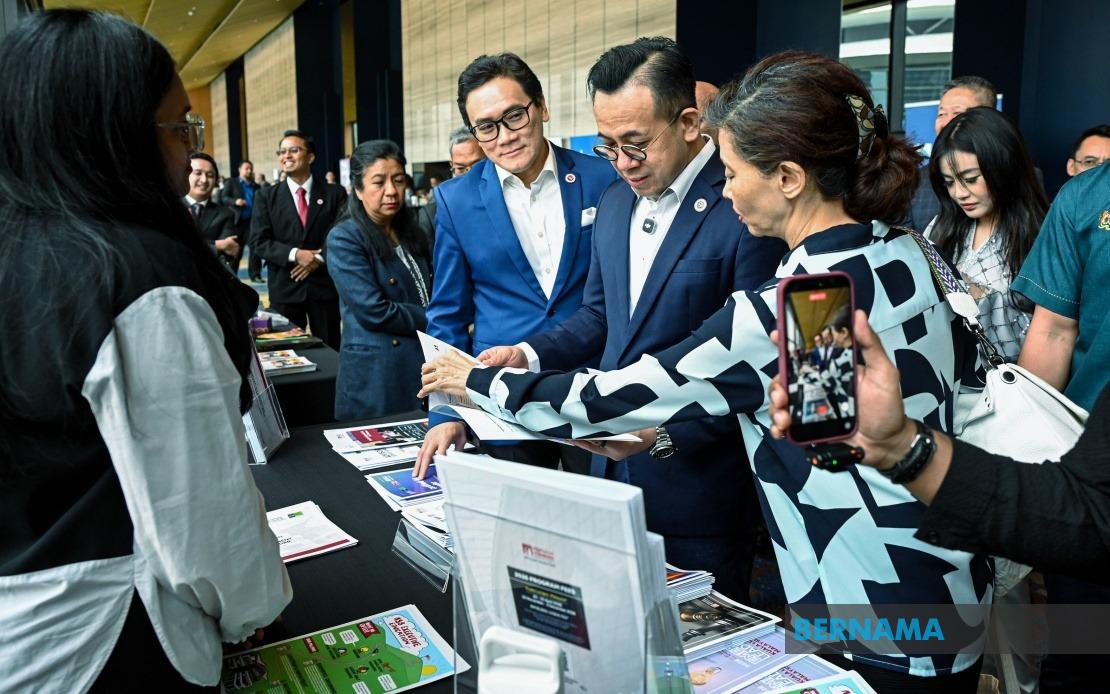
The government's push to elevate Malaysian businesses onto the global stage is gaining momentum, with Entrepreneur and Cooperatives Development Minister Steven Sim making a direct appeal to local companies to fundamentally transform how they operate. Speaking at the BrandQuest 2026 programme and National Mark of Malaysian Brand Appreciation Ceremony in Kuala Lumpur on August 17, Sim articulated a strategic vision that goes beyond the traditional manufacturing model that has long defined Malaysia's industrial base.
At the heart of this transformation is a conceptual shift from "Made in Malaysia" to "Made by Malaysia". The distinction is more than semantic—it represents a wholesale reorientation of how the nation approaches value creation and intellectual property. Under the previous paradigm, Malaysian factories primarily produced goods designed elsewhere, applying the "Made in Malaysia" designation while remaining essentially contract manufacturers. This model, while sustaining employment and generating export revenue, locks local enterprises into low-margin, high-volume production with minimal control over design, pricing, or brand identity.
Sim's alternative vision positions Malaysian companies as originators and innovators rather than replicators. The "Made by Malaysia" framework envisions products conceived, designed, engineered, and manufactured domestically by Malaysian talent and capital. This shift acknowledges that long-term competitiveness and profitability depend on moving up the value chain—away from price competition where labour costs determine margins, and toward differentiation based on quality, innovation, and brand strength. For Southeast Asian readers, this represents a strategic conversation increasingly relevant across the region as countries confront the reality that low-cost manufacturing alone cannot sustain middle-income economies.
To support this transition, Sim identified three foundational pillars that local companies must embrace: value prioritised over price, innovation over imitation, and an unwavering commitment to safety, health, and quality standards. These principles directly address the reputation challenges that have historically constrained Malaysian brands in international markets. Rather than competing on cost alone—a race Southeast Asian economies cannot win against Bangladesh or Vietnam—Malaysian companies are being encouraged to build reputation through excellence. This repositioning strategy acknowledges that emerging markets must eventually escape the low-cost trap to achieve genuine prosperity and market leadership.
The government is backing this vision with concrete financial support. Through SME Corp, a RM230,000 allocation has already benefited approximately 40 micro, small and medium enterprises in securing National Mark of Malaysian Brand certification during 2025 and 2026. While the absolute figure may appear modest, its significance lies in recognising that small and micro enterprises—often lacking resources for branding, certification, and compliance infrastructure—require direct government assistance to meet international standards. Sim indicated that this allocation would be reassessed regularly, signalling willingness to scale investment based on demonstrated results and market demand.
Beyond branding support, the ministry is channelling substantial resources through the Power Up 10K programme, which has distributed RM9 billion in financing to 250,000 entrepreneurs nationwide as of July. Against a target of RM15 billion for the year, this programme represents one of the most ambitious entrepreneurial financing initiatives in the region. The scale reflects recognition that capital access remains a critical bottleneck for Malaysian SMEs seeking to upgrade operations, invest in technology, and expand into higher-value activities. For a country with a large entrepreneurial base but constrained access to traditional banking credit, such initiatives address a genuine market failure.
The National Mark of Malaysian Brand certification programme itself signals a systematic approach to building credibility and differentiation. By providing a government-backed standard that signifies commitment to quality and local origin, the certification helps Malaysian products overcome the liability of newness and unfamiliarity in overseas markets. Consumers in developed economies increasingly value provenance and authenticity—factors that play to Malaysia's advantage if leveraged strategically. The certification essentially says: "This product was conceived and made in Malaysia, meets rigorous standards, and represents genuine local innovation."
Recognition ceremonies such as the Malaysian Brand Heritage Awards serve practical functions beyond ceremony. By publicly honouring companies like Seasonings Specialties, Passive Fire Protection, Goodnite, Halagel, and Sydney Cake House, the government elevates these businesses as role models and demonstrates that the "Made by Malaysia" vision is achievable across diverse sectors—from food and beverages to specialty chemicals and home furnishings. This sectoral diversity suggests the strategy is not limited to high-tech manufacturing but encompassing the full spectrum of Malaysian enterprise, making it potentially accessible to companies with varying capabilities and capital bases.
The timing of this initiative reflects broader regional and global economic trends. With global supply chains becoming more geopolitically fragile and consumers increasingly conscious of product origin, Malaysia has genuine opportunity to build brands that command premium pricing based on quality and innovation rather than competing on cost. Southeast Asian markets are simultaneously seeing rising middle-class consumption, creating domestic demand for premium Malaysian brands. The strategy thus serves both export ambitions and the domestic market opportunity that remains partially underdeveloped.
However, the transition from manufacturing to brand-building is neither automatic nor costless. It requires sustained investment in research and development, design capabilities, and marketing infrastructure—areas where many Malaysian SMEs remain undercapitalised. It demands a cultural shift toward viewing intellectual property and design as strategic assets worthy of protection and investment. It necessitates building distribution networks and customer relationships that require time and capital to establish. The government's financing and certification programmes address these constraints, yet implementation success will ultimately depend on whether Malaysian entrepreneurs can sustain the vision beyond initial government support.
The broader strategic context matters. As middle-income economies across Asia confront the reality that they cannot compete with lower-cost producers, building distinctive, high-quality brands becomes essential to prosperity. Malaysia's relative advantages—stable political environment, developed infrastructure, skilled workforce, and geographic position—provide genuine foundations for this transition. What remains to be demonstrated is whether the country's SME ecosystem can collectively execute the shift from contract manufacturing to brand leadership. Sim's public commitment and the allocation of substantial resources suggest serious government intent. The next phase will test whether market dynamics and entrepreneur capability can match that ambition.

