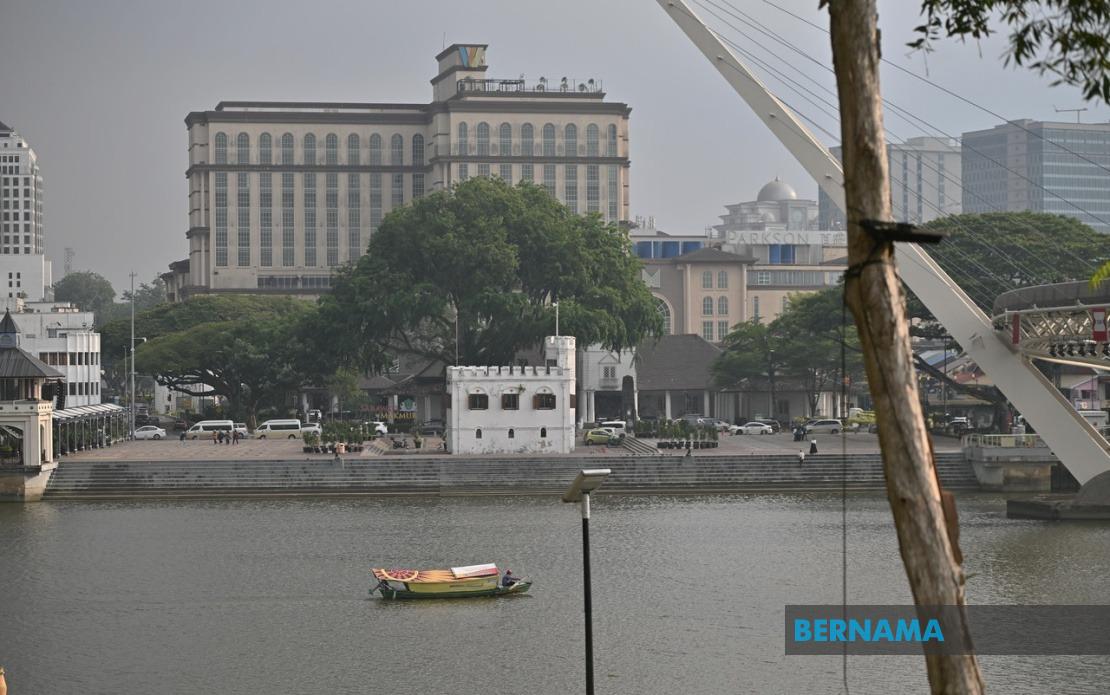
Tan Sri Lee Lam Thye, chairman of the Alliance for a Safe Community, has sounded the alarm over Malaysia's approach to managing transboundary haze, urging the government to shift from its traditional reactive stance to a proactive prevention strategy. Speaking on August 12, Lee highlighted the renewed deterioration in air quality across parts of Sarawak and Peninsular Malaysia as a critical juncture for policy reform, noting that the nation's repeated vulnerability to this recurring crisis reflects systemic failures in preparedness and coordination.
The situation in Sarawak has become particularly acute, with six schools in Tebedu ordered to close after air quality readings exceeded hazardous levels, with the Air Pollutant Index surpassing 200. Lee emphasised that prolonged hot and dry weather in the region creates ideal conditions for rapid fire spread and cross-border smoke migration, a phenomenon Malaysia has battled many times before. His warning reflects growing concern that without fundamental changes to how the country addresses haze, future episodes will continue to catch authorities and the public unprepared, despite decades of experience with the problem.
Central to Lee's critique is the observation that Malaysia has tolerated a cycle of crisis management rather than genuine prevention. He proposed a comprehensive five-point strategy that begins with fully activating the National Haze Action Plan the moment early warning indicators signal rising risk levels. This represents a departure from current practice, where responses typically accelerate only after air quality has already deteriorated and the public faces immediate health threats. By embedding prevention into standard protocols, the nation could theoretically intercept developing crises before they metastasise into widespread public health emergencies.
The second pillar of Lee's proposal involves substantially strengthening the monitoring infrastructure for hotspots, fire-prone areas, wind direction patterns, and real-time air quality data. Enhanced surveillance would enable authorities to detect emerging threats and intervene before fires escalate or smoke clouds cross maritime boundaries into Malaysian airspace. Such technological and institutional investments would require coordination between federal and state agencies, as well as partnerships with Indonesian counterparts whose territories often serve as the originating points for transboundary pollution.
Lee has also emphasised the critical importance of regional cooperation under the ASEAN Agreement on Transboundary Haze Pollution, which all Southeast Asian member states ratified in 2015. While acknowledging that the legal framework exists, he stressed that the real deficit lies in implementation rigour and ground-level execution. The agreement remains largely symbolic in its current application, with member states often dragging their feet on enforcement and cross-border accountability mechanisms. Lee's call for "stronger implementation and faster action" reflects frustration with the gap between multilateral commitment and tangible results on the ground.
Regional accountability mechanisms represent another facet of Lee's strategy. He argues that transboundary haze must be reframed as a public health catastrophe, not merely a seasonal inconvenience. The crisis triggers respiratory problems, disrupts schooling, overwhelms healthcare systems with pollution-related cases, and imposes substantial economic costs through lost productivity and tourism revenue. When viewed through this lens, transboundary haze becomes a governance failure of regional significance, one demanding the same level of political will and resource allocation typically reserved for armed conflict or pandemic response.
Crucially, Lee did not absolve Malaysia of responsibility. He pointedly reminded authorities that domestic contributors—including illegal open burning, peat fires, agricultural land clearing, and inadequately managed development projects—remain unaddressed within Malaysian territory. By calling on the government to "put our own house in order while urging our neighbours to do the same," Lee avoided the nationalist trap of blaming Indonesia exclusively, instead advocating for comprehensive accountability across all sources of air pollution affecting the region. This balanced approach carries greater diplomatic credibility and political sustainability.
Enhancing public preparedness forms the fifth element of Lee's framework. Schools, hospitals, workplaces, and communities require clear protocols for responding to haze emergencies, from facility closures to medical resource mobilisation. Beyond procedural readiness, the public must receive accurate, timely information about air quality conditions and health risks. Current communication systems often lag behind actual deterioration, leaving citizens uninformed about dangers until symptoms manifest. Transparent, science-based public information would enable individuals to adjust behaviour and seek preventive care proactively.
Underlying all five proposals is a call for fundamental cultural and institutional change. Lee explicitly urged the nation to abandon the mindset that treats haze as an annual seasonal nuisance that communities must simply endure. Instead, he argued that transboundary haze should be categorised as a recurring regional disaster requiring sustained investment in prevention, preparedness, and cooperative engagement. This reframing has profound implications for budget allocation, bureaucratic structures, and political priority-setting within Malaysia and across ASEAN.
The economic argument for prevention further reinforces Lee's position. Costs associated with haze crises—healthcare expenditures, lost workplace productivity, tourism cancellations, school closures, and environmental remediation—accumulate rapidly once pollution episodes strike. Early intervention, enhanced monitoring systems, and improved regional coordination represent modest outlays compared to the economic damage caused by unchecked transboundary haze. Lee stressed that prevention remains substantially cheaper than managing consequences, a fiscally conservative argument that should resonate with budget-conscious policymakers.
Lee also highlighted the importance of leveraging ASEAN's early-warning systems, emphasising that these resources must not remain dormant bureaucratic mechanisms but rather trigger immediate operational responses. The difference between possessing early-warning capabilities and acting upon them separates successful crisis management from perpetual vulnerability. Regional coordination must translate predictive information into coordinated policy action across borders.
The timing of Lee's intervention carries significance, arriving as haze concerns resurface amid changing weather patterns and ongoing land-use pressures across Southeast Asia. Climate change is extending fire seasons and intensifying atmospheric conditions that facilitate smoke migration, suggesting that transboundary haze episodes may become more frequent and severe without preventive adaptation. Malaysia's delayed adoption of genuinely preventive governance structures increasingly appears not as optional policy refinement but as essential adaptation to emerging environmental realities.

