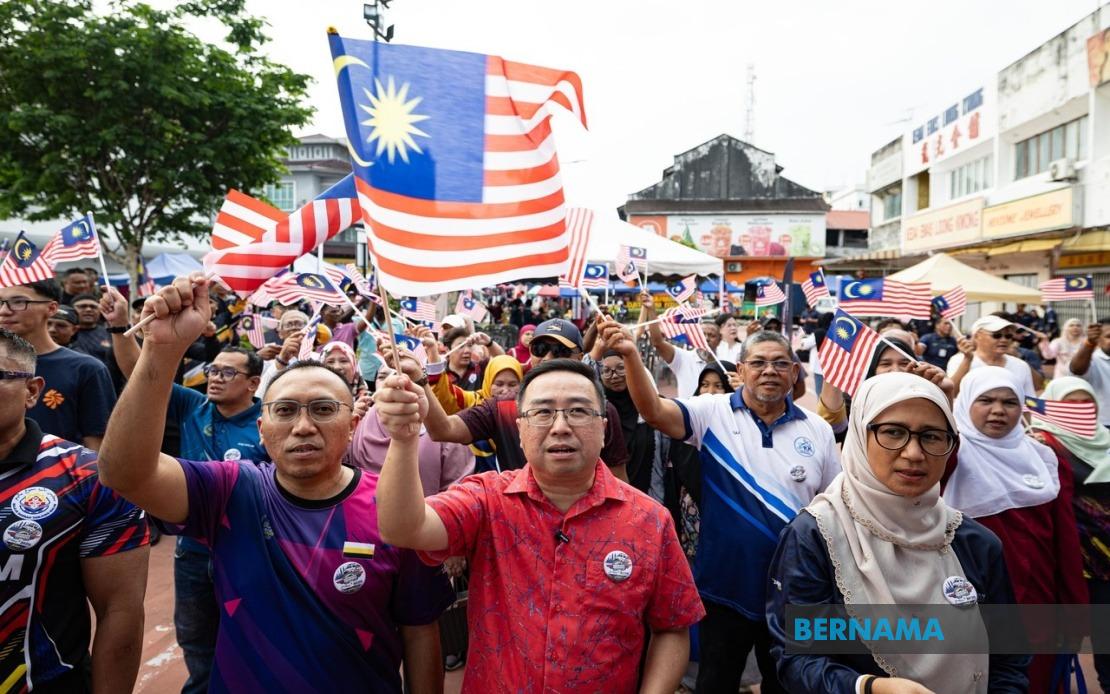
Malaysia's path forward demands a fundamental reimagining of what nationhood means—one that transcends the entrenched frameworks of race and religion that have long dominated public discourse and political contestation. Science, Technology and Innovation Minister Datuk Chang Lih Kang articulated this challenge during the nation's Merdeka anniversary, arguing that divisive politics cannot be countered through silence, coercion, or the machinery of fear, but only through creating a genuine sense of collective ownership in the country's future among all citizens, irrespective of their ethnic origin, religious affiliation, or political persuasion.
The Tanjong Malim MP's intervention addresses a critical vulnerability in Malaysia's social fabric. When political actors instrumentalise identity markers to mobilise support, they inadvertently fragment society into competing constituencies viewing governance through a zero-sum lens. This approach breeds resentment, erodes trust in institutions, and creates the false perception that state resources and opportunities are distributed unequally along communal lines. Such dynamics have historically weakened rather than strengthened national cohesion, leaving communities feeling perpetually threatened and defensive rather than invested in collective prosperity.
Central to Chang's argument is the proposition that institutional strength, professional integrity, and impartial law enforcement form the bedrock of genuine national unity. When courts, bureaucracies, and security agencies operate according to transparent principles applied uniformly across all Malaysians, regardless of their background or political alignment, citizens develop confidence that the system serves everyone's interests. Conversely, when institutions are perceived as captured by particular groups or serving sectarian agendas, legitimacy erodes and cynicism spreads. Building this institutional infrastructure requires sustained political commitment to depoliticise the civil service and judiciary, a task that becomes increasingly difficult when ruling coalitions treat state machinery as an extension of party interests.
The minister's commentary on national symbolism offers particular insight into the challenge of fostering patriotism without authoritarianism. The Jalur Gemilang represents Malaysia's historical journey and aspirations, meriting dignified treatment. However, enforcement regimes that criminalise minor infractions or inadvertent disrespect risk counterintuitive consequences: citizens may become fearful of displaying the flag, transforming what should be a unifying emblem into a source of anxiety. A mature nation distinguishes between accidental negligence and deliberate provocation, between honest mistakes and calculated insults. Educational approaches that correct behaviour while preserving dignity typically prove more effective at cultivating genuine patriotic sentiment than punitive regimes that generate resentment.
Context, intent, and proportionality emerge as crucial differentiators in this framework. Government agencies functioning as educators and guides rather than purely as enforcers can redirect potential alienation into reconciliation. When mistakes are treated as teachable moments rather than occasions for punishment, individuals remain connected to national institutions and values. This approach does not imply tolerance for deliberate incitement or provocative acts designed to foment division—such conduct remains rightly subject to accountability. Rather, it suggests calibrating responses to match offences, ensuring that proportionate consequences reinforce rather than undermine respect for law and national symbols.
Chan's invocation of Sultan Perak Sultan Nazrin Shah's remarks at the 8th World Conference on Islamic Thought and Civilisation highlights the distinction between coerced and consensual unity. When belonging is imposed through exclusionary policies or majoritarian assertion, it generates resistance and brittleness. Conversely, unity grounded in shared values—respect for diversity, commitment to fairness, and recognition of mutual interdependence—proves more resilient because it rests on genuine agreement rather than subordination. This framework invites Malaysia to leverage its genuine strengths: a population accustomed to navigating religious and cultural pluralism, institutional arrangements that have historically accommodated multiple communities, and a national founding document—the Federal Constitution—that explicitly protects minority rights while affirming majority aspirations.
The minister's question regarding the Malaysia being created for the next generation reframes the entire debate. Contemporary political contestation often fixates on immediate grievances and electoral cycles, treating governance as a series of tactical manoeuvres. Yet the nation's trajectory is shaped by the institutional precedents being established, the cultural norms being reinforced, and the expectations being cultivated in younger Malaysians. If current governance patterns model the manipulation of identity for political gain, resort to state coercion against perceived opponents, and proportionately harsh responses to minor infractions, these become normalized. Conversely, if institutions demonstrate fairness, political actors resist sectarian mobilisation, and processes respect human dignity, these norms become embedded in subsequent generations' understanding of legitimate governance.
The implications for Malaysia's regional standing deserve emphasis. Southeast Asia's stability and prosperity increasingly depend on nations managing internal diversity through inclusive institutions rather than hegemonic assertion. Malaysia's historical ability to maintain social peace despite significant ethnic and religious complexity represents a valuable regional asset. Yet this asset deteriorates when governance narratives shift toward zero-sum identity competition. Conversely, renewed commitment to institutionalised fairness, transparent law enforcement, and genuine pluralism would strengthen Malaysia's model for demonstrating that diverse societies can thrive without suppressing dissent or mobilising communal fear.
Civic participation in this reimagining requires citizens to exercise restraint and empathy. Public discourse has become habituated to outrage—treating minor infractions as major provocations, interpreting ambiguous actions as deliberate insults, and responding to mistakes with calls for severe punishment. Breaking this cycle demands that communities themselves model the proportionate responses Chang advocates for at the institutional level. When ordinary Malaysians demonstrate forgiveness for genuine errors, refuse to amplify sectarian provocations, and insist that their political representatives elevate discourse beyond identity mobilisation, they create political space for leadership to operate according to the principles Chang articulates.
The challenge facing Malaysia extends beyond any single policy intervention. It requires cultural and political renewal—a deliberate choice by leaders and citizens alike to prioritise long-term institutional integrity over short-term electoral advantage, to view national development as a shared endeavour rather than a zero-sum competition, and to treat fellow Malaysians as partners in common enterprise rather than as competitors to be managed through fear. As the nation observes another Merdeka anniversary, Chang's intervention reminds Malaysians that genuine national strength derives not from silencing dissent or policing symbols with excessive vigour, but from creating institutions and spaces where all citizens—regardless of ethnicity, faith, or political belief—experience ownership in Malaysia's future and commitment to its success.

