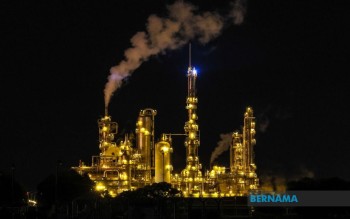
Following Prime Minister Datuk Seri Anwar Ibrahim's announcement that the government would examine establishing a national petroleum reserve stock, policy experts are urging caution about how Malaysia approaches this potentially expensive undertaking. Mohd Sedek Jantan, director of investment strategy at IPPFA Sdn Bhd, has cautioned against adopting the expansive reserve frameworks deployed by wealthy developed economies, arguing instead for a measured strategy tailored to Malaysia's specific budgetary constraints and vulnerability profile.
The distinction between merely building a petroleum reserve and building one that makes financial sense is crucial, according to Mohd Sedek. He emphasizes that Malaysia should not simply emulate the strategic petroleum reserve programmes of industrialised nations such as the United States and Japan, whose substantially larger economies and fiscal reserves afford them the luxury of maintaining enormous stockpiles. Instead, policymakers must recognize that Malaysia faces a fundamentally different set of economic parameters and energy security challenges that demand a customized approach rather than a transplanted one.
A core concern underpinning the economist's position relates to resource allocation within government. Malaysia, like most developing economies, juggles competing demands across numerous sectors. Healthcare infrastructure, educational quality, and food security all compete for limited public funding alongside energy security initiatives. Any decision to channel substantial capital into petroleum storage facilities must therefore withstand rigorous scrutiny and demonstrate clear economic returns. The calculation is not merely about technical feasibility but about whether such an investment represents the optimal use of taxpayer money relative to other pressing national needs.
Mohd Sedek articulates a paradox at the heart of reserve policy: while building reserves entails genuine upfront costs, the expense of being caught unprepared during a major supply disruption could dwarf the initial investment. This formulation reframes the debate from viewing reserves as a discretionary luxury to understanding them as a form of insurance against catastrophic energy shocks. The 2022 energy crisis triggered by Russia's invasion of Ukraine demonstrated how quickly global supply chains can fracture, underscoring the relevance of this concern for Southeast Asian economies heavily dependent on petroleum imports.
The recommended starting point, according to the economist, is a comprehensive risk assessment that would establish baseline parameters before any physical infrastructure development begins. This analytical phase should determine what constitutes an appropriate reserve level for Malaysia's particular circumstances, identify the most efficient financing mechanisms, and outline an operational framework suited to the nation's capabilities. Such groundwork prevents costly missteps and ensures that subsequent decisions rest on solid evidentiary foundations rather than assumptions borrowed from other contexts.
Beyond the technical dimensions of reserve sizing and management, Mohd Sedek advocates exploring private sector participation as a means of distributing costs and risks. Strategic partnerships could involve commercial entities in financing, operating, or maintaining reserve facilities, potentially reducing the direct burden on public finances while introducing market discipline and efficiency standards. This hybrid approach acknowledges both the legitimate government role in ensuring energy security and the value of private sector expertise and capital.
Scalability and commercial viability emerge as additional criteria for evaluating any proposed reserve scheme. A well-designed programme should be capable of expanding or contracting based on changing circumstances and evolving security threats. Furthermore, reserve operations should be structured in ways that generate revenue or cost savings during normal periods, rather than functioning as a pure drain on the budget. This might involve strategic sales during periods of low global prices and replenishment during subsequent market corrections, creating a dynamic mechanism rather than a static stockpile.
The timing of implementation also matters significantly. Rushing into physical construction without establishing a clear economic rationale invites cost overruns, operational inefficiencies, and political vulnerabilities if circumstances change or initial assumptions prove incorrect. A phased approach allows the government to learn from initial stages, adjust strategy based on practical experience, and build institutional capacity incrementally rather than attempting to establish world-class reserve operations immediately.
For Malaysia and other Southeast Asian nations confronting similar questions about energy security infrastructure, the message is clear: ambition must be tempered by fiscal realism. The objective is not to achieve rankings among the world's largest reserve holders, but to develop a reserve system that genuinely enhances national resilience while remaining financially sustainable. This distinction between prestige and pragmatism should guide all subsequent deliberations as policymakers work toward a final decision.

