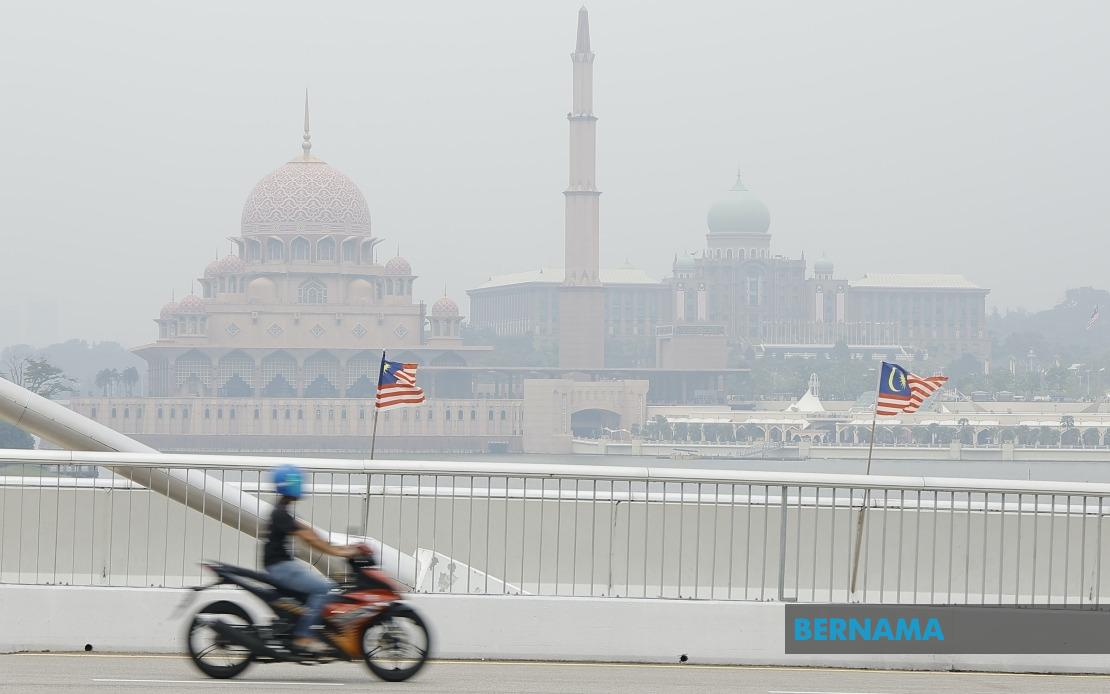
Malaysia stands at a critical juncture in addressing recurring haze episodes, with air quality experts advocating a fundamental shift in how the nation tackles this recurring environmental threat. Associate Professor Dr Azman Azid from Universiti Sultan Zainal Abidin's Besut Campus has called for the development of a comprehensive early haze warning system, arguing that the country must transition from its current reactive approach to a more sophisticated predictive strategy that safeguards both air quality and public health across the region.
The urgency of this transformation becomes apparent when examining the health toll of recent air pollution episodes. Ministry of Health data revealed a stark 259 per cent surge in asthma cases between the 32nd and 33rd epidemiological weeks, with cases jumping from 61 to 219. This alarming statistic underscores a reality that often gets overshadowed by Air Pollutant Index readings and smoke movement tracking: the direct and measurable impact on respiratory health among ordinary Malaysians. Rather than treating haze as a temporary nuisance to be monitored and managed after it arrives, Azman proposes a framework that emphasises forecasting, prevention, protection and action.
The technological foundation for such a system already exists within Malaysia's current infrastructure and capabilities. The country possesses weather forecasting systems and access to multiple data streams including hotspot information indicating fire locations, satellite imagery tracking smoke plumes, meteorological records documenting wind patterns and speed, atmospheric trajectory models projecting air mass movement, current Air Pollutant Index measurements, disease surveillance patterns from hospitals, and fine particulate matter readings measuring particles of 2.5 micrometres in diameter. The challenge, Azman suggests, lies not in gathering individual data points but in genuinely integrating these disparate sources into a coherent forecasting mechanism.
When combined effectively, this data integration could enable health authorities and educational institutions to make evidence-based decisions well in advance of pollution events. If atmospheric models indicate rising PM2.5 levels in a particular region within a 48 to 72-hour window, hospitals and clinics could preemptively increase their operational readiness, stock supplies, and prepare staff for surge capacity. Schools could similarly reschedule outdoor activities to protect students, particularly those with pre-existing respiratory conditions, from unnecessary exposure to hazardous air. This proactive approach transforms haze management from a perpetual crisis response into predictable, manageable scenarios.
The expert draws an important distinction between the Air Pollutant Index, which measures current air quality, and a forward-looking haze warning system, which would anticipate and forecast deterioration. The API remains valuable as a real-time indicator, yet from a risk management perspective, it represents a reactive tool that informs the public and authorities only after pollutants have already permeated the atmosphere. An early warning system would not render the API obsolete but rather complement it, providing the temporal advantage necessary for meaningful intervention.
Regional dimensions of the haze challenge add complexity to Malaysia's response strategy. As a signatory to the ASEAN Agreement on Transboundary Haze Pollution, Malaysia participates in a multilateral framework acknowledging that air currents and smoke plumes respect no political boundaries. However, Azman contends that current cooperation mechanisms remain largely descriptive, focusing on data exchange and reactive measures rather than coordinated prevention and rapid response. Strengthening collaboration requires advancing beyond mere information sharing toward more ambitious initiatives including joint fire source mapping, coordinated smoke trajectory forecasting, technology transfer among member nations, mutual firefighting assistance and collectively agreed response protocols.
Domestic enforcement and prevention efforts deserve concurrent attention. Authorities must intensify their commitment to strengthening and rigorously enforcing legislation governing open burning, bush fires and peatland monitoring across Malaysia. These regulatory foundations, when consistently applied, reduce the incidence of fires that subsequently generate transboundary smoke, ultimately diminishing the burden on downstream countries and their health systems. Without such foundational prevention work, even the most sophisticated forecasting system operates within inherently constrained parameters.
The problem extends beyond atmospheric science and meteorology into land use practices and peatland management strategies. Sustainable approaches to agriculture, forestry and development fundamentally determine fire frequency and intensity across the broader Southeast Asian region. Where peatlands remain drained or poorly managed, fire risk escalates dramatically, creating conditions for the protracted, intense haze episodes that periodically paralyse visibility and compromise air quality across multiple countries. Addressing the root causes therefore demands integration of forestry policy, agricultural practices, land tenure questions, and developmental priorities into the haze prevention framework.
Diplomacy and technical capacity matter equally in this multifaceted challenge. Neither technology alone nor enforcement alone nor diplomatic commitments alone provide adequate solutions to transboundary haze. The problem demands synthesis: combining fire prevention initiatives at the source, advanced atmospheric modelling to forecast smoke movement, regional cooperation mechanisms that facilitate rapid information exchange and mutual assistance, and ultimately more sustainable land use patterns that reduce fire occurrence. This integrated approach recognises that haze originates from upstream sources and carries downstream consequences, requiring interventions across the entire causal chain.
In the near term, Malaysian authorities may prove unable to prevent every smoke plume from entering national airspace, as the nature of atmospheric circulation and neighbouring land use patterns remain partially beyond unilateral control. Yet Malaysia retains considerable agency in reducing fire frequency through improved prevention and enforcement, deploying early warning systems to forecast smoke movement with greater accuracy, and crucially, protecting public health through evidence-based preparedness measures. By implementing an early haze warning system integrated with robust enforcement of anti-burning regulations and deepened regional cooperation, Malaysia can substantially mitigate the respiratory disease burden and quality-of-life impacts that haze episodes impose on its population.

