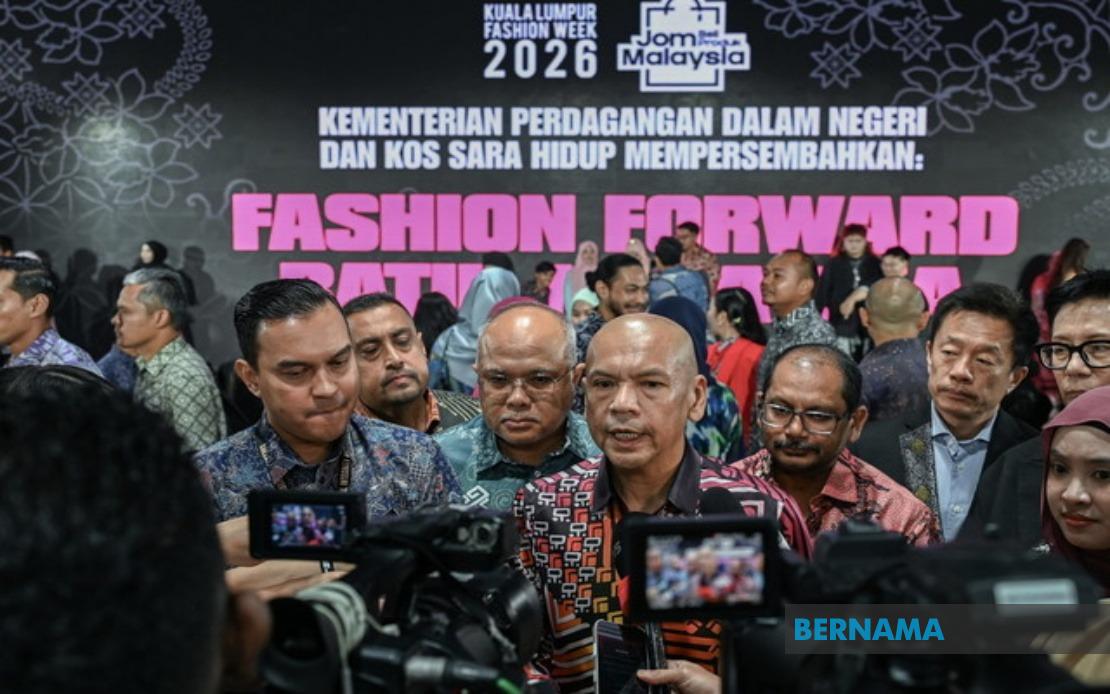
The Malaysian government is taking a collaborative approach to revitalise its domestic product sector by actively soliciting input from industry players, entrepreneurs, and other stakeholders. Domestic Trade and Cost of Living Minister Datuk Armizan Mohd Ali announced the consultation initiative while emphasising that policymakers need genuine feedback from those operating on the ground to ensure government strategies truly reflect market realities and business needs.
This consultative effort forms part of a broader government restructuring aimed at breaking down institutional silos that have traditionally hampered coordinated action across different ministries and agencies. The government recognises that a fragmented approach to promoting local products has reduced effectiveness, with each agency pursuing its agenda independently rather than advancing a unified national strategy. By establishing channels for stakeholders to submit their views directly to the KPDN and relevant agencies, the government hopes to consolidate these separate efforts into a cohesive framework that can be presented to the Cabinet Committee for consideration and implementation.
The newly established Cabinet Committee to Empower the Use and Purchase of Local Products, chaired by Deputy Prime Minister Datuk Seri Fadillah Yusof with KPDN serving as secretariat, represents a high-level political commitment to this agenda. The committee brings together representatives from multiple ministries including the Ministry of Economy, the Ministry of Investment, Trade and Industry, the Ministry of Tourism, Arts and Culture, the Ministry of Entrepreneur Development and Cooperatives, and the Finance Ministry. This breadth of involvement underscores the government's understanding that supporting local products is not purely a trade issue but intersects with cultural development, tourism, economic policy, and financial planning.
The timing of this initiative responds to mounting concerns from Malaysian entrepreneurs about intensifying competition from foreign products, particularly through digital commerce platforms. The flooding of imported goods—whether through traditional retail channels or increasingly through online marketplaces—has created pressure on local businesses struggling to maintain market share. By actively seeking stakeholder input, the government aims to develop counter-strategies that address these real competitive pressures while remaining practical and implementable across different sectors of the economy.
The committee's fundamental objectives extend beyond mere protectionist sentiment. Rather, policymakers are framing the promotion of local products as integral to reducing national import dependence and channelling greater economic contributions toward domestic enterprises. For a middle-income nation like Malaysia, strengthening indigenous product competitiveness can support sustainable economic growth, create employment opportunities in diverse regions, and build valuable international brand recognition for Malaysian goods.
Minister Armizan highlighted the strategic partnership between KPDN and Kuala Lumpur Fashion Week as a practical manifestation of these ambitions. This collaboration reflects implementation of the Jom Beli Produk Malaysia movement, which seeks to empower local products through engagement with industry players rather than through top-down mandates alone. The fashion sector, particularly batik production and design, exemplifies how Malaysian cultural products can achieve global market penetration and prestige. Last year's event generated USD32 million in media value, demonstrating the potential for local creative industries to build substantial international platforms.
These developments align closely with emerging economic data highlighting the expanding importance of Malaysia's cultural and creative industries. The 2024 Cultural and Creative Satellite Account Report documents that this sector contributed RM130.7 billion to gross domestic product, representing 6.8 per cent of total GDP. This substantial contribution indicates that government investment in supporting creative and cultural products is not merely nostalgic nation-building but rather strategic economic development targeting a high-value sector with demonstrated global demand and growth potential.
For Malaysian entrepreneurs and businesses, the government's openness to stakeholder feedback presents an opportunity to shape policy in directions that reflect practical realities. Industry participants can articulate specific barriers they face, successful approaches they have observed, and market gaps they believe government support could address. Whether concerns involve access to financing, logistics infrastructure, regulatory burdens, or digital marketing capabilities, the feedback mechanism theoretically allows diverse voices to inform policy design.
Regionally, Malaysia's initiative to coordinate multi-agency support for local products may offer insights for other Southeast Asian nations grappling with similar challenges of import competition and the need to develop competitive domestic industries. The approach of establishing high-level committees with cross-ministerial representation, combined with systematic stakeholder consultation, represents a governance model that other ASEAN countries considering industrial development strategies might observe closely.
The success of these efforts will ultimately depend on whether the Cabinet Committee translates stakeholder feedback into concrete policy measures with adequate resourcing and implementation mechanisms. Simply collecting input without demonstrable follow-up action could undermine business confidence in government responsiveness. Furthermore, policymakers must navigate the delicate balance between protecting local entrepreneurs and maintaining competitive pressures that drive innovation and efficiency—a challenge that requires nuanced understanding of different industry dynamics rather than uniform interventions.

