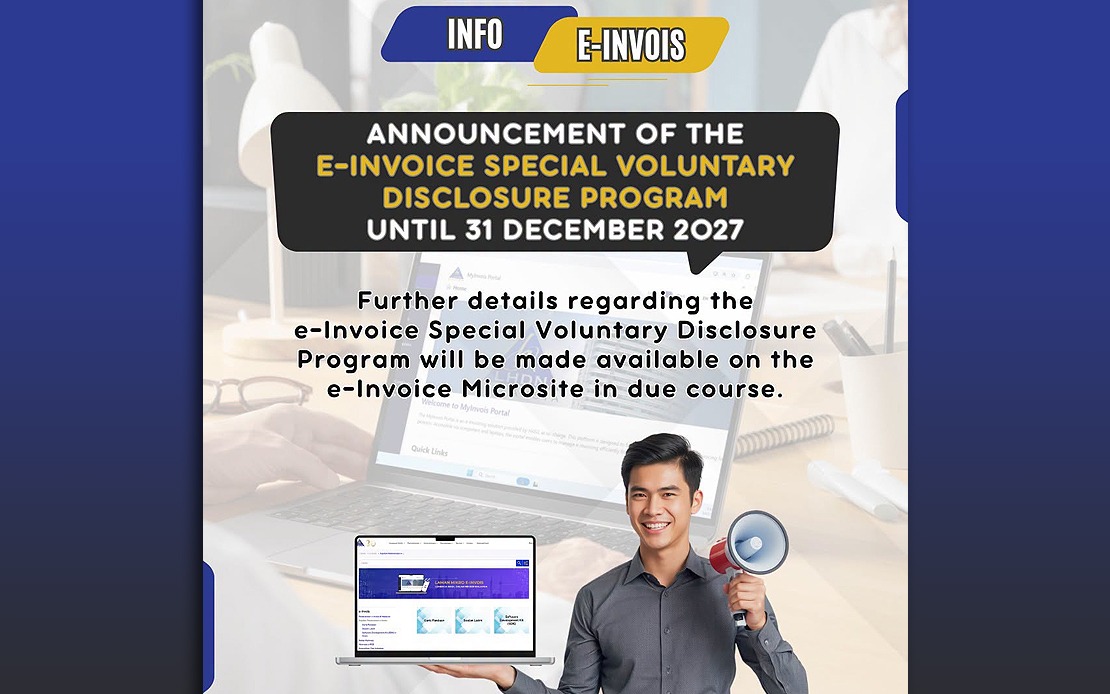
Prime Minister Datuk Seri Anwar Ibrahim has announced an extended grace period for Malaysian businesses to resolve e-Invoice compliance issues without facing penalties, signalling the government's intent to ease the transition to digital tax reporting for the country's struggling small enterprise sector. The e-Invoice Special Voluntary Disclosure Programme (PKPS), which runs until December 31, 2027, represents a pragmatic shift in enforcement strategy, acknowledging the challenges many firms face in adopting the mandatory electronic invoicing system that has been rolled out across the economy.
The Inland Revenue Board (IRB) has opened the disclosure scheme to three distinct groups of taxpayers, each facing different compliance barriers. The first category encompasses businesses that simply failed to submit e-Invoices for certain qualifying transactions—a common scenario among smaller operators juggling multiple regulatory requirements. The second group includes companies that did submit e-Invoices but found their records contained errors or fell short of the technical specifications outlined in the General and Specific e-Invoice Guidelines. The third and broadest category covers any taxpayer who has not filed e-Invoices for any period dating back to the original mandatory implementation date, potentially encompassing hundreds of thousands of enterprises across Malaysia.
What distinguishes this disclosure programme from previous compliance campaigns is the explicit removal of financial penalties during the voluntary submission window. The IRB has committed to imposing no sanctions on taxpayers who come forward to update, revise, or correct their e-Invoice records through the designated channels. This penalty waiver applies regardless of how substantial the compliance gap or how long the delinquency has persisted, provided submissions occur before the December 31, 2027 deadline. For many business owners, particularly those operating on tight margins, the absence of punitive measures transforms what might otherwise be a daunting administrative burden into a manageable correction exercise.
The timing of this initiative reflects broader economic pressures facing Malaysia's micro, small, and medium enterprise (MSME) segment, which has struggled with cascading regulatory costs in recent years. Finance Minister Anwar Ibrahim explicitly framed the programme as a cost-reduction measure designed to lighten the compliance load on these crucial engines of employment and innovation. By combining penalty forgiveness with genuine assistance infrastructure, the government appears to be acknowledging that many businesses lack the internal accounting capacity or external professional support to navigate complex digital tax requirements without guidance. This represents a departure from purely punitive enforcement models that have sometimes alienated small traders from formal tax compliance altogether.
Accompanying the disclosure initiative is a separate but complementary incentive structure designed to encourage broader e-Invoice adoption and digital infrastructure investment. The government has approved an acceleration of tax incentives that allows companies to claim full capital allowances in a single financial year for purchases of information and communication technology (ICT) equipment deployed specifically for e-Invoice implementation. Additionally, businesses may claim the entire cost of developing or modifying computer software systems required to generate, transmit, or manage electronic invoices within the same 12-month period. These allowances significantly reduce the effective cost of digital system upgrades, potentially saving qualifying businesses substantial sums in corporation tax liability.
The incentive structure carries particular relevance for Malaysian small enterprises that have historically operated with minimal digital infrastructure. Many have either resisted e-Invoice adoption due to perceived costs or have implemented systems inadequately, lacking both the software sophistication and staff training necessary for consistent compliance. By concentrating tax relief into a single year rather than spreading allowances across multiple years, the government essentially front-loads the financial benefit, improving cash flow at the critical moment when businesses must bear upfront implementation expenses. This approach acknowledges a fundamental economic reality: entrepreneurs are more likely to invest in compliance infrastructure if the tax savings materialize quickly and visibly.
The IRB has established multiple support channels to assist taxpayers navigating the voluntary disclosure process, recognising that many businesses lack specialised tax knowledge. A dedicated e-Invoice helpdesk operates at 03-8682 8000, offering technical guidance and clarification on submission requirements. A live chat service through the MyInvois platform provides real-time interaction with support staff. Taxpayers can also visit IRB offices nationwide for face-to-face consultations with officers familiar with e-Invoice specifications and common implementation challenges. Email support channels remain available for written inquiries and documentation-heavy questions. This omnichannel approach reflects recognition that business operators have varying preferences for obtaining assistance, with some preferring telephone interaction, others seeking written confirmation, and still others valuing immediate digital chat responses.
The extended timeline until December 31, 2027 provides Malaysian businesses with nearly three years to reorganise their recordkeeping, update systems, and resolve outstanding compliance gaps. This elongated window represents a significant departure from typical disclosure programmes, which usually operate on annual or quarterly cycles. The longer runway suggests government awareness that meaningful compliance change requires time for system upgrades, staff retraining, and organisational adjustment. For businesses that have postponed addressing e-Invoice requirements, the extended deadline provides repeated opportunities to engage with IRB support services and gradually bring operations into alignment with digital reporting standards.
The programme's implications extend beyond individual business compliance to encompass broader economic policy objectives. Malaysia's digital economy ambitions require widespread adoption of digital financial infrastructure, and voluntary compliance mechanisms often prove more effective at building sustainable participation than enforcement-heavy approaches that generate resentment. By demonstrating government flexibility and support rather than punishment, the disclosure scheme may cultivate long-term compliance habits among businesses currently struggling with digital transition. The visibility of successful transitions by peer firms often influences adoption decisions among hesitant operators, suggesting that expanded participation in the programme could create positive momentum across the small business sector.
Regional economic context underscores the relevance of this initiative to Malaysia's competitive positioning. Other Southeast Asian nations have pursued similar digital tax compliance frameworks, and Malaysia's success in bringing small businesses into formal e-Invoice compliance affects both tax revenue sustainability and business competitiveness. Enterprises operating across borders within ASEAN benefit from standardised digital invoicing practices, and Malaysia's comprehensive disclosure programme positions the country as accommodating to business needs while pursuing legitimate tax administration goals. This balanced approach may particularly appeal to Malaysian firms engaged in regional trade, which often face multiple regulatory requirements across different jurisdictions.
The voluntary disclosure programme also carries implications for tax revenue forecasting and budget planning. By encouraging previously non-compliant taxpayers to regularise their status, the IRB gains clearer visibility into business populations that may have operated partially outside formal tax accounting systems. Improved data quality from disclosure submissions allows better targeting of future compliance efforts and more accurate assessment of tax base composition. Additionally, businesses that successfully navigate the voluntary disclosure process develop greater familiarity with e-Invoice requirements, potentially reducing future compliance failures and associated administrative costs for both businesses and the tax authority.
Implementation success will depend significantly on awareness and uptake among target business populations, particularly in smaller towns and rural areas where e-Invoice awareness may remain limited. The IRB's multi-channel support approach addresses this challenge partly, but additional outreach through business associations, accountancy bodies, and local government agencies may be necessary to reach businesses operating outside major urban centres. Timing of awareness campaigns and coordination with tax filing seasons could amplify programme visibility and encourage participation during natural compliance decision-making periods when businesses already focus on tax obligations.

