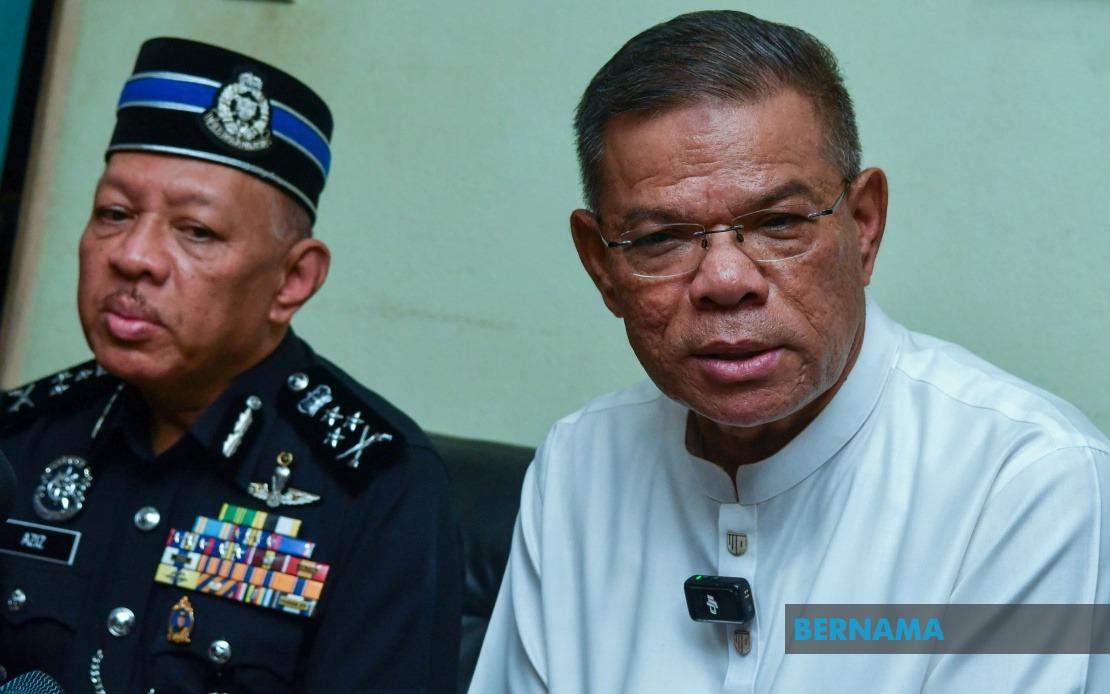
The Malaysian government is taking deliberate steps to strengthen security arrangements along its shared frontier with Thailand, focusing on systematic cooperation mechanisms rather than public disagreements. Home Minister Datuk Seri Saifuddin Nasution Ismail has outlined how Kuala Lumpur and Bangkok are collaborating through established platforms designed to address the multifaceted challenges facing one of Southeast Asia's most complex international boundaries.
The cornerstone of this bilateral effort is the Malaysia-Thailand Border Security Management Committee, a government-to-government forum that convenes twice annually to review and coordinate security matters. This structured approach reflects how the two nations are attempting to move beyond ad-hoc responses to cross-border incidents and instead embed cooperation into regular institutional practice. The committee serves as the primary mechanism through which both capitals discuss strategic concerns affecting border stability and sovereignty protection.
Complementing the high-level government dialogue is a parallel police-to-police framework that directly engages officers from the three Malaysian states that share a land frontier with Thailand: Perlis, Kedah, and Kelantan. This subnational cooperation is critical because local law enforcement agencies understand the granular nature of border dynamics, from trafficking patterns to community movements. By institutionalising contact between police forces at the state level, Malaysia ensures that security challenges are addressed with input from frontline personnel who daily encounter cross-border issues.
The police cooperation framework operates through three core pillars that represent best practices in international law enforcement collaboration. Intelligence sharing enables both nations to pool information about suspect movements, criminal networks, and emerging threats that transcend the border. Capacity building ensures that officers on both sides maintain compatible training standards and can effectively coordinate when required. Joint operations represent the most direct form of collaboration, where Malaysian and Thai forces work together on specific security concerns that demand synchronized action across the frontier.
The minister's comments come amid broader regional security dynamics affecting Southeast Asia's land borders. Cross-border crime remains a persistent concern, encompassing human trafficking, drug smuggling, and weapons trafficking. The porous nature of the Malaysia-Thailand frontier, combined with dense jungle terrain and numerous unofficial crossing points, creates inherent vulnerabilities that no single nation can fully address unilaterally. By emphasizing institutional cooperation, Malaysia is acknowledging that effective border management requires sustained engagement with its neighbour.
Saifuddin Nasution's remarks also reflect a deliberate diplomatic strategy of keeping border disputes within official channels rather than allowing them to escalate through public statements. He explicitly noted that Malaysia and Thailand resolve contentious matters through "appropriate platforms and forums in an orderly manner as neighbouring countries," rather than engaging in media exchanges that could inflame public opinion or derail cooperation. This approach recognises that border management demands discretion and long-term institutional trust.
The recent visit of Thai Prime Minister Anutin Charnvirakul to Malaysia provided an opportunity to discuss border security at the highest political level. Such summits reinforce the commitment of both governments to treating security cooperation as a priority relationship matter, not merely a technical law enforcement issue. When prime ministers discuss border management, it signals that these concerns have crossed from the operational domain into strategic political consciousness.
The complexity of border governance stems from competing imperatives that must be balanced simultaneously. Malaysia must protect its sovereignty and territorial integrity while also respecting Thailand's equivalent concerns. The legitimate movement of people across the frontier—whether for trade, family connections, or employment—must be facilitated while preventing criminal elements from exploiting these channels. The jungle environment itself presents both opportunities and challenges, offering strategic depth for security operations but also numerous concealment possibilities for smugglers and unauthorized crossers.
Malaysia's emphasis on formal institutional frameworks reflects lessons learned from other regional border management experiences. Countries that rely on informal arrangements or personality-driven relationships between individual officials often experience discontinuity when personnel change. By embedding cooperation into regular committees, training programmes, and operational protocols, Malaysia is building resilience into the bilateral security relationship that can withstand political transitions and personality shifts.
For Malaysian citizens and businesses operating near the border region, this institutional approach offers both practical benefits and broader reassurance. Enhanced police cooperation and intelligence sharing should result in reduced cross-border crime affecting the Perlis, Kedah, and Kelantan communities. Businesses engaged in legitimate trade with Thailand benefit from predictable security environments and streamlined customs cooperation. The systematic approach also reduces the likelihood of security crises that could disrupt normal commercial and social activity in border zones.
The Border Security Management Committee's twice-yearly cadence represents a significant commitment from both governments, ensuring that border issues receive regular senior-level attention rather than only episodic crisis response. This regularity allows officials to identify emerging trends before they become acute problems and to build personal relationships that facilitate problem-solving when urgent issues arise.
Looking forward, Malaysia's commitment to institutional cooperation with Thailand on border security reflects both pragmatic necessity and diplomatic maturity. The frontier between the two nations will continue presenting security challenges that neither country can definitively resolve alone. By maintaining robust G2G and P2P platforms, establishing clear communication channels, and demonstrating political will to work collaboratively, Malaysia is positioning itself to manage these challenges effectively while protecting national interests and maintaining the bilateral relationship essential for regional stability.

