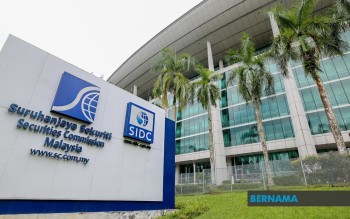
Malaysia's government and the Securities Commission are advancing a deliberate strategy to position the country as a gateway for Russian capital seeking halal financial instruments, signalling renewed diplomatic and commercial engagement with Moscow at a time when Western sanctions have redirected investment flows across Asia. The Ministry of Finance has confirmed that bilateral dialogue with Russian authorities, including the Central Bank of Russia and the Saint Petersburg International Mercantile Exchange, has intensified since 2023, laying groundwork for a more formal integration of Russian investors into Malaysia's Islamic capital markets.
The breadth of this initiative extends beyond simple investment attraction. Malaysia is preparing for exploratory visits to Central Asia scheduled for 2026 or 2027, intended as fact-finding missions to gauge market readiness and identify stakeholder networks across the region. These missions directly support the Securities Commission's internationalisation agenda for Islamic capital markets and reflect a calculated effort to establish Malaysia as the preferred conduit between Russian and Central Asian capital flows and halal investment opportunities. The timing suggests Malaysia is capitalising on geopolitical realignment, positioning itself as an alternative financial hub for Russian entities unable to access traditional Western capital markets due to sanctions regimes.
A particularly significant development emerged in May 2025 when the Head of the Republic of Tatarstan expressed interest in adopting Malaysia's Islamic finance development model. This interest represents more than symbolic value; it opens pathways for Malaysia to export its considerable shariah expertise and financial infrastructure know-how to a major Russian federal subject with Muslim-majority populations. Such arrangements could create revenue streams through professional services including shariah advisory work, regulatory consultancy, specialised training programmes and institutional capacity-building initiatives. For Malaysia, this represents an opportunity to monetise decades of accumulated expertise in Islamic finance while simultaneously deepening institutional ties with Russian counterparts.
The Securities Commission's strategic approach reflects awareness that attraction of foreign capital requires more than competitive returns. The regulator is simultaneously strengthening the underlying framework that makes the ecosystem credible and sustainable. The Capital Market Masterplan 2026-2030 prioritises regulatory enhancements, product innovation tailored to emerging investor preferences, and international collaboration mechanisms that allow foreign participants to participate comfortably within Malaysia's Islamic finance structure. These reforms directly address investor concerns about transparency, compliance standards and market depth—prerequisites for Russian institutional capital to commit at meaningful scales.
Context matters considerably here. Russia's traditional banking relationships with Europe have fractured, prompting Russian enterprises and state entities to explore alternative financial architectures. Islamic finance presents a genuine alternative because it operates on entirely different institutional foundations and regulatory jurisdictions from Western banking systems. Malaysia's established expertise—built through two decades of systematic development and supported by the Kuala Lumpur-based International Islamic Financial Centre infrastructure—provides Russian investors with both familiarity and confidence. The country's track record in managing complex shariah-compliant instruments positions it as technically credible in ways that nascent Islamic finance centres cannot match.
For Malaysia's own economy, this outreach programme carries implications beyond capital inflows. Successful integration of Russian capital would validate Malaysia's positioning as a truly global Islamic finance hub rather than a regionally-focused facility. It would demonstrate that Malaysia's financial expertise transcends particular geopolitical alignments and functions as neutral financial infrastructure available to all investors operating within shariah principles. This neutrality, if sustained, becomes a long-term competitive advantage as geopolitical fragmentation increases and investors seek diversified financial ecosystems not tied to specific political allegiances.
The Ministry of Finance emphasised that all investment from Russia must satisfy Malaysia's domestic legal requirements and international standards, establishing clear parameters that distinguish this initiative from informal financial arrangements. This insistence on proper regulatory compliance reflects awareness that Malaysia's reputation as a trustworthy Islamic finance hub depends on rigorous governance. Investors in halal instruments frequently come from diverse religious and cultural backgrounds and require absolute confidence that their capital operates within transparent, regularly-audited frameworks aligned with shariah principles. Any appearance of regulatory compromise would undermine Malaysia's credibility across its entire investor base.
The initiative also positions Malaysia as a bridge connecting Russian capital with global markets through Islamic finance instruments. Rather than simply directing Russian money into domestic Malaysian assets, the strategy envisions Malaysia as an intermediary that helps Russian investors access international opportunities within shariah-compliant frameworks. This broker function carries higher economic value than simple capital attraction and cements Malaysia's role as indispensable financial infrastructure for growing segments of global capital seeking halal investment channels. As Islamic finance expands globally and non-Muslim investors increasingly participate, Malaysia's ability to serve as trusted intermediary becomes increasingly valuable.
Central Asian expansion represents a logical geographic priority. The region contains significant Muslim populations, numerous investment opportunities in energy and infrastructure sectors compatible with Islamic finance principles, and historical trade relationships with Malaysia. Successful penetration of Central Asian markets would create spillover benefits throughout the broader Eurasian region. Russian capital would become the entry point for Malaysian financial institutions and expertise into markets currently underserved by Islamic finance offerings, creating long-term institutional relationships and establishing Malaysian standards as regional benchmarks.
The regulatory and institutional frameworks supporting this strategy reflect Malaysia's maturation as a financial centre. The country's shariah scholars, Islamic finance lawyers, regulatory experts and product developers constitute genuine intellectual capital that can be deployed regionally and globally. By exporting these services rather than simply attracting capital, Malaysia transforms itself from recipient of foreign investment into exporter of financial expertise. This distinction matters economically because expertise services generate higher margins and create more durable competitive advantages than simple capital attraction mechanisms.

