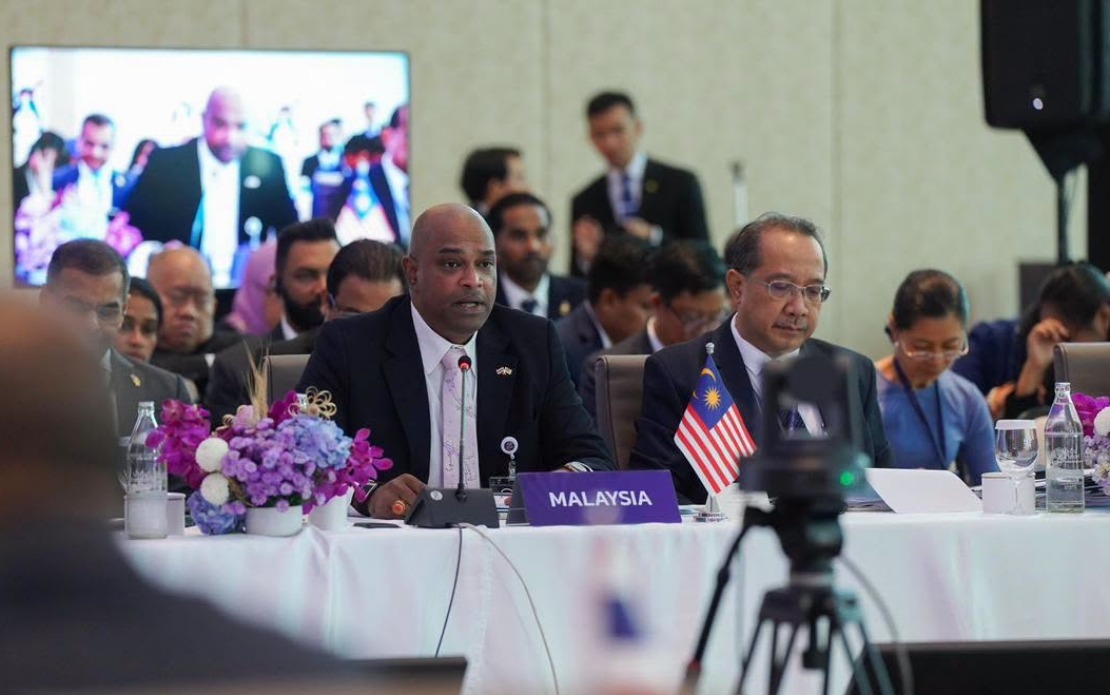
Malaysia has made a strategic push for ASEAN to establish stronger frameworks recognising the skills and professional qualifications of workers across the region, arguing that such harmonisation is essential for the bloc to remain competitive in an increasingly globalised labour market. Human Resources Minister Datuk Seri R. Ramanan articulated this position at the 14th ASEAN Plus Three Labour Ministers' Meeting held in Bangkok, Thailand, emphasising that regional talent must not only address immediate industry demands but also achieve recognition and employment opportunities beyond ASEAN borders.
The minister outlined three interconnected priorities that Malaysia believes should guide ASEAN's approach to workforce development. The first involves accelerating joint certification systems and achieving greater harmonisation of Technical and Vocational Education and Training qualifications across member states—a foundational step toward creating mutually recognised credentials that employers and workers can trust regardless of where the training was completed. The second priority centres on expanding technology transfer partnerships and enhancing teacher competencies, recognising that instructors themselves must maintain cutting-edge knowledge to prepare students for modern workplaces. The third pillar focuses on developing internationally competitive training programmes in emerging sectors including artificial intelligence, next-generation vehicles, and robotics, ensuring the region does not fall behind as global industries undergo rapid technological transformation.
Ramanan stressed that the underlying objective transcends mere bureaucratic certificate recognition. Instead, Malaysia views skills harmonisation as a strategic investment in the region's human capital and economic future. By ensuring that workers trained and certified within ASEAN possess credentials trusted by multinational employers, member states can expand employment prospects for their citizens while simultaneously attracting foreign investment seeking a skilled, mobile workforce. This approach addresses a persistent vulnerability in Southeast Asia's labour market: the brain drain phenomenon, where talented professionals migrate to developed economies partly because their qualifications lack international recognition or are undervalued in regional markets.
The inclusion of China, Japan, and South Korea in the Bangkok meeting reflects Malaysia's conviction that trilateral cooperation with these advanced economies is indispensable for accelerating regional progress. These three nations possess decades of experience in building world-class vocational education systems, managing technological transitions, and establishing quality assurance mechanisms that command global respect. By facilitating knowledge exchange and best-practice sharing with these partners, ASEAN can compress the development timeline and avoid replicating mistakes already surmounted by more industrialised neighbours. Such collaboration also signals to multinational corporations that ASEAN is serious about producing graduates whose competencies meet international benchmarks.
The timing of Malaysia's initiative carries particular significance in Southeast Asia's current economic context. The region faces intensifying competition from other labour-supply regions and pressure from advanced economies to protect their own workers through stricter immigration policies. Simultaneously, ASEAN economies are experiencing acute skills shortages in both high-tech and emerging sectors, creating mismatches between available workers and employer requirements. Harmonising qualifications across the bloc would create a genuinely integrated regional labour market, enabling companies to recruit talent more flexibly and workers to pursue opportunities across national boundaries without facing the costly and time-consuming process of credentials re-validation.
Malaysia's emphasis on future-oriented training programmes reflects broader recognition within ASEAN that the region cannot rely on traditional comparative advantages indefinitely. Manufacturing bases are evolving rapidly as automation and artificial intelligence reshape production, while new sectors are emerging that barely existed a decade ago. Countries that fail to build educational pipelines aligned with these transformations risk creating unemployable graduates and widening structural unemployment. By positioning ASEAN as a source of workers skilled in robotics, AI implementation, and advanced manufacturing, member states can defend their competitiveness against both developed and developing competitors.
The cross-regional dimension of skills recognition also addresses critical labour mobility challenges that currently impede Southeast Asian integration. Many ASEAN workers lack confidence that their vocational qualifications will be accepted in neighbouring countries, creating psychological and institutional barriers to labour mobility even where legal frameworks theoretically permit movement. Establishing transparent, harmonised certification systems would remove these uncertainties and enable workers to make informed decisions about cross-border employment. This human dimension—empowering individuals to build international careers—complements the economic rationale for harmonisation.
Ramanan's framing of skills development as fundamentally about workforce value rather than merely administrative compliance reveals Malaysia's strategic sophistication. Credentials matter only insofar as they signal genuine competence to employers and facilitate career advancement. By focusing on substance—ensuring that training actually produces workers capable of performing demanding roles—rather than simply creating mutual recognition agreements, Malaysia signals that ASEAN's commitment is genuine rather than performative. This approach should resonate with employers, governments, and workers alike.
For Malaysia specifically, leading this initiative positions the country as a thought leader in regional labour policy and vocational education. As an upper-middle-income economy facing its own skills challenges and competing to attract high-value manufacturing investments, Malaysia has clear incentives to champion standards that showcase Southeast Asian talent. This positioning also aligns with Malaysia's broader strategy to assume greater diplomatic responsibility within ASEAN on economic and development matters.
The success of Malaysia's push will depend on whether ASEAN member states can overcome coordination challenges and national interests that often impede regional cooperation on education and labour matters. Different countries operate distinct vocational systems reflecting unique industrial structures and development levels; achieving harmonisation requires delicate negotiation and genuine commitment to mutual recognition despite these differences. The involvement of external partners like China, Japan, and South Korea may facilitate this process by providing neutral technical expertise and financial incentives for participating countries.
Looking ahead, implementation will be the critical test of Malaysia's initiative. Establishing joint certification standards requires investment in quality assurance infrastructure, teacher training programmes, and curriculum development—undertakings that demand sustained funding and political will beyond the initial rhetorical commitment. Malaysia will need to work closely with other ASEAN member states, development partners, and private sector employers to translate aspirations into concrete mechanisms that actually improve worker mobility and competitiveness.

