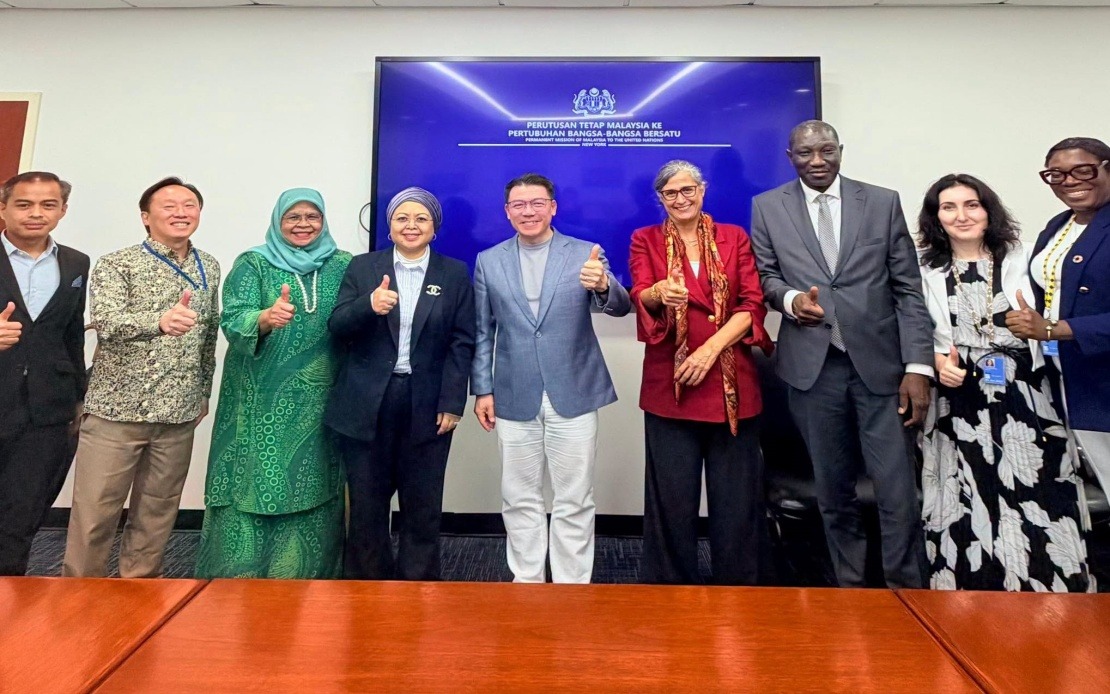
Housing and Local Government Minister Nga Kor Ming has delivered a forceful message to the global community: assessing progress on urban development commitments is no longer sufficient—member states must now produce measurable results. Speaking at the United Nations Headquarters in New York during the High-Level Meeting on the Midterm Review of the New Urban Agenda (NUA), Nga emphasised that the 2030 deadline represents an inflection point demanding immediate and decisive action rather than further documentation of failures. With only four years remaining to achieve the sustainable urbanisation goals established under the NUA framework, the window for transformative change has narrowed considerably, leaving no room for incremental approaches or delayed implementation.
The minister's participation in this critical UN gathering underscores Malaysia's elevated role within the international urban development agenda. As President of the UN-Habitat Assembly, Nga positioned himself as a voice urging the global community to confront the most pressing challenges facing urban populations worldwide. The Housing Minister articulated three interconnected crises demanding immediate priority: the persistent global housing shortage that leaves millions without adequate shelter, the digital divide that excludes significant urban populations from connectivity and economic opportunity, and the vulnerability of cities to climate impacts that threaten infrastructure and livelihoods. These challenges transcend national borders and demand coordinated responses that acknowledge both the scale of urban challenges and the urgency of implementation timelines.
Malaysia has framed its domestic urban development strategy within the broader MADANI Economy framework, which emphasises inclusive and sustainable growth. Through this lens, the country is positioning itself not merely as a participant in global urbanisation discussions but as a practical contributor to solutions. The nation's track record in green building development—having already achieved more than 500 million square feet of green index buildings with additional construction planned before 2030—demonstrates that Malaysia intends to lead by example while advocating for stronger international commitments. This combination of domestic achievement and international advocacy strengthens Nga's credibility when calling for member states to invest substantively in climate-resilient infrastructure and sustainable urban planning.
Regionally, Malaysia has emerged as a champion of the Asia-Pacific Urban Action Platform (AP-UAP), a mechanism designed to translate global sustainable development goals into locally relevant initiatives. This platform operates as a critical bridge between international frameworks and on-the-ground urban transformation, facilitating knowledge exchange among regional partners and mobilising financial resources for green infrastructure development across the Asia-Pacific. For Southeast Asian nations grappling with rapid urbanisation, the platform addresses a crucial gap: connecting globally agreed commitments to the specific contexts, capabilities, and constraints of national and local governments. The success of the AP-UAP demonstrates that meaningful urban change emerges from strong political commitment, solutions crafted by local stakeholders rather than imposed externally, and collaboration between government, development partners, and community organisations.
Nga's emphasis on ensuring that no community is left behind reflects growing international recognition that sustainable urbanisation cannot succeed if development benefits concentrate among wealthy segments while marginalised populations experience displacement or continued deprivation. This principle carries particular weight for Malaysia and other middle-income nations balancing rapid economic growth with social cohesion. Urban development projects frequently displace informal settlements or exclude lower-income residents from newly developed areas, exacerbating inequality even as cities modernise. The minister's repeated invocation of inclusive development signifies Malaysia's commitment to ensuring that urbanisation strengthens rather than fractures the social fabric.
The two-day gathering in New York brought together an expansive coalition of stakeholders reflecting the complexity of contemporary urban challenges. Beyond UN member states and senior government officials, the conference included local and regional government representatives, civil society organisations, and grassroots communities. This deliberately inclusive structure acknowledges that sustainable urban development cannot be negotiated at the national level alone; mayors, municipal administrators, and community organisations possess essential knowledge about local conditions and grassroots priorities. By legitimising these voices within the formal UN process, the High-Level Meeting sought to ensure that urban policy reflects the perspectives of those directly affected by urbanisation decisions.
For Southeast Asian policymakers, the stakes embedded in the NUA implementation discussion extend beyond abstract commitments. The region faces particular pressures from rapid urbanisation driven by rural-to-urban migration, industrial growth, and regional economic integration. Cities like Kuala Lumpur, Bangkok, Jakarta, and Manila must absorb millions of new residents while simultaneously transitioning toward climate resilience and green economies. The infrastructure deficits in many Southeast Asian urban areas—inadequate public transport, insufficient affordable housing, vulnerable water systems, and air quality challenges—demand urgent attention and substantial investment. Malaysia's advocacy at the UN level creates diplomatic space for the region to access technical expertise, financing mechanisms, and best-practice knowledge that could accelerate progress on these interlocking challenges.
The Housing Minister also expressed appreciation to various international actors who have contributed to the NUA framework, including UN General Assembly President Annalena Baerbock, UN Secretary-General António Guterres, and UN-Habitat Executive Director Anacláudia Rossbach. This diplomatic courtesy masks a deeper strategic point: sustaining momentum toward 2030 targets requires maintaining coalitions across multiple stakeholder groups. Without sustained commitment from senior UN leadership, adequate financing from development partners, and continued engagement from local and regional governments, the ambitious goals embedded in the NUA will remain aspirational rather than achievable.
Malaysia's positioning within this international discussion reflects the country's broader development trajectory. As a upper-middle-income nation facing urbanisation challenges comparable to those confronting other fast-developing economies while possessing greater institutional capacity than least-developed countries, Malaysia occupies a bridging position. The nation can draw lessons from the experiences of more developed urban centres while remaining acutely aware of the constraints facing developing countries. This positioning has enabled Malaysia to advocate for approaches that are simultaneously ambitious in scope and realistic in implementation expectations.
The call for member states to depart the High-Level Meeting with renewed determination rather than merely revised declarations signals frustration with the rhythm of international policymaking. Previous cycles of global negotiations have frequently produced elaborate commitments that dissolve into administrative processes consuming energy without generating results. Nga's intervention pushes against this pattern by insisting that the midterm review must catalyse actual behavioural change among governments and international institutions. For Southeast Asia, where urban populations are projected to increase substantially over the coming decades, the difference between sincere implementation and performative commitment carries profound consequences for hundreds of millions of people.
The four-year window until 2030 is simultaneously a deadline and an opportunity. Member states that dramatically accelerate investment in housing, green infrastructure, and climate-resilient urban systems over this period can still achieve meaningful progress toward sustainable urbanisation goals. Conversely, continued delays or incremental commitments will result in a worsening of housing crises, deepening digital divides, and insufficient urban climate adaptation. Malaysia's advocacy suggests the country intends to leverage its UN-Habitat leadership role to push the international community toward the former scenario, while simultaneously advancing its own urban development objectives through the MADANI framework and regional mechanisms like the AP-UAP.

