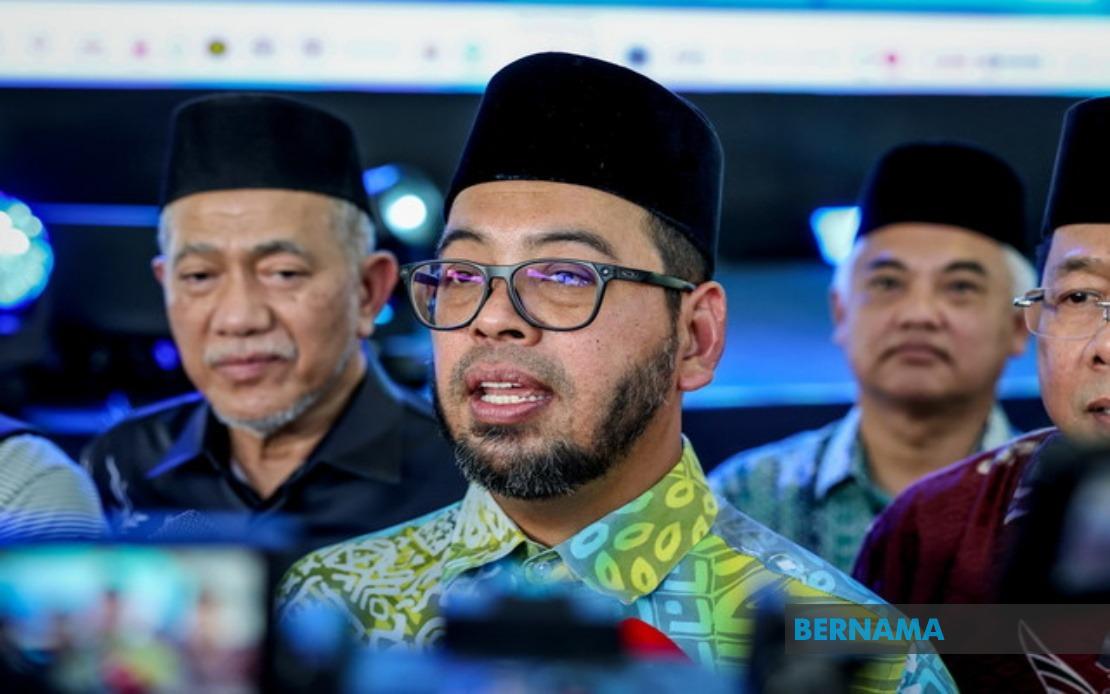
Malaysia has earned growing international standing as one of the world's foremost nations in administering Islamic affairs, according to Minister in the Prime Minister's Department (Religious Affairs) Dr Zulkifli Hasan. Speaking at the Northern Zone MADANI Ulama and Umara Multaqa event in Bukit Mertajam on July 5, he emphasised that this recognition rests on documented evidence, comprehensive data, and assessments from respected global scholars and observers who recognise Malaysia's proficiency in the religious domain.
Dr Zulkifli highlighted that during his international engagements, Malaysia's approach to Islamic governance consistently attracts interest and admiration from other nations seeking to strengthen their own religious institutions. He pointed out that objective metrics and statistical analyses consistently position the country among the world's top performers in this arena. This standing carries particular significance given persistent global misconceptions about the state of Islam in the region. The minister directly countered narratives suggesting that Islam faces marginalisation or threat in Malaysia, arguing that the international community's perspective tells a markedly different story.
The global outlook reflects recognition of Malaysia's substantive contributions to Islamic advancement on the world stage, Dr Zulkifli stressed. Rather than Islam being sidelined, the international community views Malaysia as playing a pivotal role in strengthening and guiding the management of religious affairs across multiple continents. This positioning places Malaysia alongside established Islamic thought leaders and administrative models that other developing nations increasingly seek to emulate.
One cornerstone of Malaysia's international reputation is its halal certification system, administered by the Department of Islamic Development Malaysia, commonly known as JAKIM. This framework has achieved recognition as among the most rigorous and respected globally, setting standards that extend beyond Malaysia's borders and influencing halal protocols in international commerce. The system's credibility stems from comprehensive auditing mechanisms and alignment with both Islamic principles and contemporary consumer protection standards.
Malaysia's management of the annual hajj pilgrimage through Lembaga Tabung Haji represents another area commanding worldwide respect. The institution has garnered international commendation on multiple occasions for its logistical coordination, financial stewardship, and pastoral care of Malaysian pilgrims navigating one of Islam's most significant spiritual obligations. This achievement reflects decades of refinement in handling the complex administrative and human dimensions of channeling hundreds of thousands of devotees through an ancient religious rite.
The nation's Islamic finance sector demonstrates perhaps the most quantifiable measure of Malaysian excellence. The country has maintained its position as the global leader in Islamic financial services for eleven consecutive years, generating substantial economic benefits while pioneering Shariah-compliant banking products and investment vehicles. This leadership reflects deep expertise in reconciling contemporary financial engineering with Islamic jurisprudential principles, attracting international capital and positioning Malaysia as an indispensable hub in the global Islamic economy.
On the educational front, Dr Zulkifli described the government's efforts to modernise Quranic learning through the KAFA 2.0 initiative, which augments traditional memorisation approaches with greater emphasis on practical implementation and deeper comprehension of Islamic teachings. This pedagogical evolution aims to produce religiously educated citizens capable of applying Islamic knowledge to contemporary challenges rather than simply preserving textual knowledge in isolation.
Malaysia's tahfiz ecosystem—comprising the National Tahfiz Council, National Tahfiz Policy, National Tahfiz Standard, and the Malaysia Tahfiz Certificate—represents a comprehensive institutional framework enabling graduates in Quranic memorisation to transition into professional and technical fields. This structured approach recognises that producing hafiz, or Quranic memorisers, need not consign them to exclusively religious vocations but rather equips them to contribute across Malaysian society's economic and professional sectors. The government remains focused on expanding the pool of professionally trained hafiz capable of serving national development objectives.
Contemporaneously, Yayasan Takwa extended financial support of RM280,000 across 28 mosques in Penang, allocating RM10,000 to each institution. Selected Islamic educational establishments also received equivalent funding to strengthen infrastructure and programmes. These contributions underscore ongoing commitments to bolstering the physical and institutional foundations upon which Malaysia's religious affairs management depends, ensuring that visible infrastructure and educational capacity continue expanding alongside the policy frameworks that have earned international respect.

