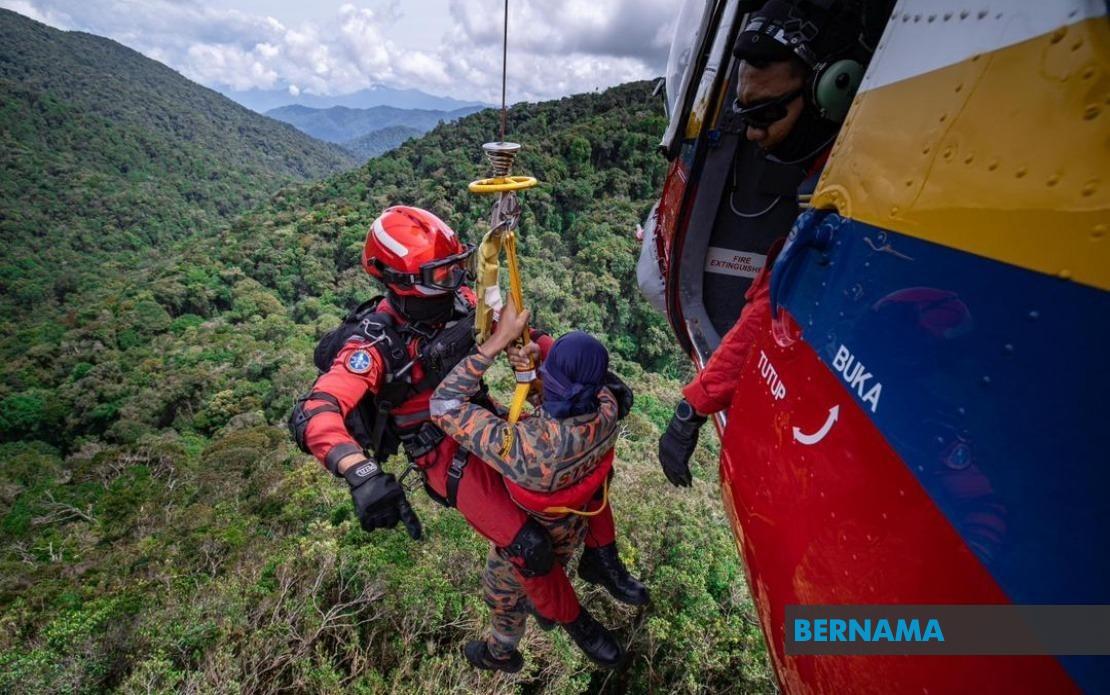
Between 2021 and 2025, Malaysia experienced 1,059 accidents across hiking activities nationwide, resulting in 63 fatalities and 87 injuries, according to figures presented to Parliament this week. Deputy Minister of Natural Resources and Environmental Sustainability Syed Ibrahim Syed Noh highlighted these stark statistics during Ministers' Question Time, pointing to the sobering toll that outdoor recreational activities have exacted as hiking's popularity has surged across the country.
The climbing accident rate underscores the urgent need for comprehensive safety frameworks as more Malaysians venture into forests and mountainous terrain. The Fire and Rescue Department of Malaysia, which compiled these figures, has alerted policymakers that casual approaches to trail safety no longer suffice. With hiking emerging as a major recreational pursuit across peninsular and East Malaysia, the gap between demand and safety infrastructure has widened considerably, creating vulnerabilities that have proved tragically consequential.
In response to this crisis, the Peninsular Malaysia Forestry Department has introduced the Mountain Risk Assessment and Management Guideline, or MoGRAM, developed with support from the United Nations Development Programme. This technical framework provides forest authorities with standardised methods for evaluating hazards along hiking routes and determining safe visitor capacity on popular trails. The guideline represents Malaysia's most systematic attempt to date at applying risk science to outdoor recreation management in Permanent Reserved Forests, establishing thresholds based on terrain difficulty, weather exposure, and rescue accessibility rather than relying on ad-hoc judgments.
A cornerstone of the new safety architecture involves mandatory engagement of certified Forestry Mountain Guides in 189 designated high-risk hiking zones. These trained professionals, recruited from local and indigenous communities, serve multiple critical functions: they monitor hiker compliance with safety protocols, coordinate emergency responses, and provide real-time assessment of trail conditions. The initiative has already certified 2,322 guides through dedicated skills development programmes, creating employment while building community capacity in environmental stewardship and crisis management.
The government is simultaneously developing a sophisticated digital infrastructure to revolutionise how hiking activities are monitored and managed. Working with the Malaysian Space Agency, the Peninsular Malaysia Forestry Department is constructing a hiking trail management system that leverages geospatial technology, geographic information systems, and remote sensing data. This technological approach will enable precise mapping of trails, real-time monitoring of trail conditions, and centralised access to comprehensive trail information across all states, addressing the current fragmentation where hiking registrations operate through disparate manual and online systems managed by individual state forestry departments.
The planned national digital hiking registration log system addresses a fundamental coordination problem. Currently, hikers register their activities through mechanisms that vary by state, limiting authorities' ability to track movements systematically during emergencies. A unified national platform would create searchable records of hiker whereabouts and itineraries, dramatically accelerating the tracing process when individuals go missing. Search and rescue teams could deploy more efficiently with accurate spatial data on last known positions and intended routes, potentially reducing response times that prove critical in mountainous terrain where hours can determine survival outcomes.
State governments retain constitutional jurisdiction over forestry areas and permit issuance, which has created challenges for centralised safety coordination. Syed Ibrahim acknowledged this constitutional reality while arguing that a voluntary national digital system could operate in parallel, capturing data that state authorities could share without infringing on state prerogatives. The proposal reflects pragmatism about Malaysia's federal structure, seeking improved outcomes through cooperation rather than centralisation that state assemblies might resist.
Beyond hardware and systems, the government emphasises the human element of hiking safety through ongoing training for guides and nature professionals. Regular certification programmes covering hiking safety protocols, risk assessment, first aid, wilderness survival, and search and rescue techniques ensure that personnel responding to crises possess current knowledge. This continuous professional development acknowledges that outdoor recreation evolves—new trails open, weather patterns shift, and rescue technologies improve—necessitating that guide training remain dynamic rather than static.
The 63 fatalities recorded over the five-year period represent preventable tragedies in many instances, raising questions about whether improved systems could have altered outcomes. Deaths in hiking accidents typically result from falls, dehydration, hypothermia, or failure of rescue teams to locate missing persons quickly. Each factor potentially addressable through better trail assessment, informed hiker preparation, professional guide presence, and rapid digital tracking suggests that Malaysia's comprehensive approach targets genuine vulnerabilities.
For Malaysian hikers planning mountain excursions, these developments carry immediate implications. Choosing trails in areas with certified guides, registering activities through available systems, and consulting updated risk assessments before departure now represent prudent steps that align with government safety initiatives. Recognising that hiking safety depends on shared responsibility—individual preparation, guide expertise, proper infrastructure, and swift emergency response—enables outdoor enthusiasts to enjoy Malaysia's natural treasures while substantially reducing accident risks.
The initiatives also carry economic and social dimensions. The certification of 2,322 mountain guides from local communities creates income opportunities while building capacity in areas often marginalised from mainstream employment. Indigenous communities gain particular benefit, leveraging traditional environmental knowledge alongside modern safety training. As hiking tourism continues expanding, these employment pathways offer sustainable livelihoods while integrating community members as essential partners in recreational safety rather than treating them as peripheral to tourism development.
Implementing these measures systematically across Malaysia's diverse terrain will require sustained funding, inter-agency coordination, and commitment from state governments. The complexity of managing hiking safety across peninsula and East Malaysia, with their different geographies and institutional structures, should not be underestimated. However, the gravity of the casualty figures provides clear justification for mobilising resources and political will necessary to translate frameworks into functioning systems that genuinely protect lives.